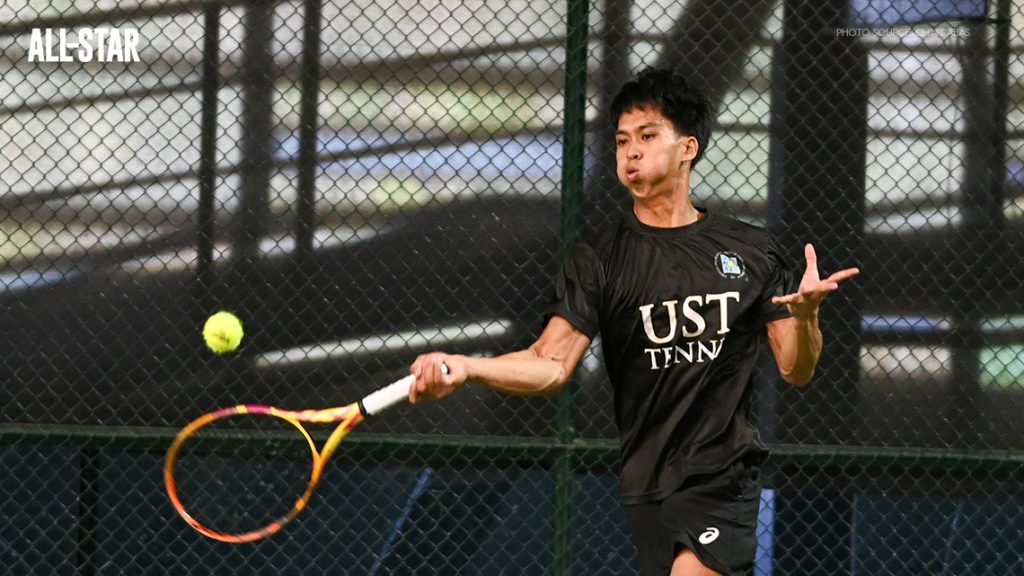
Eric Jay Tangub Built His Game the Hard Way
For Eric Jay Tangub, tennis did not start with a plan. It did not begin with rankings, medals, or the idea of becoming one of the country’s top collegiate players. Long before he became a key figure for the UST Tennisters and later emerged as a UAAP Finals MVP, the sport first entered his life in the simplest way possible: through family, through familiarity, and through spending enough time around the court for the game to eventually choose him back.
“Sa mga tito ko kasi yung mga tito ko naglalaro ng tennis, then dinadala nila ako sa tennis court. Kaya yun, doon ako na-influence na magtennis.”
At six years old, it was never that serious. Tennis was not yet a dream to chase or a future to build. It was just something to do, something to enjoy, something that felt natural because the people around him were already part of that world.
“Nung bata pa ako, hindi ko pa naisip nun kasi parang nag-enjoy lang ako kasi may mga friend ako doon.”
But somewhere between just playing and choosing to stay a little longer on court, something shifted. The game slowly stopped being just a pastime and started becoming something he wanted to test himself in.
“Doon ko naisip na parang gusto ko na sumali ng tournament… may pressure, mag-enjoy ka, mananalo ka.”

By eight, he was already entering competitions. He may not have fully understood everything that came with that world yet, but he was already beginning to feel what tennis demanded: discipline, nerve, and the willingness to keep showing up.
Then he encountered a different side of the sport. Not the polished version people usually imagine, but something more immediate and unforgiving. A version that exposed him to pressure early.
“Uso kasi yung… pustahan.”
That kind of environment changes the way you understand competition. It introduces tension before you are old enough to name it, and it forces you to carry expectations before you fully know how to process them.
“Nandun din yung pressure kasi maraming mga nakapusta sa’yo… parang di mo rin gusto na matalo.”
Even while he explored other sports such as basketball and baseball, tennis never really loosened its grip on him. He could step away for a while, but the pull was always there.
“Hindi talaga yung tennis sa akin parang nandun talaga yung puso ko kahit nag-change sport ako.”
As he went deeper into the sport, the challenges became more real too. Not every obstacle had to do with talent or training. Some of them were much more basic, and much harder to get around.
“Financial talaga kasi… mga racket, string.”
There were stretches when even something as ordinary as broken strings could keep him off the court. For young athletes without steady support, those are not small inconveniences. They are the difference between continuing and standing still.
“Kaya minsan din dati hindi ako makapag-practice ng isang buwan kasi wala mang mag-sponsor sa akin ng string.”
So he found ways to stay close to the game, even when the game itself felt financially out of reach. He stayed where tennis was, because being near it was still better than being without it.
“Nag-ballboy ako doon… tapos after na mga matatanda maglaro, hihiram ako ng racket.”
If you have ever wanted something deeply, you understand that kind of persistence. It is staying in the same place even when you cannot fully participate yet. It is finding ways, kahit kulang. And eventually, that persistence began to pay off. Tangub started making noise in junior tournaments, building a name in the local circuit, and turning small wins into proof that his effort was leading somewhere.
“Nung nag-champion ako, nag-runner up, marami na din tumutulong sa akin.”
The same sport that once felt casual slowly began opening doors for him. Support followed results. Opportunities followed consistency. The path became clearer. The young player who once borrowed rackets and waited for court time would eventually grow into one of the country’s more promising competitors, from age-group tournaments to bigger stages in Philippine tennis.
That path led him to the UST Tennisters, a choice he speaks about with certainty and gratitude. For Tangub, UST became more than just the next step in his career. It became the place where his game, identity, and belief in himself all started to sharpen.
“The best naman na choice ko sa life na naging dito ako sa UST.”
College tennis demanded something different from him. By then, he was no longer just trying to stay in the sport. He was trying to rise within it. He had already built a reputation in the junior ranks, but UAAP tennis asked for more. It asked him to contribute, to carry responsibility, and to become someone his team could count on in the biggest moments.
“Second year pa lang, doon ko na na-feel na parang gusto ko na maging MVP.”
That goal did not come from comfort. It came from hunger. It came from understanding that there was still another level he had not yet reached, and from being honest enough with himself to chase it.
“Kailangan ko pa maging better every single day… para kung ano man yung deserve ko, alam ko sa sarili ko na deserve ko.”
And that meant work. The kind that is repetitive, quiet, and mostly invisible to everyone except the people living it. Season after season, Tangub kept building. He kept putting himself through the routine, knowing that recognition only means something when it is backed by preparation.
“Pinagpaguran ko naman talaga every season.”
One of the biggest turning points in his development was not just technical. It was physical. For years, his body had not always cooperated with what his game demanded. But in college, through more structured training, better conditioning, and a stronger program, he began to overcome one of the things that had once held him back.
“Yun yung pinaka biggest achievement ko din sa buhay ko… na parang na-prove ko na din sa sarili ko na hindi na ako nagka-cramps kagaya dati.”

That mattered because high-level tennis is never only about strokes or strategy. It is also about what your body can sustain when the match stretches longer than expected. At UST, Tangub found a system that helped him build that base.
“Malakas kami, nakapag-foundation kami… endurance, strength, and power.”
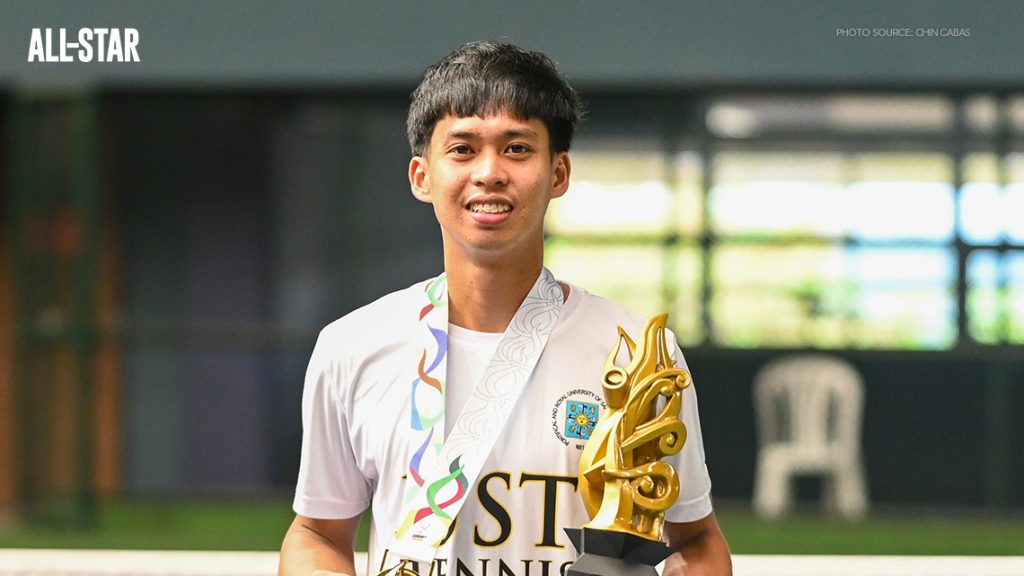
That foundation showed itself in the way his career kept progressing. He became an important piece of UST’s success, helped the Growling Tigers return to the top of UAAP men’s tennis, and eventually earned one of the clearest signs that his years of work had translated: Finals MVP honors on the collegiate stage. For someone who once worried about strings, sponsorship, and simply staying active, it was a full-circle moment that carried more weight than the title alone.
And still, even with those milestones, he knows the work is not done. His honesty about his game remains one of the clearest windows into why he keeps improving. He is not satisfied by achievement for its own sake. He continues to look at the parts that still need work.
“Kailangan ko pa i-improve yung endurance ko kasi pag long game na talaga at umaabot ng third set, hindi ko na alam anong nagagawa ko na mali. Nasasayangan din ako kasi parang konti na lang.”
Because growth does not stop at trophies. It does not end with being recognized. Even after becoming a standout in collegiate tennis and competing in bigger local tournaments beyond the UAAP, Tangub still talks like someone unfinished, someone who knows there is more to build.
Maybe that is also the part people do not always see. The public usually notices the wins, the medals, the MVP citations, the photos after the final point. What often goes unseen is the sameness of the days that make those moments possible.
“Yung magigising ng umaga… fitness, mag duty for the whole day.”
The routine. The discipline. The repeated choice to keep going, even when no one is watching.
Because for Eric Jay Tangub, tennis was never just about winning. It was never only about titles, or school pride, or the recognition that eventually came his way. It was about staying with the sport through every version of the journey: from being a kid on court with his friends, to growing up around pressure, to struggling through the costs of simply trying to train, to borrowing what he could and making the most of what was available, to becoming a player who earned his place through years of work.
And maybe that is what makes his story feel real. Not just where he ended up, but how he got there. Not just the fact that he became one of UST’s most important players, but that the path was never smooth, never handed to him, and never guaranteed. It was built point by point, season by season, through a love for the game that stayed even when everything else around it was uncertain.