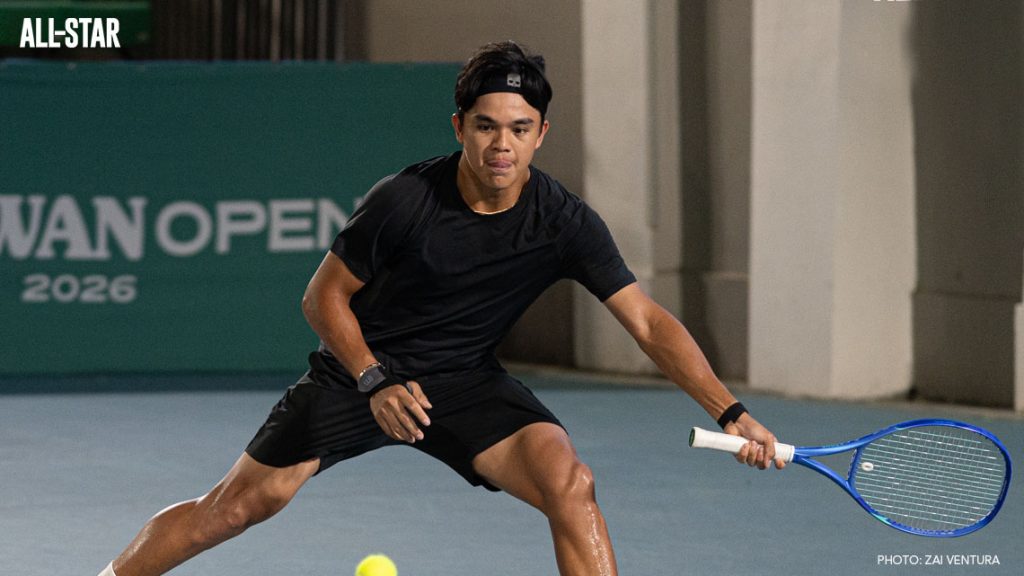
Jed Olivarez Opens Up on the Grind Behind Every ATP Point
In professional tennis, one ATP point can mean everything.
Not because it suddenly changes your life overnight, but because of what it takes just to earn one. Travel alone already drains players financially. Then there are qualifying rounds, unfamiliar opponents, long matches, and the pressure of knowing that almost everybody in the draw sacrificed something just to be there.
That’s the reality Jed Olivarez stepped into when he competed in M15 Futures tournaments in China earlier this year.
“So I competed in two weeks of M15 Futures in China. Basically, if you win a round, kahit one round in the main draw, you get ATP points. My ultimate goal is to be ranked internationally sa ATP.”
For players trying to climb professional rankings, Futures tournaments become less about glamour and more about survival. Every round matters. Every win matters. And for Olivarez, even making the main draw already required a grind of its own.
“I was really glad na I was able to come from the qualifying and win. I won four matches — three in the qualifying and one in the main draw to get one point.”
To people outside tennis, one ATP point may not sound huge. But inside the sport, especially in the ITF level, that single point can represent weeks of preparation, international travel, and surviving against players who are equally desperate to move forward.

Because once you arrive at tournaments like those, nobody is there casually.
“When you play there, you play against a lot of the best of each country. Everyone there is hungry to win because they travel all the way there. And no one wants to lose.”
That environment forced him to improve quickly, too.
“And really grateful na I was able to improve my game in the process.”
Competing Without Major Sponsorship Support
What makes Olivarez’s journey even tougher is that he’s currently navigating professional tennis without major sponsorship support behind him. While many players at the international level are backed by brands, federations, or private funding, Olivarez and his family largely shoulder the costs themselves.
“Ako lang yung nagbabayad for myself kasi I don’t have a sponsor yet. As of now, it’s just my family financially supporting me.”
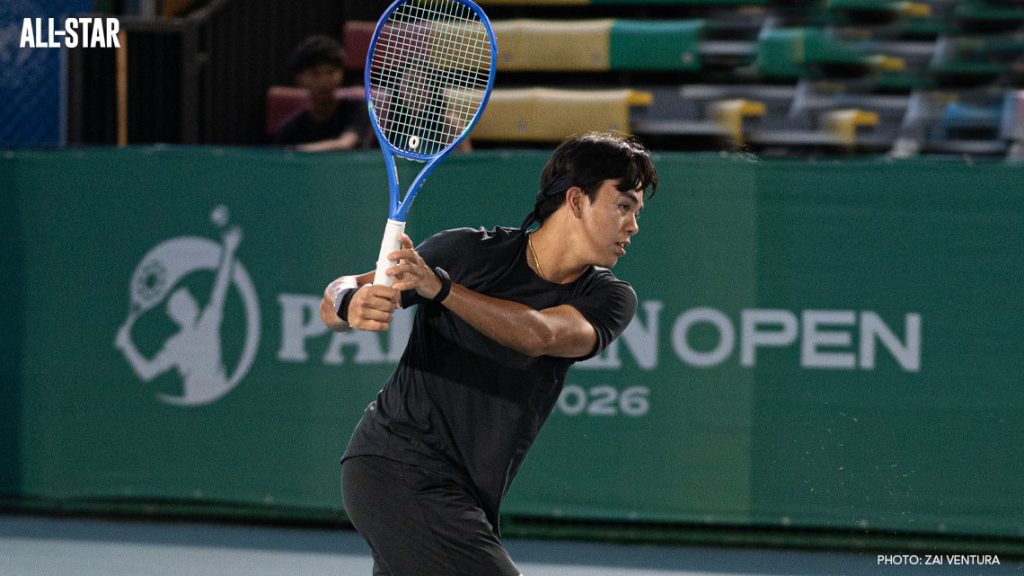
Still, even with the individual nature of professional tennis, Olivarez understands that competing internationally carries a responsibility bigger than himself, too.
“You have the flag of the Philippines. You’re representing the flag.”
Representing the Philippines in Davis Cup
That sense of representation has already become familiar territory for him over the years.
After all, the M15 tournament wasn’t his first experience in competing internationally. Long before chasing ATP points professionally, Olivarez already represented the Philippines multiple times in both the SEA Games and Davis Cup.
“I played in SEA Games three times na. As a team, we got the bronze medal twice. And then I’ve also represented the Philippines in Davis Cup three times na also.”
For tennis players, Davis Cup creates a completely different atmosphere compared to regular tournaments. Most weeks in tennis feel individual and isolating, but Davis Cup suddenly turns the sport into something collective. Every match starts carrying national expectations, too.
And with another Davis Cup campaign approaching soon, Olivarez already knows the next challenge waiting ahead.
“We’re now in Group 3. That’s the next tournament next month. We’ll be playing against countries like Singapore, Vietnam, Malaysia…”
Growing Up Around Tennis
What’s interesting, though, is that despite now representing the country internationally, tennis wasn’t even something he fully enjoyed growing up.
In fact, it was almost impossible for him to avoid the sport because of how deeply rooted it already was in his family.
“My whole family came from tennis players. One of my titas won the NCAA Division II Championships, and the other one got a gold medal in SEA Games 30 years ago. My dad also played varsity tennis.”

Still, despite constantly being surrounded by tennis, Olivarez admitted he didn’t immediately love it as a kid. At one point, he even seriously considered swimming instead.
“I actually didn’t really like tennis when I was a junior. I did try swimming. I thought I was pretty good at swimming.”
But somewhere along the way, his relationship with tennis slowly changed. Winning started making the sport feel more personal.
“When I started winning tennis tournaments when I was a kid, that’s when I really enjoyed the sport more.”
That success didn’t happen accidentally either. Like many athletes who eventually reach international competition, Olivarez spent most of his childhood inside demanding training routines long before the results came.
“My parents basically dragged me to the court to practice when I was younger. I trained a lot when I was younger — three hours a day, five to six times a week since I was seven or eight.”
Finding Independence Through College Tennis
Unlike many players who trained abroad in elite academies early on, Olivarez mostly developed his game locally in the Philippines. The biggest turning point in his growth eventually came during college in the United States, where he competed in NCAA Division I tennis.
And for him, those years shaped more than just his game.
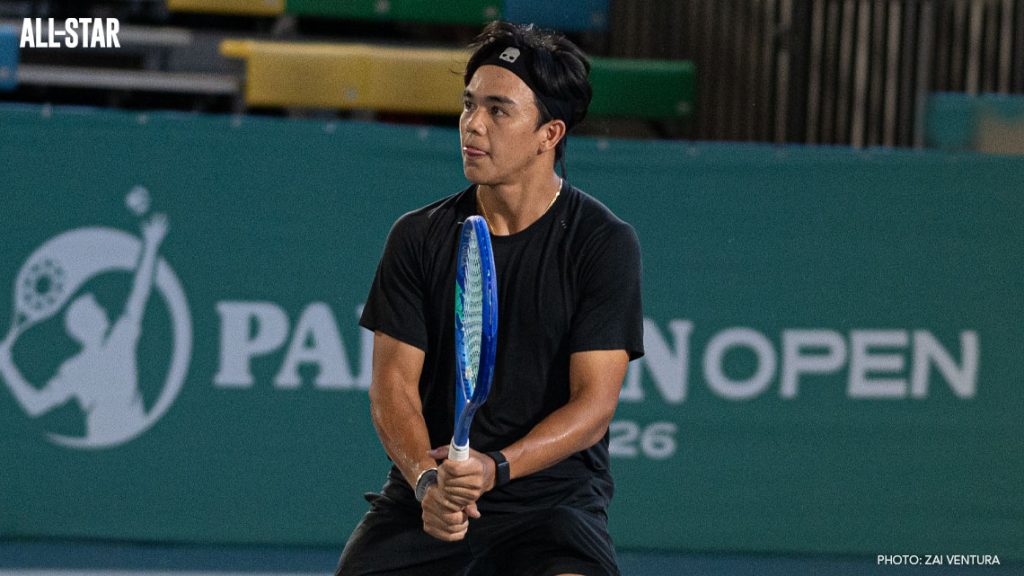
“I trained here ever since naman in the Philippines. I never really went outside to train in any big academy. The most international experience I had was in college. I went to college in the States, and that’s where I feel like I matured the most as an athlete and as a person kasi I was by myself there. I had no family with me so I learned to be independent.”
That independence eventually carried over into the professional side of his career, too. Because once college ended, the realities of professional tennis became fully his responsibility already.
Chasing the Next Step in Professional Tennis
Now, years later, the feeling of winning still matters to him. But it no longer feels the same way it did when he was younger.
The sport feels more physical now and far more demanding.
“It’s still a great feeling. The only thing that’s changed is it’s much harder to win nowadays because everybody’s good at this age. Everyone’s strong, everyone’s mature na. So I would say, it’s a lot more hard-earned now that I’m older.”
And maybe that’s what defines Jed Olivarez’s journey so far.
Not because everything came quickly or easily.
But because every ATP point, every Davis Cup appearance, and every international win feels built on years of persistence, sacrifice, family support, and continuing to chase a professional tennis dream that still demands more from him every season.