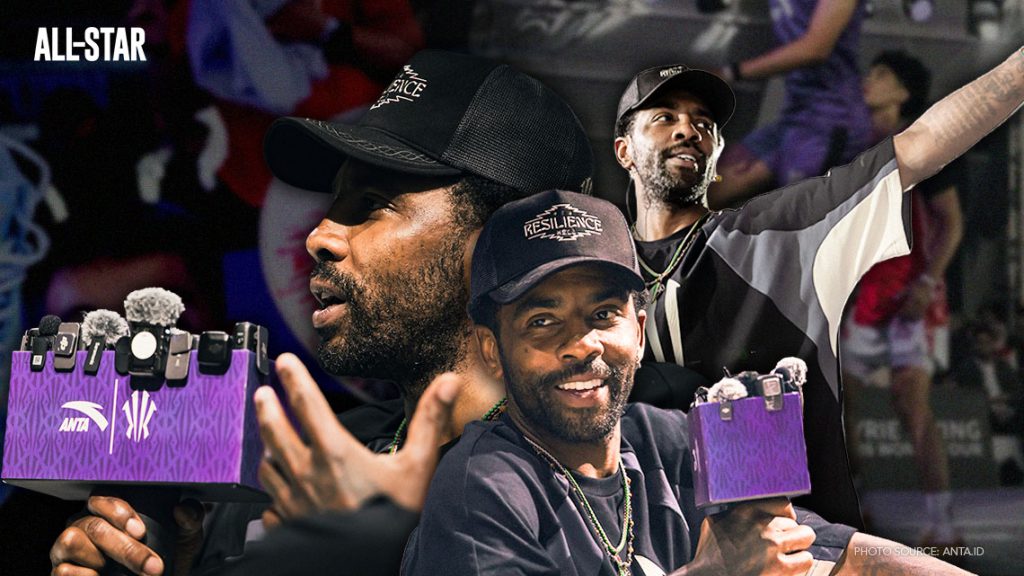
Kyrie Irving’s Lessons in Being Human
Before Kyrie Irving speaks about championships, he speaks about people.
The shoes lined the walls. Hundreds of fans packed into City Hall at Pondok Indah Mall in Jakarta. Cameras followed every movement of one of basketball’s biggest stars. It would have been easy for the NBA champion, one of the most gifted artists to ever treat the basketball court like a canvass, to make the afternoon about another sneaker launch, another promotional stop, another celebration of an NBA career that has already produced moments most players only dream about.
Instead, he talked about humanity.
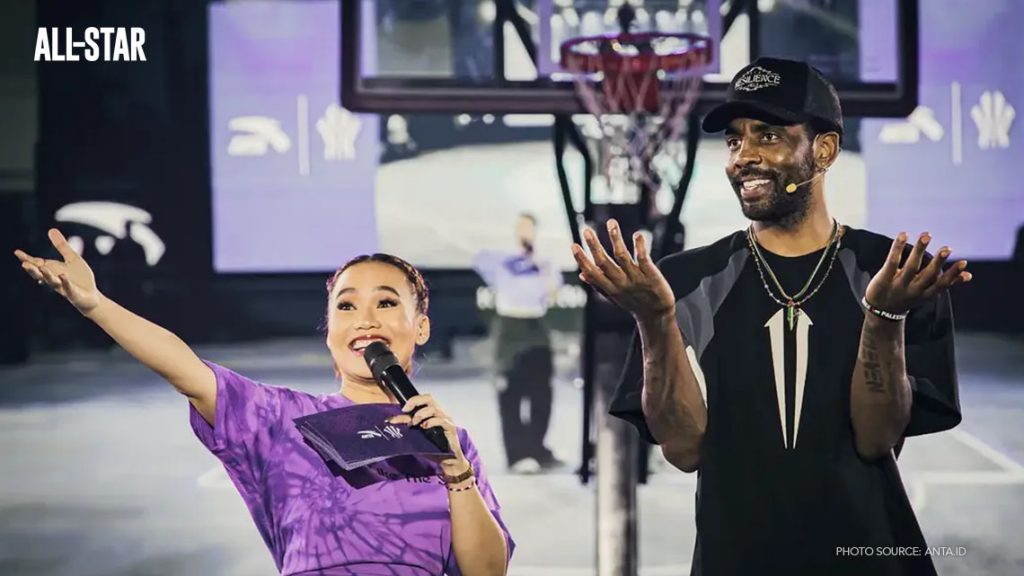
Kyrie answered questions that wandered far beyond basketball. There were conversations about injuries, faith, criticism, family, legacy, creativity, children, community, and the responsibility that comes with having strangers across the world see pieces of themselves in his imperfect but meaningful time on this earth.
At 34, after an NBA season in his prime lost to a torn ACL and years spent living through both extraordinary triumphs and very public failures, Irving no longer sounds like a player trying to convince the world who he is. Instead, he sounds like someone who has finally become comfortable with that answer himself.
“If I’m remembered for anything,” he said in Jakarta, “I’ll remember how many people I’ve impacted and how many people have impacted me.”
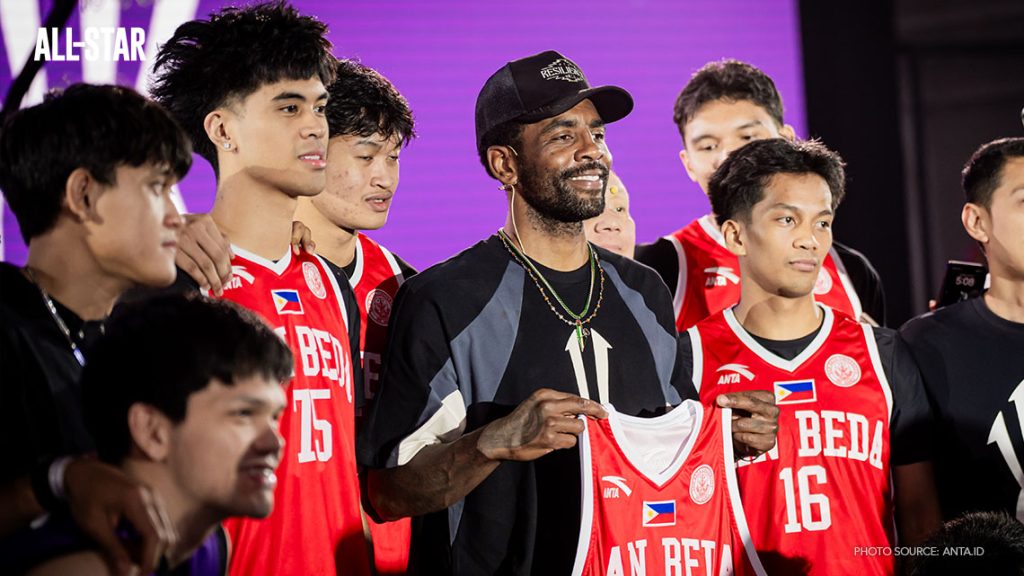
Those words became the thread connecting everything else he shared.
Basketball, Irving explained, is no longer just the destination. It has simply become his vehicle.
That explains why his partnership with ANTA has become much more substantial than just a signature shoe line between box-office A-lister and up-and-coming apparel wear giant. As Chief Creative Officer, Irving spoke less about products than about finding a company willing to embrace his creativity, his culture, and the values he wants to represent. Basketball gave him the platform. What he does with that platform, in his mind, matters more than the points on stat sheets.
“I utilize basketball as a vehicle,” he said. “I don’t allow it to just use me.”
Many athletes spend careers chasing what the game can give them. Irving now seems more interested in asking what he can give through the game. That outlook surfaced repeatedly throughout the afternoon. When discussing the younger generation, he never criticized social media or changing times. Instead, he spoke about responsibility.
Young fans, he said, don’t simply want pictures anymore. They want honesty. They want conversation. They want to know the people they admire are willing to stand in front of them without pretending to be perfect.
They want pure, raw authenticity.
“I’ve made mistakes,” Irving admitted matter-of-factly. “I’m not perfect by any stretch of the imagination.”
For much of his career, public discussion around Irving has often been reduced to headlines, debates in the media, or unforgettable highlights from a once-in-a-generation basketball savant. But in Jakarta, he consistently returned to the same message: people deserve grace because every person is still becoming who they are meant to be.
He admitted that he wished more people had met him where he was when he was mentally when he was younger instead of judging him from afar. So now he tries to offer that understanding to others. Especially the next generation.
The conversation inevitably shifted toward adversity.
Few stars have endured as many physical setbacks as Kyrie. Four knee surgeries. A shoulder surgery. Two hand surgeries. Most recently, the ACL tear that forced him to spend the past NBA season watching from the sidelines instead of creating more irreplaceable moments on the hardwood.
Many athletes describe those periods as the lowest moments of their careers. Irving refuses to use that language.
“I don’t call them lows,” he said. “They’re lessons.”
For him, injuries became invitations to discover parts of himself that basketball had never required. He read more. He prayed more. He strengthened his relationship with God.
He learned what remained when the game he loved was temporarily taken away. Basketball disappeared, but purpose did not.
That shift may explain why Irving now measures success differently than he once did.
Earlier in his career, he admitted, he believed everything revolved around championships and All-Star appearances.
Then life became bigger than basketball: he traveled the world, he met fans from countries he had never imagined visiting, and he discovered communities that embraced him not simply because of what he could do with a leather ball that weighs 1.4 pounds, but because of what he represented beyond it.
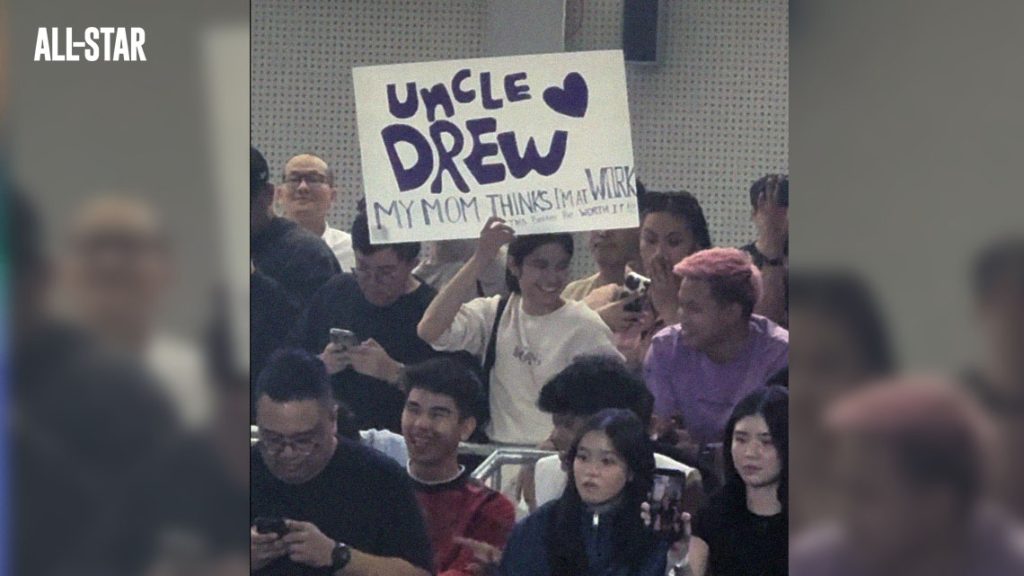
Standing in Indonesia for the first time, surrounded by supporters who had traveled from neighboring countries to spend a few hours with him – some may have even played a prank on mom about going to work – Irving spoke less like an NBA superstar than someone still amazed by the reach of a game he dedicated his life to as a child.
Basketball, he said, breaks down language barriers. The court speaks for itself. So does kindness. Perhaps the most personal moments came when Irving described the people who shaped him long before the world knew his name.
His father. His late mother. His grandmother. His ancestors. He described himself not as a self-made athlete, but as a continuation of generations that sacrificed before him.
“They had to crawl,” he said, “for me to walk.”
And now he hopes his own children can run farther still. That perspective keeps success from becoming ownership. Achievements become inheritance, opportunities become responsibility, and legacy becomes stewardship.
“My tribe is a reflection of me,” he said. “And I’m a reflection of them.”
It is his philosophy that no one succeeds alone, no one heals alone, and most importantly, no one grows alone. For all the discussion surrounding championships, endorsements, injuries, and fame, Irving saved perhaps his simplest advice for the end.
Be patient. It is important to give yourself and others grace. It is consequential to stay curious.
Allow yourself to laugh.
Allow yourself to cry.
Feel every emotion that comes with being human.
“I’m not a robot,” Irving said with passion in his voice. Neither, he reminded everyone listening, are the people sitting across from us. There is a temptation to flatten athletes into statistics, headlines, or opinions.
What emerged in Jakarta was not someone asking to be viewed as perfect.
Long after the sneakers wear out, the arenas empty, and the final game is played, championships will live in record books. But the people whose lives are changed by kindness, authenticity, and compassion will carry those moments much longer.
Irving believes that’s the legacy worth chasing. Listening to him in Jakarta, it became clear he already has.