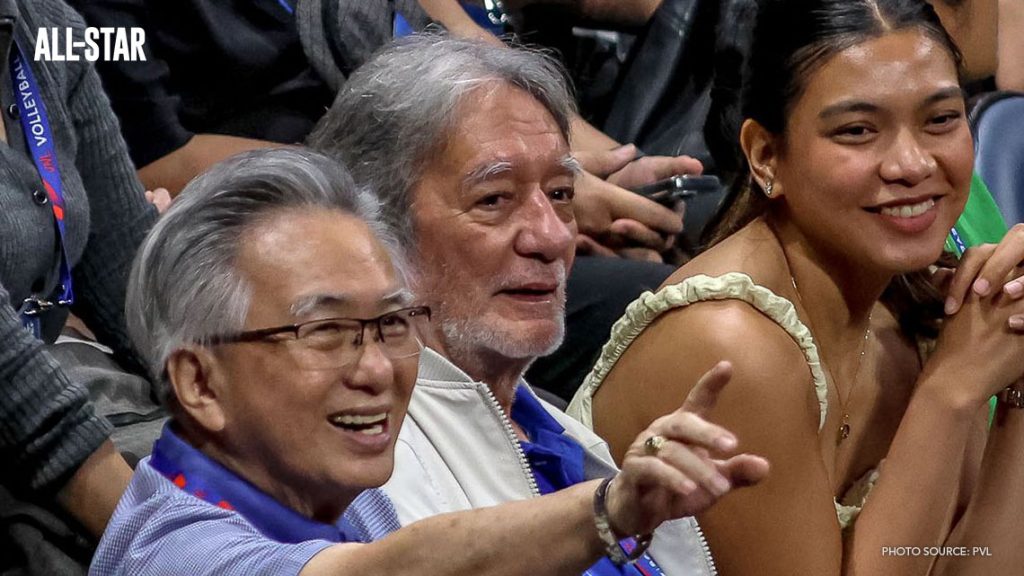
Ricky Palou: From Banker to Father of Local Volleyball
Ricky Palou, the man widely credited with helping spark the volleyball phenomenon in the country, burst onto the scene almost by accident.
A member of the Ateneo champion team that won the title back when the school was still competing in the NCAA in 1969 and likewise became a part of the Braves, San Miguel’s team that won the crown in the National Open a year later, Palou was content and retired as an athlete.
He was ready to embrace a new world in the corporate sector as a banker.
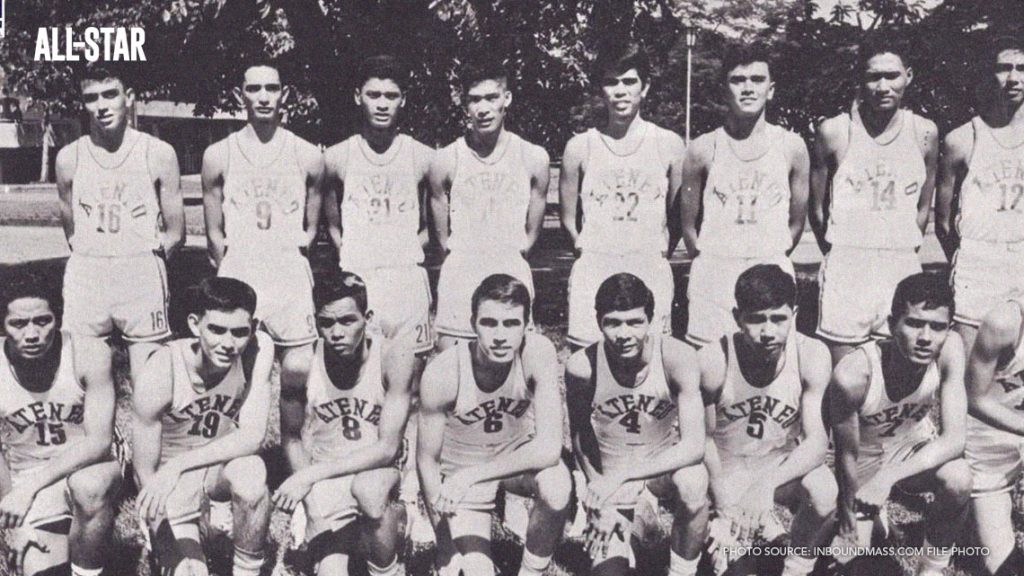
“When they started to turn pro (in the PBA), I stepped away from basketball. I became a banker,” added Palou, who was ready to give up sports in place of a regular 8-to-5 job and start a career in the corporate world.
“I joined Far East Bank. It was owned by businessmen involved in a variety of businesses. Far East Bank, later on, was acquired by BPI. I’ve figured I have to look at my future, my career. I couldn’t stay in basketball. The problem at that time, if you were a professional player, you have no time for yourself, your family. And if you’re already working, you cannot give time to both.”
Just when he had zeroed in on his newfound career, fate would lead Palou back into sport — but it was something he was not familiar with. An inter-bank, multi-sports event paved the way for Palou’s return to the sporting circuit despite his reservations, but he accepted the challenge as part of his responsibilities as a bank executive.
“When I was in the bank, may liga yung mga bank companies, inter-bank league,” said Palou. “We have the men and women volleyball teams and they asked me if I can be their manager.”
“At first, I was having second thoughts as I don’t know anything about volleyball, but they convinced me and I said OK. That’s when I realized when I saw the games already, maganda palang spectator-sport ito. That’s what interested me in volleyball.”
Years after spending his time in the corporate sector, Palou was led back into the sporting circuit.
An old, dear friend, the late Jun Bernardino, who worked as a courtside reporter in the PBA and ended up running the day-to-day affairs of the country’s pioneering professional league, convinced Palou to give sports another shot.
Bernardino wanted Palou to oversee the technical side of the game.
“I was in-charge of the technical aspect of the PBA,” he added. “When Jun Bernardino found out that I retired from the banking industry, he asked me to join him and helped him at the PBA. That’s how I got back into sports.”
That was also the time when independent teams had the loudest voice in the boardroom. Back then, only one corporation was allowed to have a sister team, San Miguel Corporation, then being controlled by the family of Andres Soriano, chairman of this giant brewery company, which also acquired Ginebra San Miguel from the Palancas.
Despite having multiple squads, they could not outnumber the independent group composed of six other entities then.
“At that time, the members of the board were the heads of the corporation,” he added.
Palou was referring to no less than the team owners of companies like Wilfred Uytengsu of Alaska and Joey Concepcion of RFM Corporation, Rene Buhain, then the president of Purefoods, which was then being owned by the Ayala Corporation, and former commissioner Rey Marquez, who was later on replaced by Rey Gamboa, also the co-founder of the Collegiate Champions League.
“The meeting is always cordial, pero they always debated and reasoned out on what should be and what should not be done in the league,” said Palou.
Palou would also work double time in the PBA and for his alma mater, Ateneo, to which he served in the athletic department.
As the league’s technical head, Palou admitted that their group will always be scrutinized not just by the public but by every stakeholder in the PBA, and it’s not easy to please everybody. It also came at a time when there were doubts about the credibility of game officials.
“I was more focused on officiating,” said Palou. “I was present at all the games, pinapanood ko. More often than not, pinapanood ko yung mga galaw ng mga referee. At that time, there were talks of mga game fixing, so doon ako naka-focus.”
“After the game, I would go to the group in charge of our broadcast coverage and request for the tapes of the games. Then I will review. Betamax pa noon,” he added. “I will review the movements of the referees. There were times we got rid of referees because of reports of game fixing, favoring one team over the other. That made my work difficult. You fire people, they did their job, but you know, teams would complain, saying, ‘this referee is always against us.’ Things like that.”
In the PBA, Palou spent five years serving as technical head, and summing up his experience working in a different capacity, he realized that there’s more to sports than just competing inside the hard court.
“It made me realize that sports is not just playing. Nakita ko on what people need. I’ve seen and heard the opinion of the people, particularly in officiating, and I’m in charge of the referees as well,” added Palou.
“Maraming inputs ang nakuha ko. I thought before, you go there and play, maayos na. But before the game starts pala, ang daming kailangang gawin. Kailangan maayos yung court, maayos yung mga locker rooms. Yung mga equipment, you have to test them, the table officials are well-organized,“ said Palou.
When Bernardino retired in the PBA for health reasons, Palou followed him shortly after, but the latter found out that he could not disassociate himself in sports just yet.
Life After the PBA
The partnership between Palou and Bernardino spilled over all the way to a joint venture born out of friendship — a sports organization that is tasked to stage major events.
Of course, finding the right platform has always been a challenge, and these basketball guys found themselves in a quandary.
There were already existing collegiate leagues that had been running four to six months a year, then there’s already a semi-pro league in the Philippine Basketball League as a feeder of the PBA, then the only remaining professional league in the country following the fold up of the Metropolitan Basketball Association.
Finding a niche in the local basketball landscape has been a struggle for Bernardino and Palou, who were the key officials in the creation of Sports Vision Management Group, Inc., along with the late Moying Martelino, former PBA commissioner and ex-Samahang Basektbol ng Pilipinas executive director Sonny Barrios, Atty. Aga Francisco, and Rhea Navarro.

“When we retired, we wanted to keep the barkada together. We put up a sports events company. Then, nag-usap-usap kami. Lahat kami galing ng basketball, so basketball kaagad yung na-organized namin,” said Palou.
There’s only one program in basketball that wasn’t given much attention yet – high school basketball — but immediately, the group realized something.
“We tried high school basketball,” said Palou. “We tried that one summer. But then napansin namin ang nanood lang, mga magulang, mga kamag-anak, mga kaibigan, so we figured, hindi puwedeng ganito.”
Birth of a Sports Phenomenon
The FIVB Grand Prix, an event put up during the late 1990s and saw the rise of Brazil’s biggest star, Leila Barros, who was loved, adored and embraced by Filipinos as one of their own, gave the basketball-loving nation something that has to be given more attention.
While the major international event was a smashing hit, there was no existing program or platform for our local volleyball players and that sparked Palou to dig back on something which he had done in the past.
He believes their group needs to step into the picture in bringing local volleyball to the consciousness of the Pinoy audience.
Back then, the top three sports in the Philippines were basketball, primarily because of the PBA, and the Ateneo-La Salle rivalry.
Next in line was billiards, which became prominent, especially at the time when Efren “Bata” Reyes captured the World Pool Championship in 1999 in Cardiff, Wales, which also opened the door to future Pinoy world titlists like Ronnie Alcano, Dennis Orcullo, and Django Bustamante, among others.
A new wave of Pinoy players followed suit more than a decade after that saw the likes of women players like Rubilen Amit and Chezka Centeno and Carlo Biado, now becoming the best in their respective divisions.
Boxing also became popular when Manny Pacquiao burst onto the scene and eventually became an eight-division world champion.
Boxing and billiards, however, are seasonal, but a constant platform in volleyball could somehow shift the audience’s attention to this new discipline and slowly, but surely, Palou’s group jump-started a program that was built for the long term.
“I suggested volleyball,” said Palou. “I mentioned to them, based on my experience with the inter-bank volleyball league, subukan natin yung volleyball. At first, they were hesitant, but I reasoned out to them, ‘remember when those foreign players came here and played in the Grand Prix, sina Leila Barros, napupuno yung coliseum’. So sinubukan namin.”

Palou and co. started V-League, which in turn grew even more when Shakey’s came into the picture to make this inter-collegiate league more commercialized, despite teams carrying their respective collegiate and university squads.
It served as an extra gig for collegiate players, who have a chance to earn money outside of representing their schools playing in the UAAP and NCAA.
“Shakey’s came into the picture. Malapit si Jun Bernardino kay Leo Prieto,” added Palou. “We started it. Maliit pa yung coliseum namin noon, sa Lyceum Gym. Probably around 80 to 100 people watching the games live.”
Once Shakey’s V-League started gaining ground, TV coverage came in next.
“We talked to the network on the arrangements. Whatever you sell is yours, whatever we sell is ours. Huwag lang kaming singilin ng airtime,” said Palou.
That was the start of the growth of local volleyball. The league saw the emergence of stars from Mary Jean Balce, Aiza Maiso-Pontillas to Rachel Anne Daquis, Alyssa Valdez, Jaja Santiago, and Denise Lazaro, among others.
“We became bigger. We had to move to bigger venues. We decided to hold it regularly sa Rizal Memorial Coliseum. Gulat na gulat kami because after one tournament and the next championship, punung-puno yung coliseum,” said Palou.
What started as an experiment turned out to be a winning formula and there was no stopping Palou and his group from pushing forward.
“Shakey’s was very happy and continued to support us,” added Palou.
From Shakey’s V-League to PVL
That partnership stretched over 12 years until it transitioned to become a professional league, thus the creation of the Premier Volleyball League.
“When more people got interested in sponsoring the schools and eventually decided to have their own commercial teams, and allowances were now being given to the athletes,” said Palou. “That’s the time na pinasukan ako ng GAB.”
There was a heated debate on whether or not they would turn pro as the Games and Amusement Chairman, Baham Mitra and Palou would exchange messages.
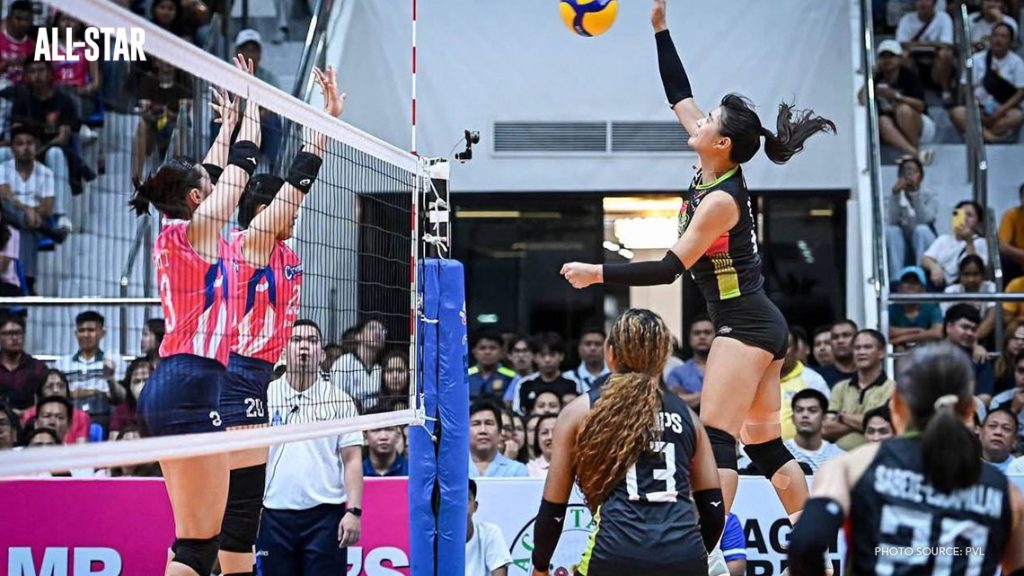
“He was telling me we have to turn pro since the players were already receiving salaries and allowances, sabi ko naman, eh bakit sa UAAP, they were also receiving huge allowances,” said Palou.
Palou was having apprehensions of turning pro, but when the COVID-19 pandemic forced everyone to adjust the way we live, so as the PVL’s thinking of turning pro.
Back then, leagues that are allowed to operate during the pandemic were professional leagues, and they had to do it under a bubble setup.
Fast forward, the wave of stars from Shakey’s V-League spilled over in the PVL as Valdez and the other young emerging stars made their mark in a league that somehow made volleyball players instant celebrities.
Palou had witnessed how volleyball has become one of the country’s premier sports entertainment attractions.
“Before kasi, walang pumapansin sa volleyball,” added Palou. “Eventually, when they started watching the game, Nakita nilang exciting yung games, every point counts. It’s not like basketball that you’re going to watch for two hours.”
“Dito labanan nang labanan sa puntos. It really became the game exciting. Hindi ka puwedeng mabagal kasi paluan nang paluan. It became popular.”
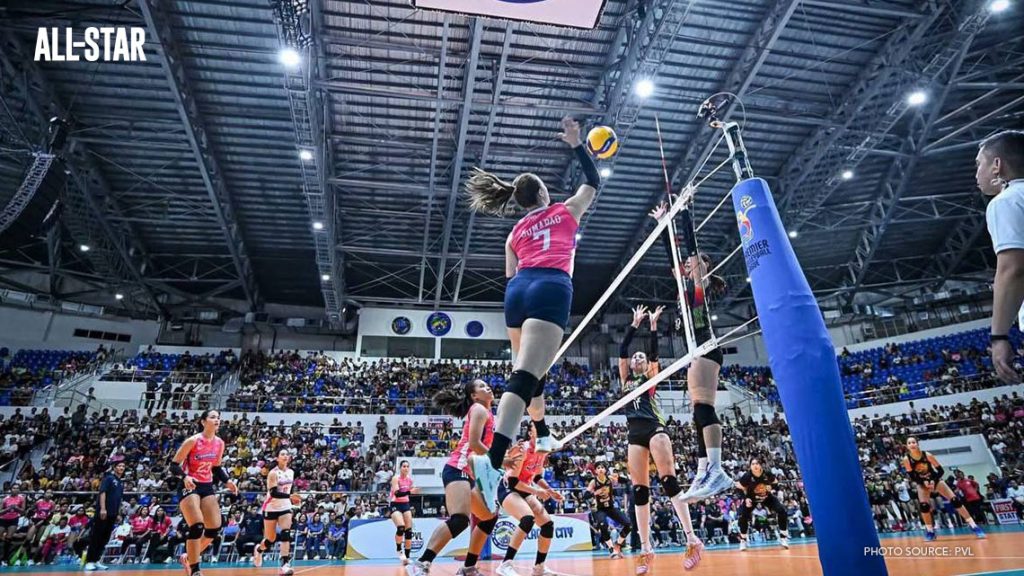
According to Palou, the PVL, being a professional league now, has given hope to volleyball players in the country that there would be continuity in the sport they all love.
“What happens now is, players from the collegiate ranks, nagiging feeder sila ng teams sa PVL. That means continuity sa career nila,” he added. “Please continue supporting the game of volleyball. It’s an exciting game. You’ll enjoy it. Bring your kids. It’s a family affair.”
For more exclusive volleyball stories and updates, click here.