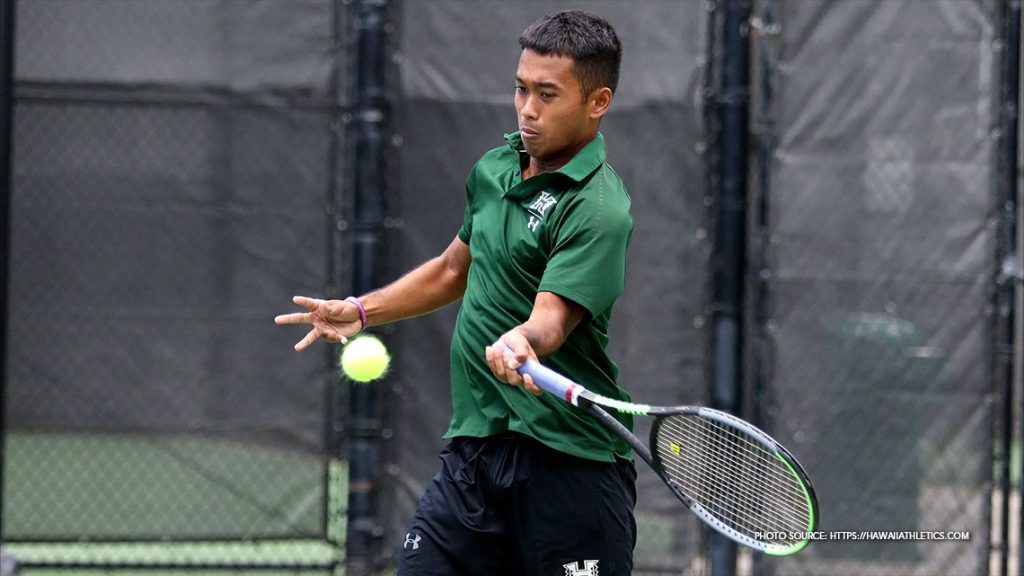
Andre Ilagan’s Long Road Leads to His First Shot at the US Open
Andre Ilagan didn’t just stumble into professional tennis. Growing up in Hawaii as the son of Filipino immigrants, he came from a family that initially revolved around basketball, with tennis entering the picture almost by accident when his older brother injured his ankle and stumbled upon the sport on television. A few cheap rackets, some balls, and trips to the local park eventually turned that experiment into something much bigger, with Ilagan becoming the one who would take the family game the furthest.
“My oldest brother, Anthony, sprained his ankle and was watching TV and it was tennis. And then he said, ‘Oh, this is pretty easy.’ So they went to a local shop and bought cheap rackets and cheap balls and went to the park and started playing. And they’re like, ‘Oh, this is actually pretty hard,’ but they wanted to do it.”
From Family Courts to College Tennis
Ilagan was only five when he started playing, and tennis gradually became more than something he did with his family. His father coached him from the beginning until he left for university, while his parents made it clear that a college education would have to come through his own work. Ilagan understood early that tennis could become his way forward, and that meant committing himself to it long before he knew exactly where the sport would take him.
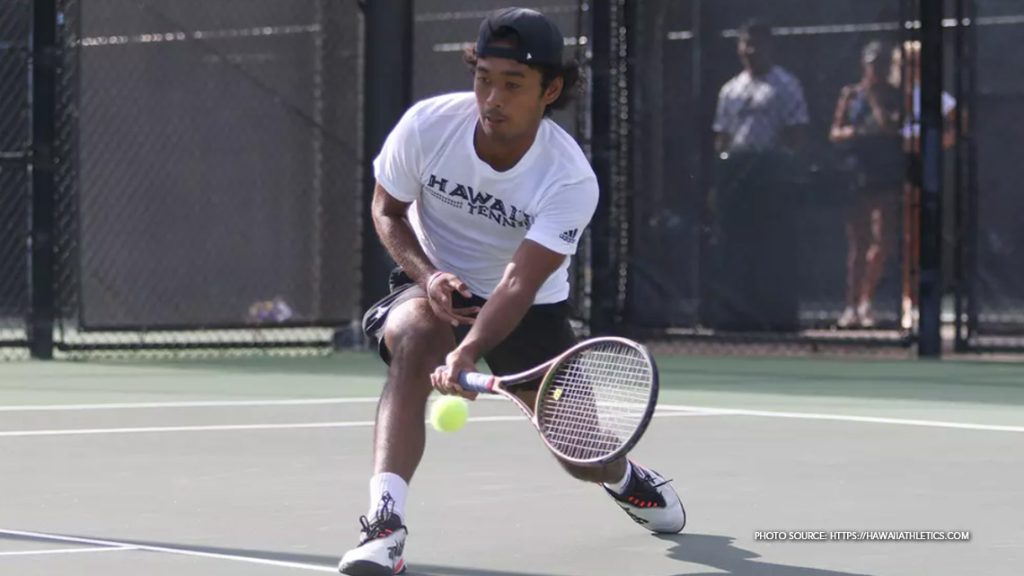
“My parents said I’m not going to be very tall. So I said, fair enough. And they said they’re not going to pay for any of my college schooling. So I had to find a way to work hard and just get a full scholarship so I don’t have to pay for school.”
That commitment eventually made him one of the most accomplished players in University of Hawaiʻi men’s tennis history. Ilagan became the Big West Player of the Year in 2022, reached the NCAA Singles Championship Round of 16 in 2023, and became the first Rainbow Warrior to earn ITA All-American honors. He also finished his college career as a four-time All-Big West selection in singles and doubles before turning professional.
Learning to Live on Tour
The professional game, however, came with a different kind of challenge. Ilagan had spent years surrounded by teammates, coaches, and friends, but suddenly he was traveling from tournament to tournament and living out of a suitcase. The tennis itself didn’t feel completely foreign, but the lifestyle did, and the loneliness became one of the hardest parts of his first several months on tour.
“I think the difference for me was just getting used to the lifestyle of a professional tennis player. Obviously, living off a suitcase, it’s a bit lonely at times. I struggled with that maybe the first six, seven, eight months. When you’re in school, you’re with your teammates all day. You hang out with your friends. And then you go complete 180. You travel alone.”
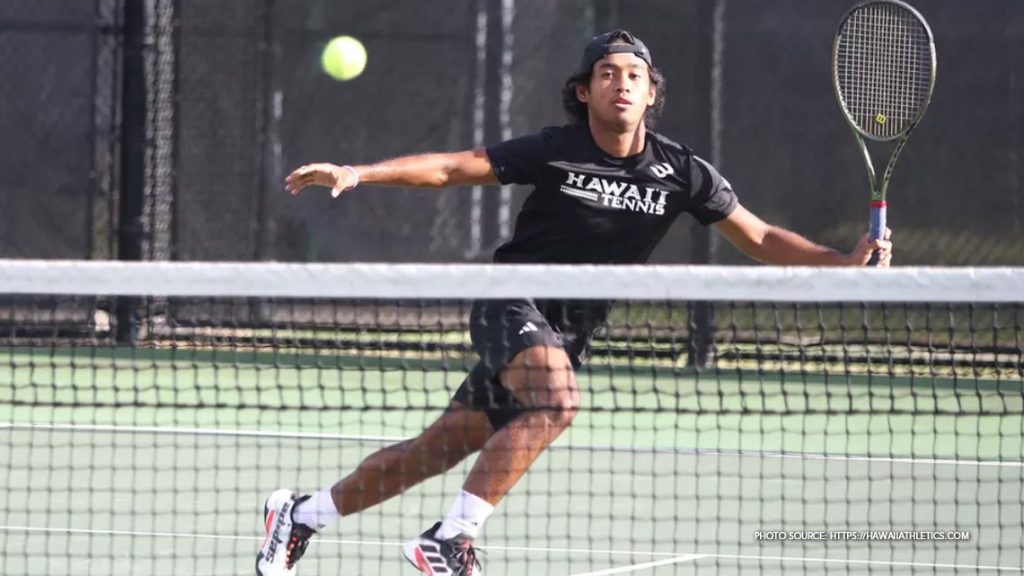
The transition also meant learning how to build a career without the same resources that established professionals have. Ilagan couldn’t afford to bring his coach to every tournament, so much of the early professional journey required him to figure things out on his own. His first ATP Challenger came in 2023, and the years that followed became a gradual climb through the lower levels of the professional circuit.
A First Shot at the US Open
That climb has started to accelerate this year.
Ilagan entered the 2026 US Open qualifying tournament after making consecutive Challenger finals in Lexington and Brownsburg. Those results helped push him up the rankings, with the University of Hawaiʻi reporting that he climbed 33 places to No. 210, the highest ranking of his career at the time, while the U.S. Open wild card gave him a chance to compete on a stage he had never reached before.
The opportunity came with a phone call.
“I was lucky enough to go back-to-back final of two challengers beforehand and then get the call on Monday and say, ‘You’re in the Open.’ I said, all right, sounds good.”
The excitement was obvious, but Ilagan also understood what the opportunity meant beyond simply having his name inside the US Open draw. A Grand Slam appearance comes with bigger crowds, bigger attention, and, importantly for a player still building his professional career, bigger financial rewards.
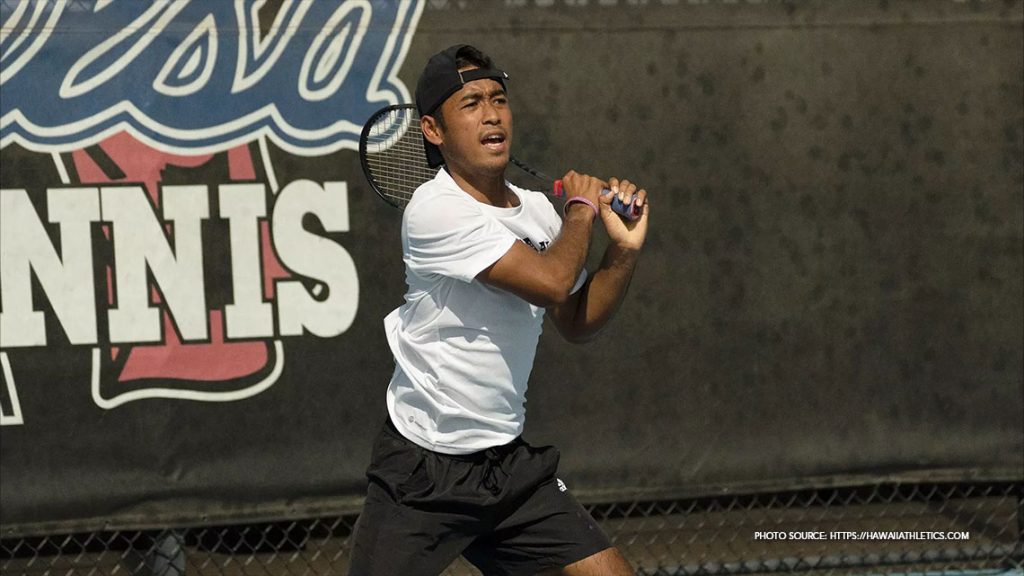
“Happy, obviously. It helps continue my career for a little longer because playing at these events, obviously the money is a little bit bigger. But yeah, just super exciting. Just happy to be out here and just see what I can do.”
His approach heading into qualifying is almost deliberately simple. Rather than allowing the size of the tournament to change his preparation, Ilagan wants to treat the US Open like any other tournament, knowing that thinking too much about what is at stake could become its own distraction.
“I’m just taking it as every other tournament. Trying not to make it feel like, ‘Oh, this is a big event.’ Which, I mean, it is. But in hindsight, it’s going to probably mess with my head. So I just want to take it as normal as it can be.”
Having his coaches and a friend with him has also helped make the experience feel less overwhelming. There is still the pressure of needing to win three qualifying matches to reach the main draw, but Ilagan wants to make sure he doesn’t lose the reason he worked so hard to get there in the first place.
“I’m lucky to have my coach and my other coach as well with me. And I have a friend that’s here as well. So it keeps me sane and just have fun around the courts and just enjoy every bit of it.”
Playing With a Filipino Connection
There is another part of the US Open experience that means something different to Ilagan.
Although he was born and raised in Hawaii and competes under the American flag, his family is Filipino. He may not speak the language, but he grew up understanding parts of his family’s culture, and that connection has followed him onto the professional circuit. Playing on the same Grand Slam stage as fellow Filipino Alex Eala has only made that connection more visible.
“I’m full Filipino. And I have the culture. I mean, I can’t speak the language, but I can understand like two to three dialects. But yeah, obviously, it’s probably an honor to be, you can say, playing for the Philippines as well.”
That feeling becomes even more noticeable whenever Filipino fans recognize his last name. Ilagan doesn’t necessarily expect them to know who he is before walking into the stadium, but he has noticed how quickly the Filipino community rallies behind one of its own.
“It’s just an honor just having me playing these tournaments, having the Filipino crowd that has no idea who I am. And they see like, ‘Oh, I have a Filipino last name.’ They come and support. And it’s awesome.”
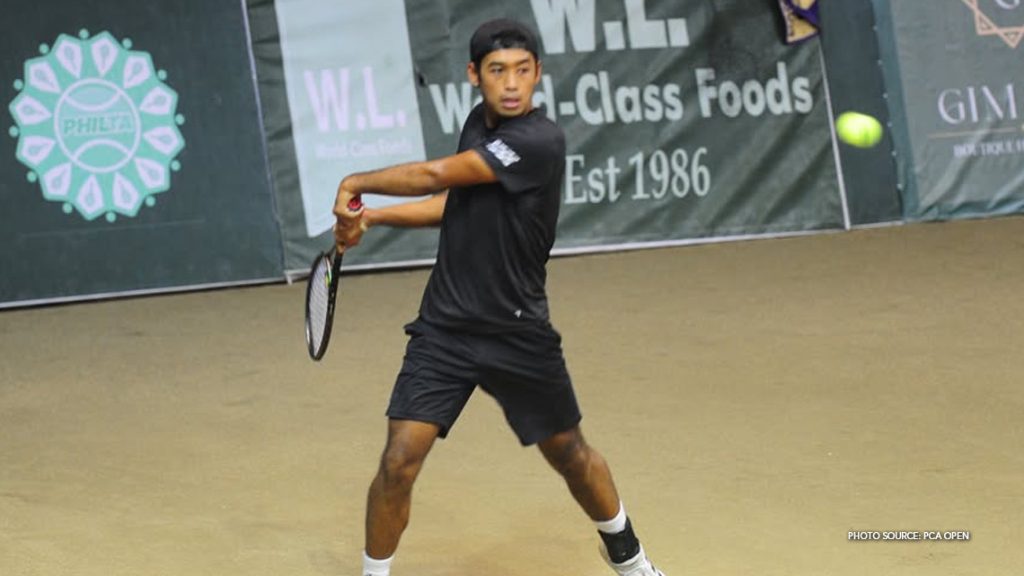
His connection to the Philippines has also given him opportunities to play there. Ilagan competed at the PCA Open in 2023, making the final before losing to AJ Lim. It was a particularly memorable run because he was playing on a shell court, a surface he had never experienced before, while his parents had recently retired and moved to the Philippines.
“I played the PCA tournament. My parents are retired in the Philippines now. So I was like, yeah, why not? I’ll do this before I go back and do preseason back in Hawaii. Ended up playing in and losing in the final to AJ Lim. It was on shell court, and I’ve never played on shell court. So that was already me making the final was pretty good.”
The Philippines remains part of his life away from tennis. After spending an exhausting stretch of the year on the road, Ilagan plans to return to his parents in November, not for another tournament, but for something much simpler. After 24 weeks of traveling when he arrived at the US Open, with another 10 weeks planned afterward, he wants a break from the racket.
“I don’t plan on touching my racket and just enjoying with my parents back home. Or back in the Philippines.”
How Far Can He Take It?
Hawaii remains his home base when he isn’t traveling. His two brothers, cousins, and close friends are still there, giving him a place to return to between the constant movement of professional tennis. That balance matters, especially when the tour can sometimes feel isolating.
Now, standing at the edge of his first Grand Slam qualifying campaign, Ilagan isn’t trying to predict how far the journey will go. He knows there are no guarantees in tennis, and that every opportunity can disappear just as quickly as it arrives.
“I may never get this opportunity again. So let’s just enjoy every bit of it. All the challenges, all the crowds and all of that. Just soak it all in. And, you know, if I win, cool. If I don’t, that means I got to go back to the practice courts and keep working hard.”
That mindset fits the journey that brought him here.
A five-year-old who picked up tennis because his brothers did. A kid from Kalihi who spent hours on public courts. A college player who turned a scholarship opportunity into a historic career. A young professional who spent months learning how to survive on the road. Now, Ilagan is preparing to step onto the grounds of the US Open, becoming the first University of Hawaiʻi men’s tennis player to compete at a Grand Slam.
His next destination after New York is still uncertain. He expects to spend the rest of the year on the Challenger circuit, with hopes of qualifying for ATP events in China and Shanghai before turning his attention toward the 2027 Australian Open.
The goal is no longer simply reaching the next level.
He is already there.
Now Andre Ilagan is finding out just how far he can take it.
For more exclusive tennis stories and updates, click here.