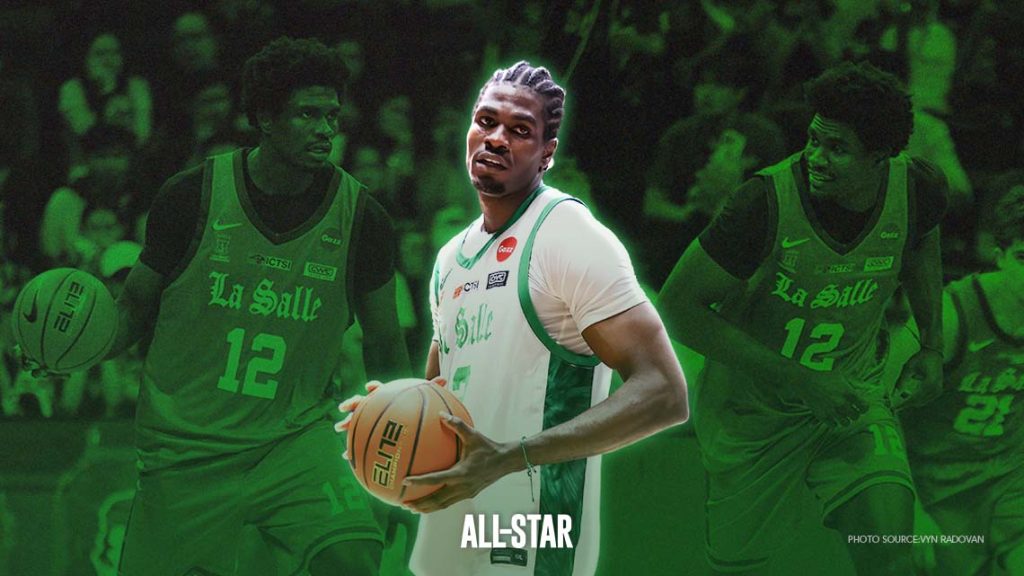
Henry Agunanne’s long road back from the ACL injury
DLSU Green Archer Henry Agunanne’s return to the basketball court was never as simple as getting healthy enough to play again. It meant going through months of uncertainty, facing setbacks he did not anticipate, and learning to accept that recovery would take much longer than he had hoped.
The first signs of trouble came during Season 87, when Agunanne was already experiencing knee pain but continued playing. At the time, the discomfort was manageable, and initial medical examinations pointed to quadriceps tendinitis. With rehabilitation underway, there was reason to believe that the injury could be addressed without a lengthy absence.
However, the pain persisted. Despite several checkups and MRI scans, the source of the problem remained unclear until further examinations in June of the following year revealed that he had an anterior cruciate ligament (ACL) injury.
Finally, I know what’s wrong
Rather than feeling completely overwhelmed by the diagnosis, Agunanne recalled experiencing a sense of relief. After months of trying to understand what was wrong with his knee, finally having an answer gave him a clearer idea of what needed to happen next.
“For me, it was like, finally, I know what’s wrong,” he shared in an exclusive interview. “It was a little bit of relief that, oh yeah, now I know what it is and what to do next.”
The diagnosis, however, also meant accepting that he would miss the upcoming season. Agunanne had spent the months after Season 87 hoping to recover in time to return, pushing through January, February, March, and the months that followed.
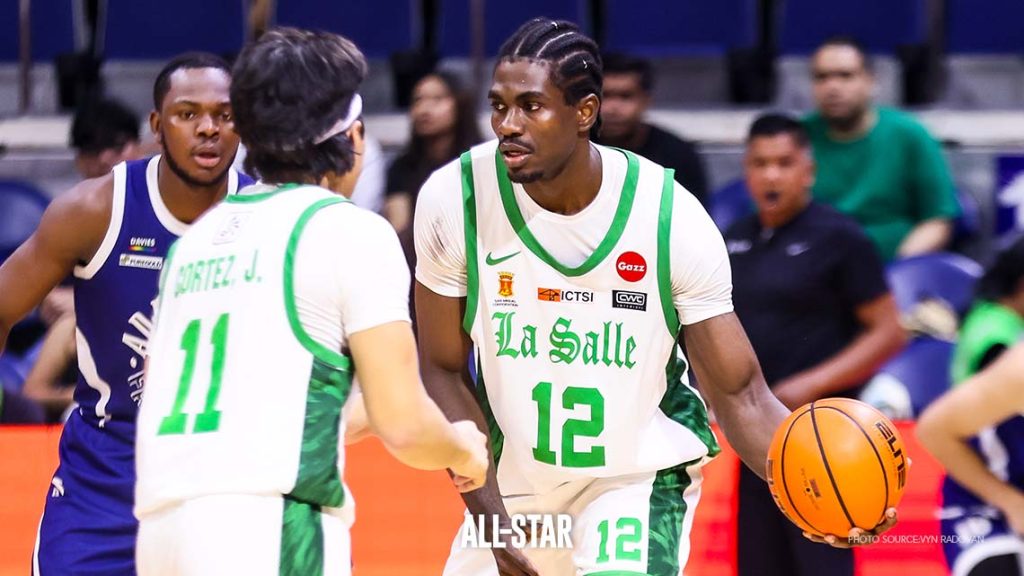
But as his condition failed to improve, the possibility of playing became increasingly uncertain. Once surgery became necessary, he knew that returning in Season 88 was no longer an option.
When the other knee gave out
His recovery took another unexpected turn when his other knee began developing problems.
While his surgically treated left knee was gradually improving, his right knee started experiencing persistent pain. What initially seemed like a result of compensating for the injured leg became another major obstacle.
Agunanne explained that the cartilage in his right knee had worn down, causing significant pain whenever he pivoted, jumped, or made movements required in basketball. He underwent additional treatments, including platelet rich plasma and hyaluronic acid injections, but the discomfort continued throughout the early months of the year.
For strength and conditioning coach Miguel Aytona, who helped oversee his rehabilitation program, the situation required constant adjustments.
Agunanne had to follow different programs as the medical staff worked around the condition of both knees. Progress was often slow, particularly because attempts to increase the intensity of his exercises sometimes caused the pain to flare up again.
“We were very conservative because every time he would try to progress, it would flare up and we couldn’t bring him into practice because it kept flaring up. So we were just patient with him.” Aytona explained.
The rehabilitation process became a collaborative effort involving the medical staff, strength and conditioning team, and coaching personnel. Rather than forcing a fixed timeline, they adjusted his program depending on how his body responded, emphasizing the importance of listening to his physical limits.
For Agunanne, however, being patient was easier said than done. As the new season approached, he watched his teammates prepare while he remained on the sidelines. He had not participated in regular practices, scrimmages, or team activities, and many of the players around him were new faces he had yet to play alongside.
There were moments when he felt like an outsider. While his teammates attended training camps, traveled for games, and prepared together, he remained in Taft, watching from a distance. He wanted to be part of those experiences again, especially when he saw the team going through the kind of intense practices he had always enjoyed.
Still, he recognized that the people around him were not rushing his return. His coaches and physical therapists regularly checked on his progress and reminded him to respect his limits. At times, he even found himself wishing they would put more pressure on him, believing that pushing harder might help him get back sooner.
Nobody’s rushing you
That mindset, however, sometimes worked against his recovery. Agunanne admitted that there were instances when he continued exercising despite experiencing pain beyond the threshold set by his physical therapists. He eventually learned that pushing through discomfort was not always a sign of progress.
“Nobody’s rushing you,” he recalled being told.
“If you keep going above your threshold before the right time, you’re not going to progress.”
Coach Topex also reminded him to take his time, even when the season was only weeks away. For Agunanne, who was eager to return, hearing that advice was difficult. But the support and patience of his coaches helped reinforce the importance of allowing his body to recover properly.
That patience was tested again in the months leading up to his return. By August, Agunanne was still unsure whether he would be ready to play. Although his condition began improving slightly, he knew that he had missed a significant amount of preparation. He had not played consistently, practiced with the team, or experienced the demands of a full basketball game in a long time.
Nevertheless, he refused to completely give up on the possibility of returning.
“One thing with me is, I told myself there’s no way I’m going to give up hope until my name is not on that list to actually play. There’s nothing else to do besides holding on to hope.”
In September, he finally completed the necessary clearance test and returned to a five-on-five scrimmage. The experience gave him renewed confidence, and he followed it up with a tune-up game the following week. However, the pain returned shortly after, raising concerns that his comeback might be interrupted once again.
The setback was particularly difficult because he feared returning only to be forced back onto the sidelines. After everything he had gone through, the thought of playing one game and then sitting out because of his knee was something he wanted to avoid.
Back on the court against FEU
But as his condition gradually improved, another opportunity came. Two days before La Salle’s game against FEU, Agunanne was informed that he would be cleared to play, just with restricted minutes. Originally expected to play only around 10 to 15 minutes, he eventually logged approximately 12 minutes on the court.
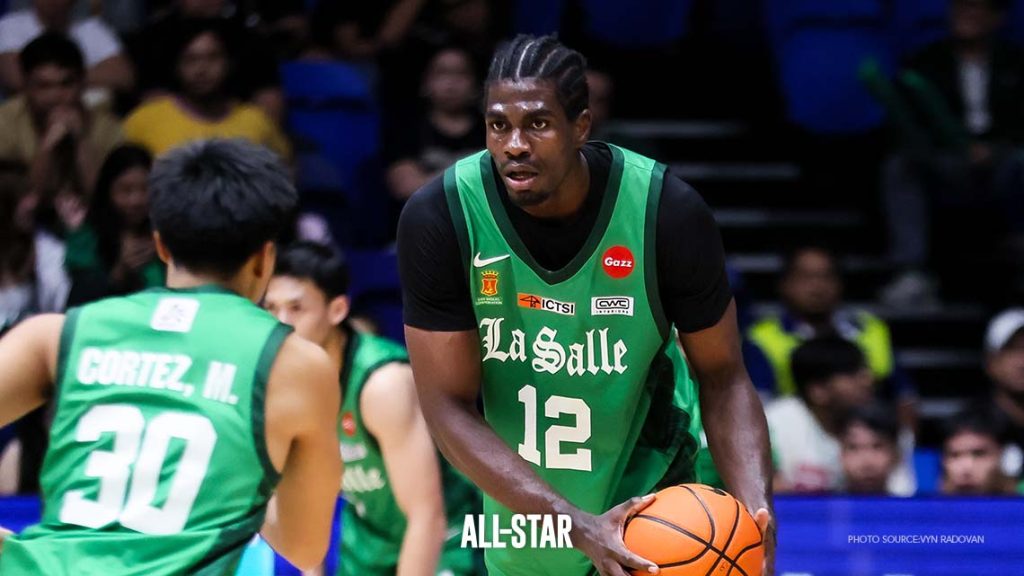
This time, his knee held up. Although he still felt some discomfort, it was not enough to prevent him from continuing practice. After nearly two years of rehabilitation and uncertainty, he was finally back playing competitive basketball. Since then, he has averaged 7.9 points, 6.8 rebounds, 0.5 assists, 0.7 steals, and 1.1 blocks. He has also logged 19 minutes and 46 seconds per game.
His return was not the result of one breakthrough exercise or a sudden solution. According to physical therapist Teddy Fabian, Agunanne’s program involved consistent strength training and coordination with the team’s conditioning staff. By the time he returned, the focus had shifted toward maintenance and ensuring that his body could continue handling the demands of the game.
“There were no magic exercises ever. So, it was just consistency,” Fabian said. “Maybe it paid off after all those months.”
Beyond the physical work, Agunanne also made changes to how he approached his overall health. Rather than following a restrictive diet, he focused on improving his nutrition, taking supplements, managing his meal timing, and making sure he ate enough to support his recovery. He also became more intentional about meeting his nutritional needs and getting proper sleep.
Sleep is the OG
For him, rest became just as important as the hours spent training and rehabilitating.
“Sleep is the OG of all recovery methods,” Agunanne said.
The experience also changed his understanding of what it means to work hard. Before his injury, Agunanne was accustomed to training throughout the day, believing that putting in more hours was the best way to improve. Recovery taught him that effort also meant knowing when to rest, how to fuel his body, and how to train intelligently.
“I know I’m a very hard worker. I could go morning, afternoon, evening, I’m working out, I’m doing stuff. I was putting in a lot of work, but I wasn’t really working smart.”
The emotional side of recovery was just as significant. While he received messages from people asking when he would return, not all of them were encouraging. Some reminded him that they were waiting for him to play again, while others made him feel as though he needed to hurry back.
Agunanne admitted that these messages sometimes felt more like pressure than support. At a time when he was already dealing with the frustration of being unable to play, the expectation to return could make the process even more difficult. He learned to focus on the people who encouraged him to take his time and get better.
Among the messages that stayed with him were those from members of the Lasallian community, including people he did not personally know. Their concern reminded him that he was not forgotten, even while he was away from the court.
Leaning on the brotherhood
His teammates also became an important source of support. Being separated from the group made him realize how much he valued the brotherhood they had built through basketball. During the more difficult moments of rehabilitation, they were among the people he could turn to when he needed someone to talk to.
“Just being out, it made me realize how much I actually missed that. I think it’s just really important, how we really actually need other people.”
Looking back, the injury gave him a different perspective on his place within the team and the importance of the people around him. It also taught him to understand his body better, as he spent nearly two years learning about the muscles, movements, and physical demands he had previously taken for granted.
Now back on the court, Agunanne knows that his recovery does not simply end with his return. The work continues through proper preparation, maintenance, and listening to his body. After experiencing how quickly progress can be interrupted, he is more aware of the importance of taking care of himself beyond the game.
His journey was marked by delayed returns, recurring pain, and moments when the season seemed just out of reach. Yet through the support of his teammates and medical staff, and a renewed understanding of how to approach his own recovery, he found his way back.
The biggest victory may not simply be playing again. It is knowing that the road back taught him how to work smarter, lean on others, and appreciate the opportunity to once again be part of the team.