
Inside Tom Chua’s Defensive Blueprint for the UP Fighting Maroons
A basketball team is often recognized for the players who score, the plays that decide close games, and the coaches who lead from the sidelines. But some of the most important work happens in the details that are easy to miss: a defensive rotation, a well-timed switch, a player knowing exactly where to position himself before the opposition can make its move. For the UP Fighting Maroons, much of that work comes from assistant coach Tom Chua, whose influence has helped shape the team’s identity on the defensive end.
His presence is rarely quiet. Whether during practice or in the middle of a game, he is constantly communicating, reminding players of their assignments, correcting their positioning, and demanding the physicality needed to disrupt an opponent. His voice has become part of the team’s rhythm, particularly when the pressure rises and players need someone to keep them focused on the next possession.
“He doesn’t stop talking. So, you get a steady reminder of what to do,” said Dikachi Ududo.
“When the game is so tense, sometimes you tend to forget or lose yourself. But he’s always talking, so you get reminded every time.”
That constant communication is central to Chua’s role. While his work may not always be reflected in the box score, players recognize how much preparation goes into making the team’s defense function. Jacob Bayla described him as someone who brings the team to life through the smaller details, particularly in breaking down opponents and understanding individual tendencies.
“When it comes to details and breaking down players and our defense, he’s the one who’s really bringing our team alive,” Bayla said.
“He’s a really good teacher. For the whole team and myself, he’s really like a spark plug for us.”
Every Degree of the Angle
Defense is where Chua’s influence is most evident. His work covers more than simply asking players to pressure the ball or contest shots. He teaches them how to read screens, recognize opposing tendencies, communicate with teammates, and understand how every defensive assignment connects to the next.
For Bayla, Chua’s specialty includes one-on-one defense, post defense, and ball-screen coverages. He also emphasizes the importance of identifying how opponents play, allowing the team to adjust its approach depending on the players and system it faces.
Gani Stevens sees that preparation as one of Chua’s biggest strengths. His defensive plans are not limited to one style of play, with the coach adjusting schemes according to the opponent and the demands of a particular matchup.
“He’s just coming up with the right game plans defensively against other teams,” Stevens said.
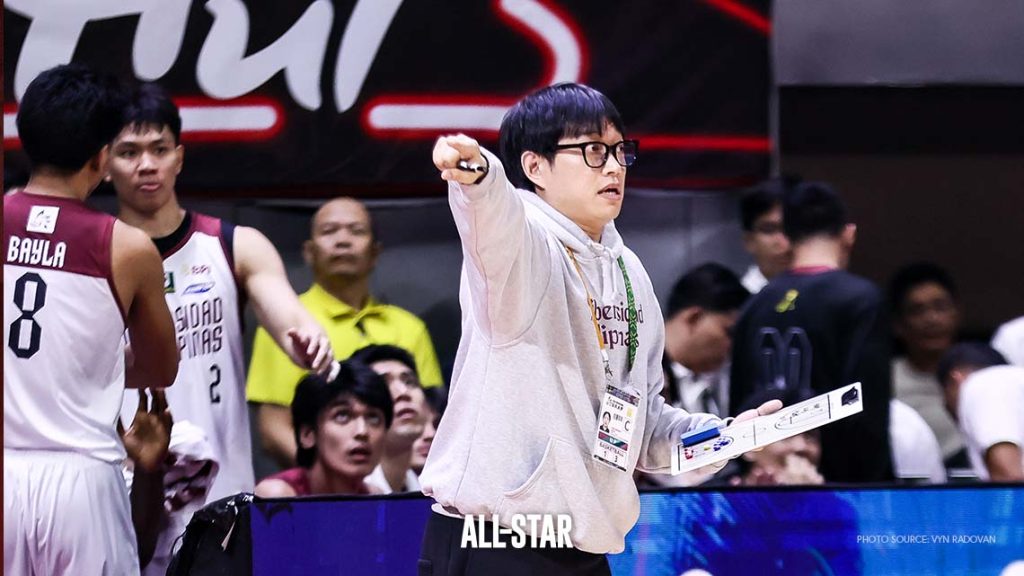
“He can switch it up depending on who we play, player to player. He’s just versatile.”
That attention to detail extends to the smallest movements on the court. Chua makes sure players understand not only which coverage to execute but also where to stand, which direction to face, and how high to position themselves when defending a ball screen. Even a slight difference in angle can affect how a possession unfolds, making precision an important part of his teaching.
“It’s so detailed that he tells you what direction to face, and you’re not going to miss a degree in the angle,” Ududo said.
“It has to be the same exact angle he wants.”
Practice Built Around Defense
The demands do not end with the technical side of the game. Chua expects the players to bring the same intensity to practice that they need during competition. Defensive drills often involve repeated one-on-one matchups, full-court pressure, and physical situations designed to prepare players for the challenges they will encounter against other teams.
Bayla recalled a practice in which the team spent more than half of its session working exclusively on defense. Those sessions have been part of the program since he joined UP, reinforcing the idea that defensive commitment is not something the team can switch on only when games become difficult.
Ududo described Chua’s practices as built around repeated, game-like situations that demand physicality. Stevens, meanwhile, pointed to the coach’s insistence on communication, energy, and effort, qualities he believes must come before players can fully develop the technical aspects of defending.
“Every practice he’s on us, yelling, getting on our butt, really harping on us to be physical and vocal,” Stevens said.
“He’s a good blend of energy and also technicality.”
That intensity can make practice intimidating, particularly when defensive drills are the first thing on the schedule. Bayla admitted that players sometimes feel nervous when they know they are about to face Chua’s full-court one-on-one exercises. But the discomfort is part of what makes the sessions valuable, forcing players to take responsibility for their individual defense before learning how to function within the team’s larger system.
Chua’s approach also means players are expected to respond when they fall short. He can become visibly frustrated when defensive assignments are missed, sometimes pulling a player out of a drill and making him wait for another opportunity to return. For the players, however, those corrections are understood as part of the coach’s responsibility to demand more from them.
“He gets mad at us. I mean, that’s what a coach is supposed to do,” Bayla said.
“If he’s not correcting us and teaching us, then he doesn’t really care.”
Passion for the UP Community
That passion is also connected to what UP basketball represents. Bayla sees Chua’s commitment not only in the way he coaches but in how much he wants the team to succeed for the university and its community. His energy on the sidelines carries into practice, creating an intensity that players are encouraged to adopt themselves.
For Bayla, that has become particularly meaningful in his own role. As someone expected to take on difficult defensive assignments and guard opposing teams’ best players, he has learned to embrace the responsibility without waiting for instructions from the bench.
“He has a lot of passion for the game and especially for the UP community. He doesn’t want to lose,” Bayla said.
“The way that the culture is and how the UP program is based, I just do it on my own.”
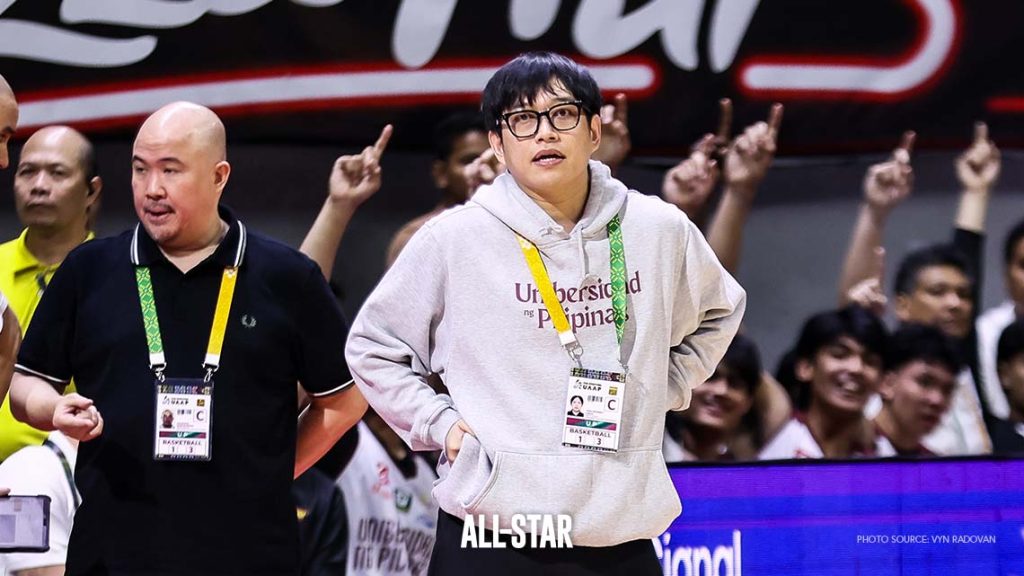
Stevens also highlighted how Chua helps players develop the habits that make a defensive unit work. Footwork, communication, rotations, and the willingness to help a teammate are all part of the process. While the technical side matters, he believes Chua first wants players to show that they care enough to compete and bring energy to every possession.
“Playing defense is really about having the heart and energy,” Stevens said.
“As long as Coach Tom sees you trying, sees you wanting to be physical, wanting to show that pride and energy, that’ll take you a long way.”
Part of a Shared System
For head coach Goldwin Monteverde, Chua’s contribution is part of the collective work that goes into preparing UP. Since joining the program, Chua has been particularly important in implementing the team’s defensive system, helping establish its principles and build them from the ground up throughout the season.
“More of implementing the defensive system, how we build from scratch going towards the year,” Monteverde said.
Monteverde also emphasized that the coaching staff’s contributions are shared. While Chua takes a leading role on defense, the entire staff works together, combining its knowledge and experience according to what is best for the team.
“Overall, actually, sa amin naman, lahat ng coaches would have contribution in either offense or defense. It’s all shared knowledge for everybody,” Monteverde said.
That collective approach does not diminish Chua’s importance. Instead, it shows how his defensive work fits into a larger program built around preparation, discipline, and trust. His instructions may be heard most clearly during defensive possessions, but the habits he teaches are carried by players long after practice ends.
For a team that wants to compete at the highest level, defense cannot depend on one player or one moment of effort. It requires five players moving together, communicating, anticipating, and trusting that everyone understands their assignment. Chua’s job is to make those expectations clear, then repeat them until they become second nature.
His voice may be one of the loudest sounds coming from the UP bench, but its impact is measured in what the players do when the game is on the line. Behind every pressure, rotation, and defensive adjustment is a coach who continues to demand attention to the details. And while the spotlight often belongs to the players who finish the possession, Chua helps make sure the work begins long before the ball reaches them.