Mom Said No to Taekwondo, Yes to Fencing. Meet Nana
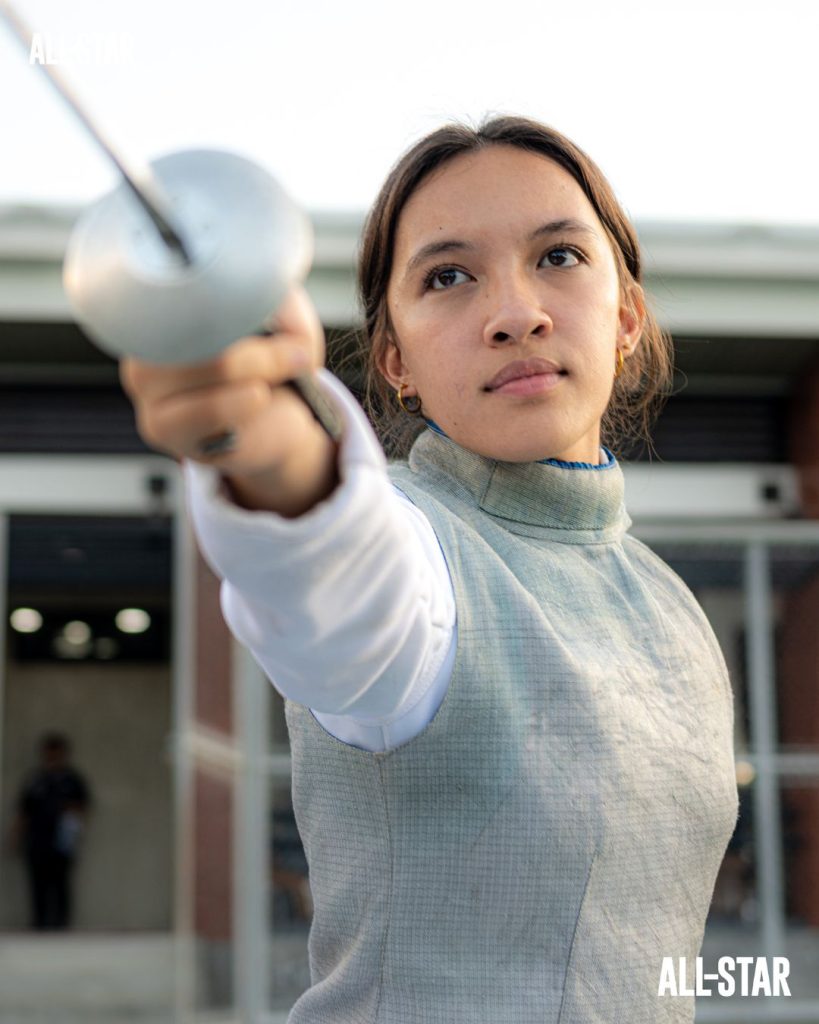
UP Fencing Team’s Marina Andrea “Nana” Carbonell didn’t have fencing as a first choice.
Like many kids trying different sports, she initially had something else in mind. But sometimes the path you don’t expect ends up becoming the one that defines you.
Carbonell first picked up the sport when she was nine years old at Multiple Intelligence International School, where fencing was offered as a club activity. The decision to try it wasn’t entirely hers at first.
“I originally wanted to join a taekwondo club, but then my mom said no. She said it’s a contact sport. Like okay, I’ll just try fencing.”
That suggestion ended up changing everything.
“So I did. And I really fell in love with the sport.”
From the very beginning, fencing felt like something that fit her personality.
“It’s an individual sport. Me kasi, parang medyo introverted ako. So gusto ko na nagmatch talaga sa akin yung pagka-individualistic ng sport.”
Unlike team sports where noise and chaos can sometimes take over, fencing offered her something different: focus. On the piste, it’s just you, your opponent, and your thoughts.
“I get overwhelmed by a lot of external noise. So gusto ko yung parang for me, I play better when I’m centered on myself.”
Fencing is Like ‘Physical Chess’
Before discovering fencing, Carbonell had already tried several sports growing up in Palawan.
“I grew up playing tennis, swimming,” she said.
But it was fencing’s dynamic nature that truly hooked her.
“It’s like physical chess,” she explained.
In fencing, every move requires both strategy and control. While facing an opponent, a fencer also has to manage the constant stream of thoughts running through their mind.
“You’re also fighting a bunch of thoughts by yourself, because again, you’re the only one standing on the piste.”
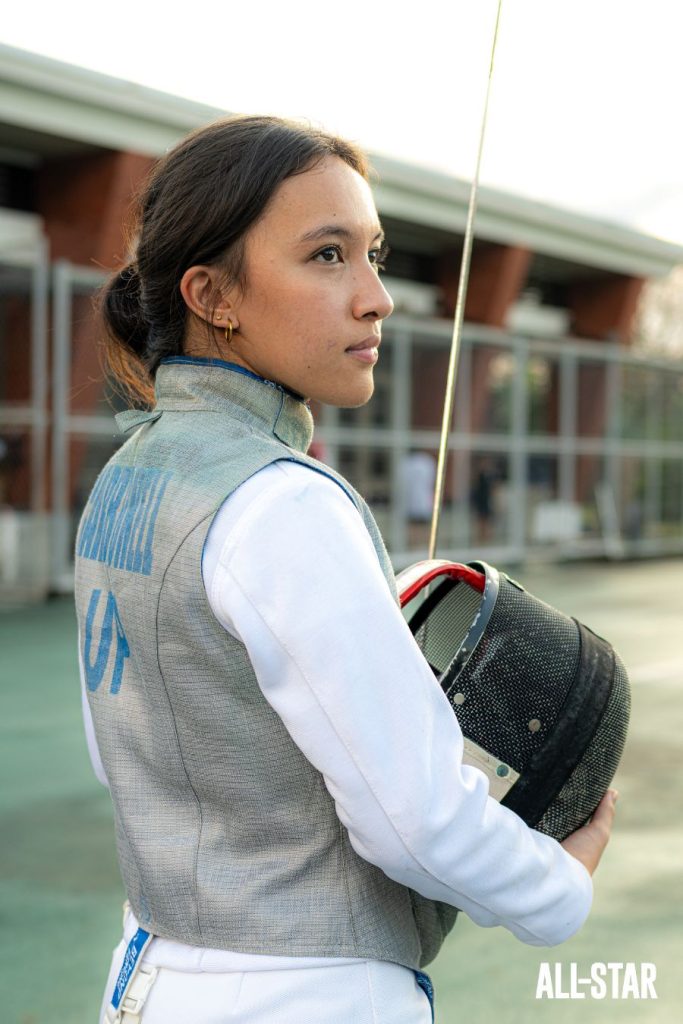
Like many athletes who grow up in their sport, Carbonell’s journey hasn’t been smooth the entire way.
“Growing up with the sport, and balancing it with school, there are times it becomes hard. I do experience burnout.”
Success Doesn’t Always Come in Dramatic Victories
There were moments where the progress felt slow, and moments where she questioned whether she was improving at all.
“Sometimes I feel like I’m stuck,”
A feeling many student-athletes know all too well. But fencing never really felt like a burden to her.
In her early years, training was something she shared with people who felt more like family than teammates.
“In my old team, my teammates were my best friends. So it didn’t really feel like training. Parang naglalaro lang kami.”
That sense of community stayed with her as she continued competing and eventually bringing her to collegiate fencing.
Even now, she still tries to reconnect with that same feeling.
“I go back to that idea of being part of a team and sharing that love for fencing,” she said.
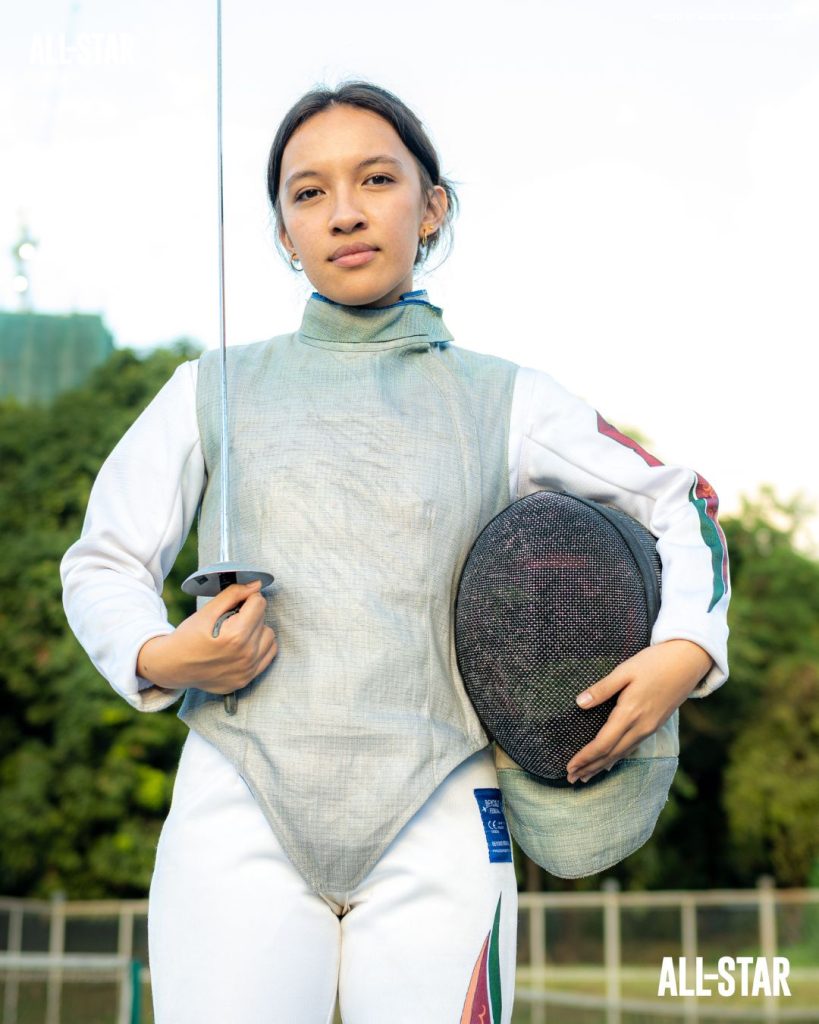
One of the biggest lessons she’s learned through the sport is that success doesn’t always come in dramatic victories.
Carbonell admits she hasn’t always stood on the podium in major competitions.
“There are always fencers who place higher than me,” she said.
Instead, she found strength in something quieter: consistency.
“My whole motto in fencing is consistency is key. I might not always be number one, but I’m always consistent in the rankings.”
For her, progress isn’t about sudden peaks or dramatic breakthroughs. It’s about steady growth.
“Hindi nagpe-peak, hindi nag-crash down. Just a steady upward motion.”
Every competition, whether she wins or loses, becomes another opportunity to learn.
“Win or lose, I still gain something from each competition. So I bring that to the next one.”
Fencing Also Demands Mental Stability
As she and her teammates prepare for the upcoming UAAP season, the team has taken a more structured approach to training. A new program designed by their coach focuses not just on physical conditioning but also on something equally important: mental strength.
“Earlier in the program we focused on strength and conditioning. Now we’re focusing more on mental stability.”
For fencers, staying calm under pressure can make the difference between scoring a point or losing one.
“We’re working on composure, breathing, and how to stay calm on the piste,” she said.
Because at the highest level, fencing isn’t just about physical ability.
“More than the physical aspect, fencing is really about mental health and well-being. That’s the finishing factor.”
As the new season approaches, Carbonell finds herself reflecting on how far she and her teammates have come.
She describes the upcoming season as a full circle moment. It’s not just about the competition ahead, but the memories that come with it.
“My teammates and I were talking about it. There are a lot of recurring events. Everything feels familiar.”
After years of competing together, they’re now approaching their final seasons in college — something that makes every moment on the piste feel more meaningful.
“We’ve been competing in the UAAP for so long. Now that we’re approaching our last years in the team, it feels nostalgic.”
More than anything, she and her teammates are simply excited to return to competition.
“We just can’t wait to compete again.”

For more exclusive stories, click here.