Grab Your Paddle: Philippine Pickleball Heads to Amateur Nationals
A few years ago, pickleball in the Philippines didn’t look anything like it does today. There were no packed tournaments, no hundreds of clubs across the country, and certainly no national competition structure.
It started much simpler: one net, a few paddles, and a handful of curious players.
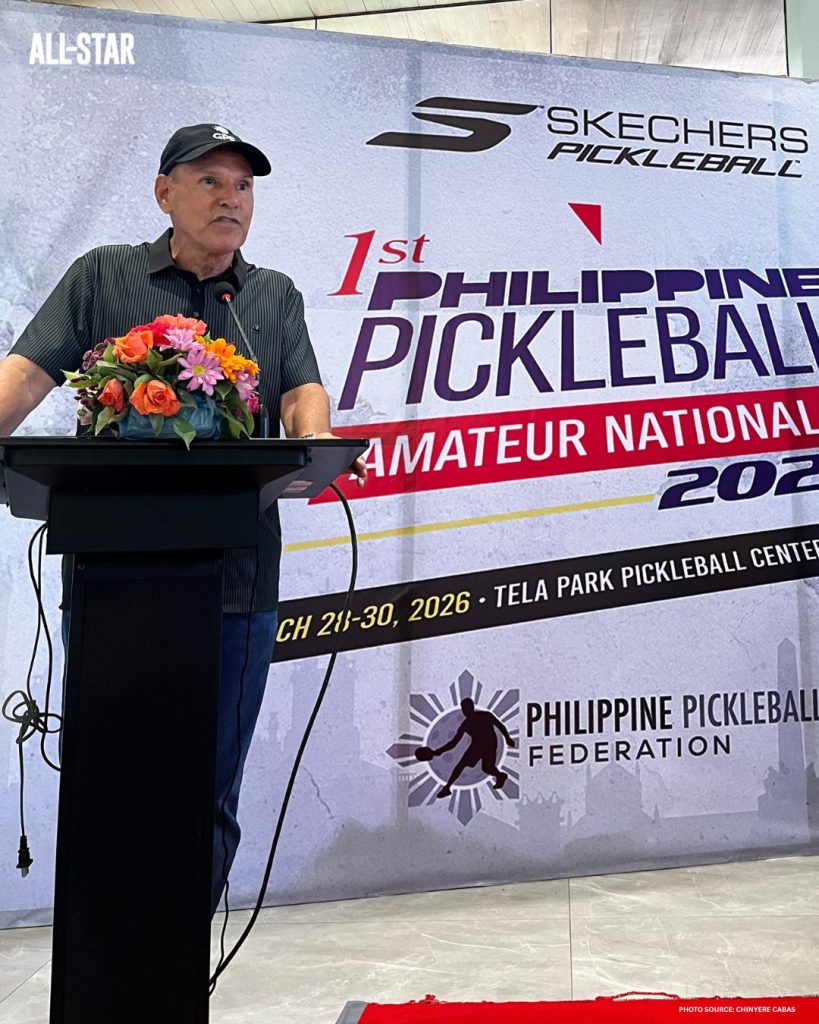
Michael Ray “Mike” Johnson, president of the Philippine Pickleball Federation, still remembers those early days clearly.
“We had one net and a few donated paddles from some friends in the States, and we set out about trying this sport.”
Back then, pickleball wasn’t just unfamiliar. It was something people didn’t quite understand.
“Everyone looked at us kind of strangely… What is this? How does it work?”
One weekend, Johnson and his friends set up a net along a street in Ortigas Center just to try the game out. They were still figuring out the rules themselves.
“We didn’t even know how to play back in those days. People started stopping and watching us. And when they stopped to watch, I would invite them to play.”
From Street Pickleball to Nationals
What began as curiosity quickly turned into a small community.
“Before you know it, we had six, eight players and we set up two courts,” Johnson said.
“Over the weeks and months, we ended up setting up four courts.”
Today, that same spirit lives on in what players call Street Pickleball in Ortigas, where weekend games still welcome first-timers and returning players alike.
But if pickleball was going to grow beyond casual matches, it needed visibility. Johnson and the early advocates began promoting the sport online and connecting with the international pickleball community.

ALSO READ:
“We set up a website. We set up a Facebook page. I figured to get the sport off the ground, we needed to have a little bit of media exposure.”
Slowly, the sport began gaining traction.
“Now when you say pickleball, no one asks what it is. People know what it is today.”
Part of pickleball’s appeal is how easy it is to pick up. The court is roughly the size of a badminton court, the equipment is simple, and games can be played almost anywhere.
“Pickleball can be played on any flat surface. Even in basketball courts or multi-purpose courts.”

That accessibility helped the sport spread quickly across communities. Today, the Philippine Pickleball Federation recognizes more than 330 clubs and over 900 courts nationwide, with new groups continuing to emerge.
One of the early milestones for the sport came in 2019, when the Philippine Architects Pickleball Association organized the country’s first tournament, marking the transition from casual play to organized competition.
Now, the federation is preparing for an even bigger step forward: the Philippine Pickleball Amateur Nationals, scheduled for March 28 to 30 at the Tela Park Pickleball Center in Las Piñas.
Philippine Pickleball Amateur Nationals
The Philippine Pickleball Amateur Nationals will gather players from different regions and serve as a national stage for amateur competitors.
The event is designed to be inclusive, reflecting the spirit of the sport itself. Pickleball competitions are typically divided by both skill level and age group, allowing players of similar abilities to compete against each other.
In tournaments, players are categorized using a skill-rating system, with amateurs generally falling below the 5.0 rating level.
Divisions may include categories such as 19+, 35+, and 50+, and competitions can be played in men’s doubles, women’s doubles, mixed doubles, and singles.
But before stepping onto the court, players first need to register.
You Can Register at Philippine Pickleball Players Registry
The Philippine Pickleball Federation recently launched the Philippine Pickleball Players Registry, an online platform that serves as the official national database for players.
Registration through the registry provides players with a unique identification number that allows their match history, rankings, and tournament participation to be tracked.
Once registered, players can sign up for sanctioned tournaments like the Amateur Nationals. While players are encouraged to belong to a club, joining one is simple—often as easy as showing up to play.
“Pickleballers are very, very friendly and warm. If you don’t have equipment, they’ll lend you a paddle, lend you balls, teach you, and have you play.”
Clubs also play a role in verifying a player’s skill level during registration, ensuring fair competition across different divisions.
For many participants, the Amateur Nationals will be more than just another tournament. Select winners will earn the opportunity to represent the Philippines in the World Amateur Championships in Singapore, giving local players a chance to compete on the international stage.
The federation hopes the event will become a cornerstone of the sport’s development in the country — a pathway for players who start casually in local clubs to eventually compete at higher levels.
Despite the new structures and competitions, the heart of pickleball in the Philippines remains unchanged: community.
“It’s a sport that’s inclusive. Anyone can play, from age 8 to 80, male, female.”
And for many players across the country, the journey into the sport still begins the same way it did years ago—someone stopping by a court, watching for a few minutes, and deciding to give it a try.
Because in the Philippines, pickleball didn’t grow from massive arenas or professional leagues.
It grew from curiosity, community, and a simple invitation.