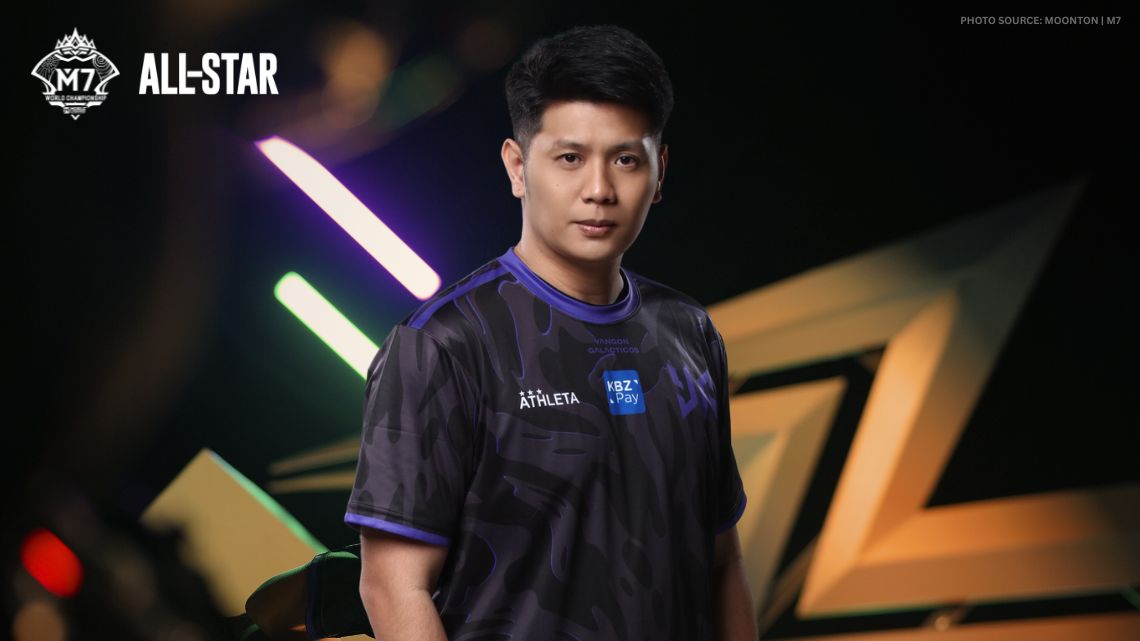
Myanmar is Not An Easy Region, Says Yangon Galacticos’ Filipino Coach
The first real gasp of the M7 World Championship came when Myanmar’s Yangon Galacticos stunned home favorites ONIC Esports 1-0 on the second day of the Swiss Stage.
Orchestrating the upset was Yangon’s Filipino head coach Mark Neil Luz, better known as Coach Marvz.
But this is not a story that begins with ambition. It begins, more honestly, with exhaustion.
“Natalo kami noon,” (“We lost before,”) says Coach Marvs, recalling their failed M5 qualifiers in Myanmar. The entire gig was conducted via Discord because he was still in the Philippines. “So sabi ko tama na ako sa esports.” (“So I said I’m done with esports.”)
That sentence—I’m done—is one esports rarely hears out loud. It is the whisper after losses pile up and life outside the game begins tapping insistently on the shoulder. Coach Marvs tried to listen. He rested. He tried other things. His wife wanted him to go corporate, which is what happens when dreams start missing rent.
But esports, like a bad habit or a good ghost, refused to leave him alone.
“Nandoon pa rin yung dugo ng esports,” he says. “Ang hirap takbuhan.”
(“There’s still esports running in my blood. It’s not something you can just walk away from.”)
Myanmar is not an easy region.
It’s easy to lower your guard when you think of Myanmar, a region without MPL.
But Myanmar is not an easy region, despite how little it’s talked about. In fact, all the Filipinos who played or worked in esports there have the same sentiment about it.
“Mahihirap ang kalaban sa Myanmar,” Coach Marvs insists. “Kailangan talaga pukpukan ang laro.”
(“The opponents are tough in Myanmar. You really have to go to war every game.”)
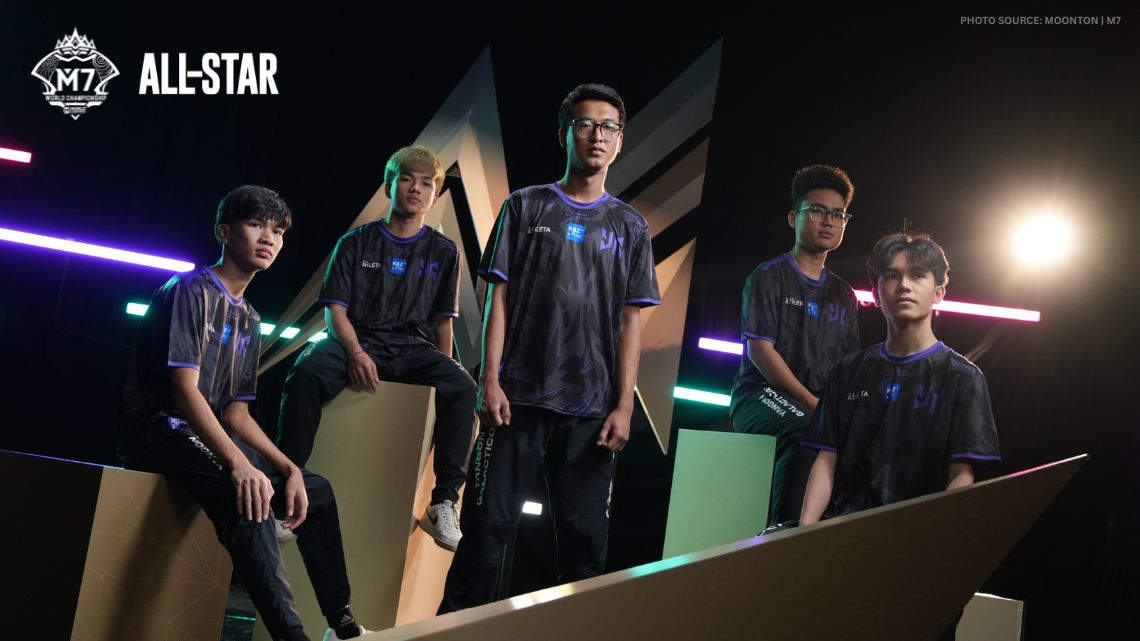
They fought their way through. They earned their M-Series slot. And when they fell short at qualifying for the Esports World Cup and the Games of the Future, the team reflected.
They watched other Myanmar teams stumble on global stages. They noticed something uncomfortable.
“They realized we are fading away from the scene,” said Coach Marvz.
So they decided to do something about it.
“Gusto nilang irepresent ang bansa nila.” (“They want to represent their nation.”
Not for money. Not for clout. For belief.
A region that refuses to be small
Coach Marvs compared esports in the Philippines and in Myanmar, and shared a stark difference. In Myanmar, whenever athletes compete abroad, all their family will send them off at the airport, offering full support and no hesitation.
“Kung ako iyon,” he says, “iiyakan ko talaga.” (“If that happened to me, I would really cry.”)
Myanmar esports, from the outside, feels invisible. From the inside, it’s loud with effort. Coach Marvz described how there are no “small” tournaments in Myanmar. Even fan matches are supported with full production, complete with backstage, singers, and a showcase of a band’s OST.
“Fan match pa lang, may production na.” (“Even the fan matches have full production.”)
Events have original music. Bands. Singers. Intent. The message is consistent: We belong here.
“Sana bigyan kami ng pansin,” Coach Marvs says plainly. “Kaya namin.” (“I hope the world notices us. We are capable.”)
“Sana ibalik ng MOONTON ang MPL o bigyan kami ng pansin na kaya namin, MOONTON. Kaya namin. Hindi ka namin ipapahiya.
(“I hope MOONTON brings back MPL or realize that we can do it. MOONTON, we are capable. We will not let you down.)
The upset wasn’t a miracle.
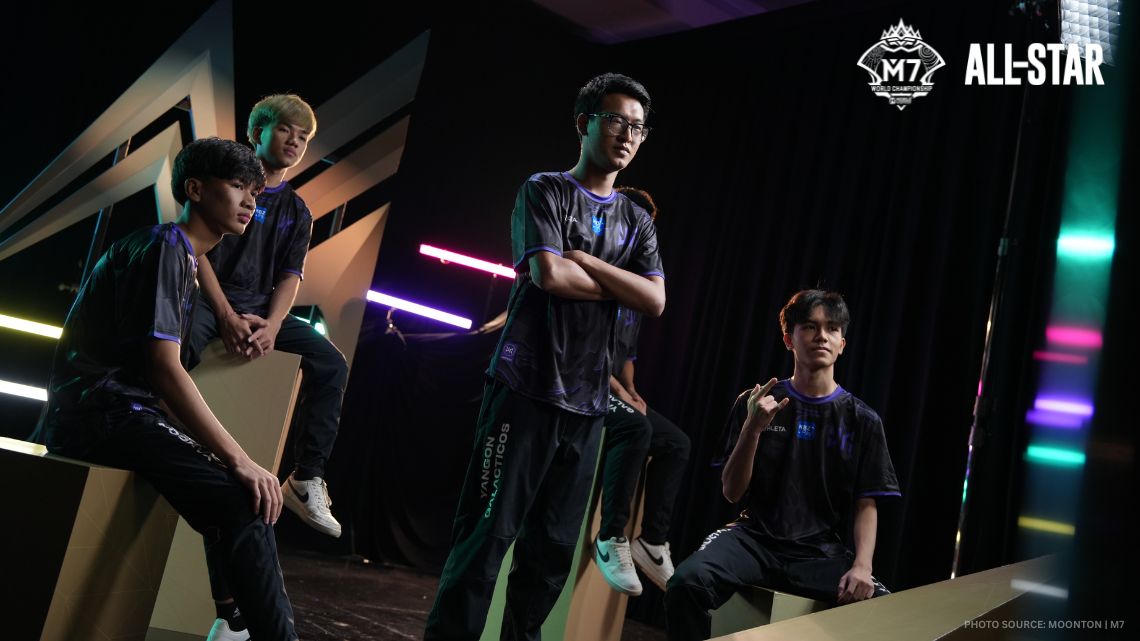
When Yangon Galacticos beat ONIC Esports at M7, it looked like a shock.
But it was neither accident nor miracle.
It was preparation disguised as surprise, patience mistaken for passivity, and belief that was sharpened over months of being overlooked. It was the long work done by players raised to be humble but taught to be fearless, and a Filipino coach who almost chose a different life, who boarded a plane with more doubt than certainty, but stayed long enough to matter.
“These kids are not driven by money or the prize pool. What drives them is different. They want to represent their country,” said Coach Marvz.
The upset only felt sudden to those who weren’t paying attention.
For more exclusive esports stories, click here.