How Early Years of Frustration turned Lastimosa Into a Winner
A Sleepless Night Before Game 7
It was one of those extraordinary nights.
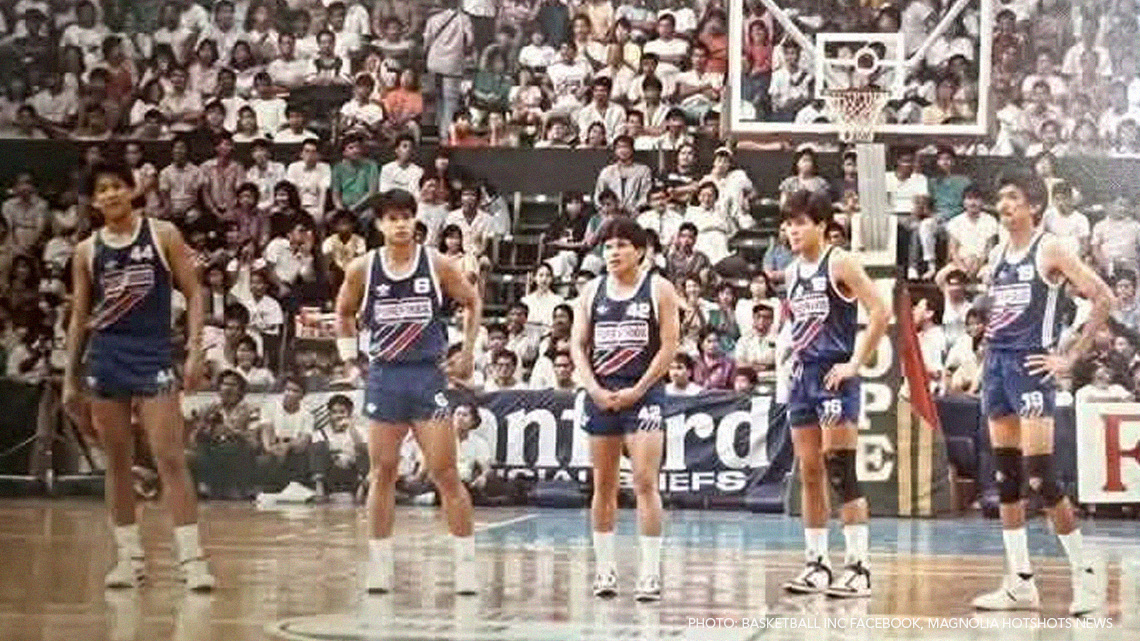
Jojo Lastimosa, then the young team captain of the Purefoods Hotdogs, couldn’t sleep. His team had just come off a 128–117 victory over the Presto Tivolis in Game 6, tying their best-of-seven series at three games apiece and forcing a winner-take-all showdown for the 1990 All-Filipino crown.
The win was the most decisive scored by the Hotdogs, a young and talented unit composed of the PBA’s glamour boys at the time. The team was led by Lastimosa, now the acknowledged skipper, and fellow former national team standouts Alvin Patrimonio, Jerry Codiñera, Nelson Asaytono, Glenn Capacio, Dindo Pumaren, and Jack Tanuan, along with reliable guard Al Solis.
Momentum, Pressure, and a Reputation to Shed
Game 6 proved pivotal, as it could turn out to be a momentum shift for coach Baby Dalupan and his troops. Throughout the series, the Hotdogs had established a reputation as chokers, squandering big leads and losing to the more experienced Tivolis down the stretch in all three of their losses prior to that rubber match.
For Purefoods, this could be a golden opportunity to finally end years of misery, a chance to stop being the perennial bridesmaid and celebrate at last.
Teeming with talent on almost all fronts, Purefoods had been in the Finals four times in just its third season in the league. Yet the Ayala franchise, then the team’s owners, repeatedly found itself crumbling under pressure.
The odds were clearly on Purefoods’ side, especially with Alan Caidic, Presto’s acknowledged top gun, sidelined by a fractured left hand.
But for some reason, Lastimosa couldn’t get a good night’s sleep on September 3, 1990.
A Premonition Realized
“Naalala ko yun even to this day,” said Lastimosa. “During that time, on the eve of our final game, hindi talaga ako makatulog. I was so anxious going into Game 7. Hindi ako makatulog, hindi ako mapakali sa bahay. Excitement. Halu-halo yung emotions ko.”
It turned out to be a premonition. Lastimosa and the Hotdogs lost badly, 96–115, adding the 1990 All-Filipino title to a growing list of heartaches suffered by a talent-laden yet underachieving team.
“We lost badly—and Arnie Tuadles played a brilliant, all-around game. Nagulat kaming lahat,” said Lastimosa.
Capacio, the team’s best defender, had been assigned to shadow Caidic but struggled to adjust against Tuadles.
“Naiba kasi yung dynamic because when you were defending Alan, dinidepensahan mo siya sa perimeter. Si Tuadles, iba naman. Popostehan ka niya,” said Capacio. “We tried to make adjustments na yung malalaki na yung dumidepensa, like Nelson Asaytono and even Alvin. Ang ginagawa naman niya, tinitirahan sa labas or galing sa drive. Magaling talaga si Tuadles.”
Tuadles, the 1979 Rookie of the Year, turned back the hands of time and poured in 33 points to lead the Tivolis to victory.
Questioning Identity and Character
Following the loss, Lastimosa began questioning himself and the team’s character, knowing how good they were individually but unable to deliver together.
“I’m beginning to question myself how good we are as a team,” he said. “Four times we were in the Finals in three seasons, yet we couldn’t win one.”
The Birth of a Glamour Franchise
Purefoods was among the most celebrated franchises ever to enter the PBA.
In 1988, they acquired the old Tanduay franchise of the Elizalde family, inheriting a team that had won three championships. That roster included then three-time MVP Ramon Fernandez, former MVP Freddie Hubalde, fellow ex-Crispa player Padim Israel, JB Yango, Willie Generalao, and Onchie dela Cruz, among others.
From Shell, the Hotdogs acquired Solis and Totoy Marquez.
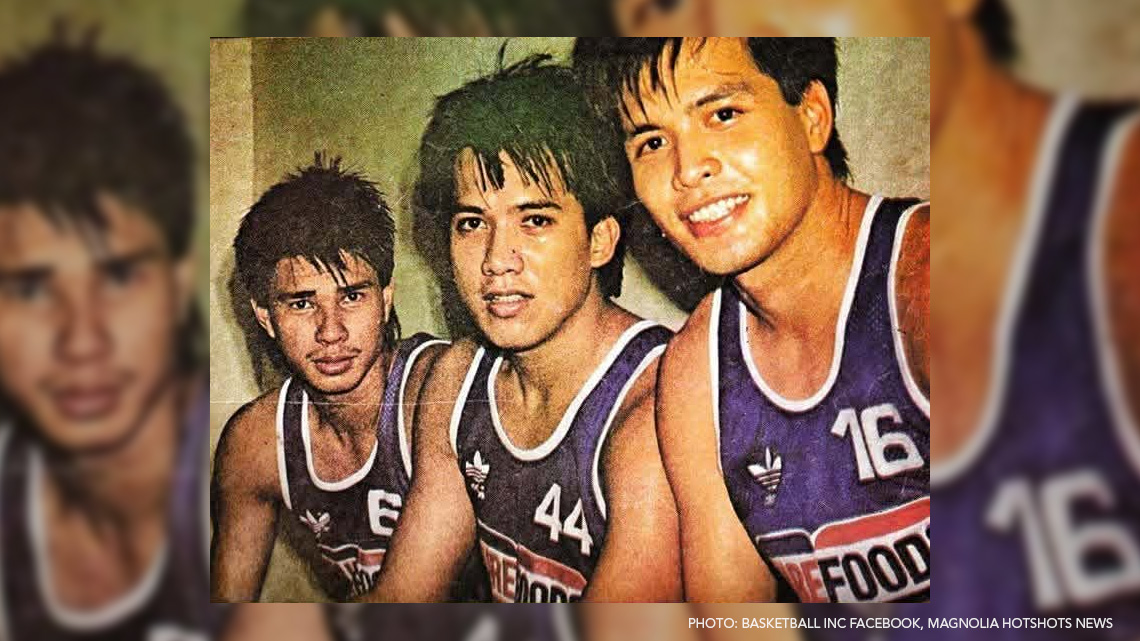
Purefoods also benefited from a unique concession at the time, when the PBA allowed the team to directly elevate top amateur talents such as Lastimosa, Codiñera, Capacio, and later Patrimonio, who joined midway through the season after fulfilling contractual obligations with corporate rival Swift.
They became instant celebrities, packing practice venues at the old Loyola Gym in Ateneo and drawing huge crowds at the ULTRA, now known as the Philsports Arena.
KEEP UP WITH ALL-STAR’S PBA STORIES HERE.
Talent, Turmoil, and Coaching Tensions
By their second season, Purefoods became even more formidable.
A turbulent 1988 season forced management to trade Fernandez, who had been benched following suspicions of game-fixing during the 1988 All-Filipino Finals against Añejo, for Abet Guidaben before the third conference.
Guidaben lasted only one conference before being traded to Alaska prior to the 1989 season.
Even with additions such as Asaytono, Pumaren, Pido Jarencio, and veterans Naning Valenciano, Ponky Alolor, Bernie Fabiosa, and Bai Cristobal, Purefoods still couldn’t win the big one.
The players, especially the young talents, struggled to adjust to Dalupan’s coaching philosophy.
“Nakakatulog na nga sa practice eh, kasi may edad na kasi talaga,” said Capacio.
“Ang coaching style niya kasi, ang tawag namin diyan yung ‘wido,’” added Solis. “Parang pakiramdaman.”
Breaking Away and Breaking Through
Frustrated by the lack of structure and dwindling minutes, Lastimosa pushed for a trade.
“Halos wala kaming naging coach na systematic talaga sa first three seasons,” he said. “Had we been given that opportunity, malamang we had better chances of winning those championships.”
Finally, in the season-ending conference of 1990, Purefoods won its first title behind imports Darren Queenan and Rob Paul Rose, and Finals hero Solis, whose three-pointer sealed a 99–98 win over Alaska.
By season’s end, Lastimosa was traded to Alaska for Boy Cabahug.
From Doubt to Dynasty
The move proved pivotal. By 1991, Lastimosa and Patrimonio were battling for league MVP honors.
That season, Patrimonio led Purefoods to its first All-Filipino title, while Lastimosa delivered Alaska’s first of many championships.
Lastimosa became a cornerstone of Alaska’s dynasty, highlighted by a grand slam in 1996. He retired as a 10-time PBA champion.
The heartbreak of 1990 shaped him into a tougher, more reliable closer.
“Mr. Fourth Quarter Man”
Though initially resistant to the Triangle Offense introduced by Tim Cone, Lastimosa eventually bought into the system.
“Ayaw ko talaga sundin yun noong umpisa,” he said, “but when Johnny Abarrientos, Bong Hawkins, Jeff Cariaso, and Kenneth Duremdes joined the team, that’s when I started to buy in.”
At Alaska’s peak, Lastimosa earned the moniker “Mr. Fourth Quarter Man.”
One Last Stand for the Flag
Lastimosa and Patrimonio co-captained the 1998 Centennial Team.
While Patrimonio found redemption against Japan in the William Jones Cup, Lastimosa saved his finest moment for the Asian Games bronze medal match against Kazakhstan.
“I played angry,” he said. “I just wanted to help the team.”
Legacy Beyond the Court
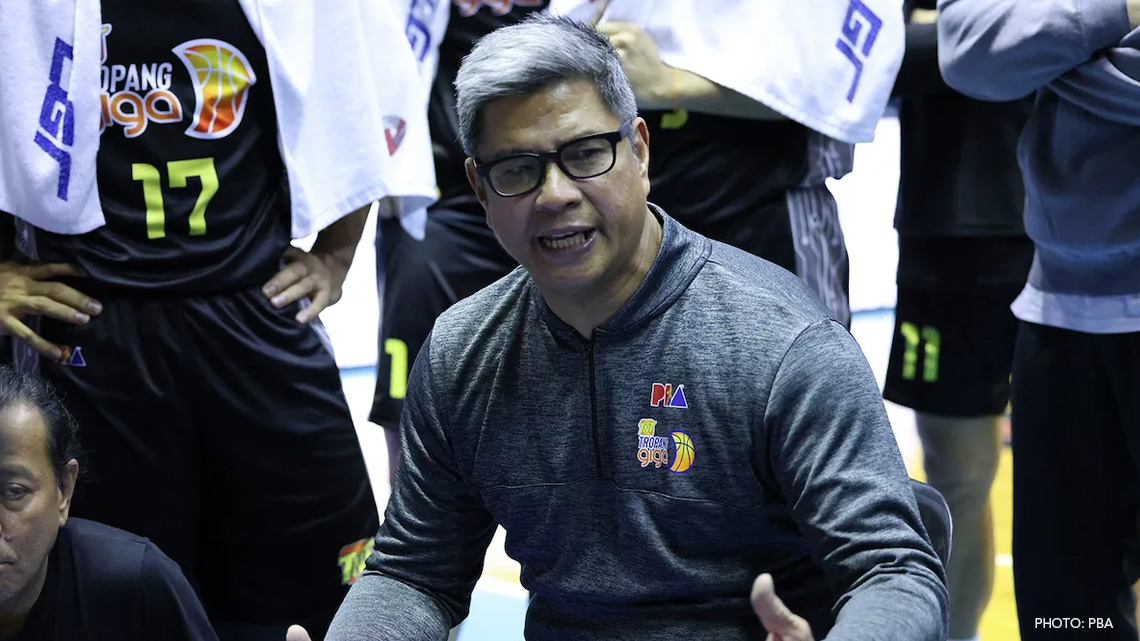
That winning mentality carried into Lastimosa’s post-playing career. In the 2022–23 Governors’ Cup, he led TNT Tropang Giga to a championship against Barangay Ginebra, coached by his former mentor, Cone.
Lastimosa is widely expected to join Patrimonio in the PBA Hall of Fame.
Patrimonio, the face of the 1990s, retired with four MVPs, six championships, and over 15,000 career points.
Today, the old Purefoods franchise continues to search for sustained success, navigating a transition under coach LA Tenorio after years of glory under Cone.