
For the Pilipinas Game to Keep Growing
The Pilipinas Aguilas didn’t arrive in Thailand like a team that had it all figured out.
There were questions before the first game of the 3×3 Basketball Thailand International Tournament even tipped.
Not about talent, but about logistics. About support. About whether this was sustainable, or just another short-lived attempt in a space that has historically asked women’s basketball players in the Philippines to give more than they ever get back.
And then, somewhere in the middle of it all, these inspirational women stopped looking like a team trying to survive the experience and started looking like one that belonged in it.
Not all at once. Not loudly. But in small, stubborn ways.
For Mikka Cacho, it didn’t hit during a big shot or a final buzzer. It came when she wasn’t even on the floor.
“When they won two games without me, that’s when it really hit me. We’re actually doing this,” she told ALL-STAR Magazine in an exclusive interview.
She was dealing with a knee that hadn’t fully cooperated. The kind of injury that doesn’t fully stop you, but doesn’t let you forget it’s there either. In a format like 3×3, where there are no real breaks and no deep benches to hide behind, that matters.
The Aguilas kept winning anyway.
“I knew it wasn’t easy for them, especially with no subs and tougher opponents waiting in the semis.”
So Mikka played. Not because she was fully ready, but because the moment demanded it.
“My knee was still hurting, but I decided to play anyway so they could rest, even just a little.”
That decision, quiet as it sounds, says a lot about what this team is built on. Not depth charts. Not infrastructure. But people who choose to give more than what’s comfortable, because there isn’t another option.
“We even struggled to find a sponsor for the tournament. And now we were in Thailand, actually competing. At that moment, I told myself, “I might never get this chance again, so I gave it everything I had.”
That sense of urgency ran through the entire group.
Camille Malagar didn’t arrive in Thailand as a finished 3×3 player. Far from it.
“To be honest, when I first started playing 3×3 it was kind of a mess.”
There’s a certain honesty in that that you don’t always hear from athletes in the middle of a championship run. But it’s also what makes the Aguilas story feel grounded. This isn’t a group pretending the path was smooth. It wasn’t.
What Thailand gave her wasn’t instant mastery. It gave her something more important.
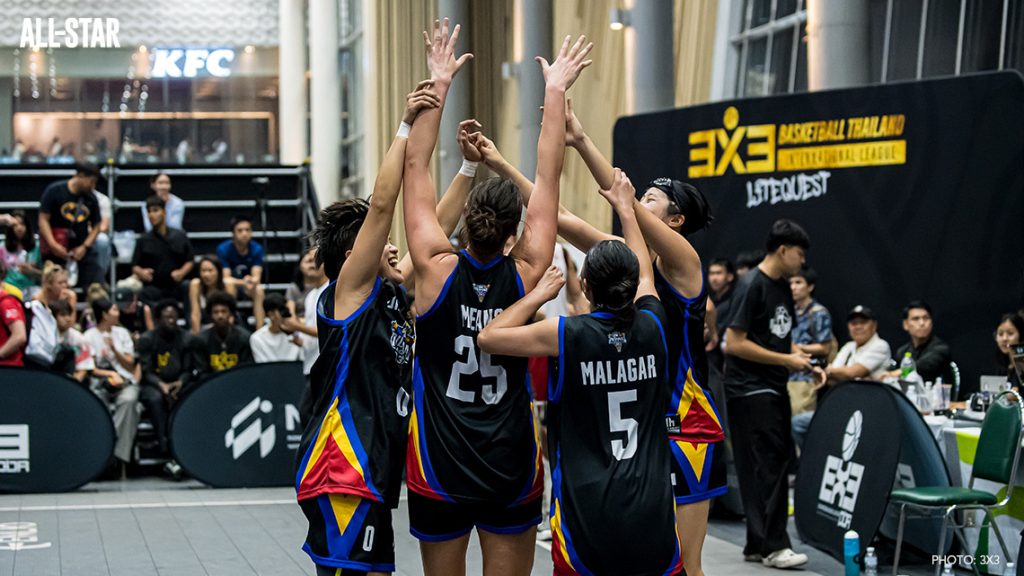
“My experience in Thailand taught me that I can push myself a lot further than I ever imagined, both physically and mentally.”
The adjustment from 5×5 to 3×3 is unforgiving. Less space. Less time. More decisions packed into every possession. There’s nowhere to hide.
And still, she found something in that discomfort.
“I realized that I really enjoy the process of getting better at something I’m not good at right away.”
That line might explain more about this team than any box score could.
Because the Aguilas, as a whole, are still in that process. Still figuring things out in real time. Still building something that didn’t fully exist before they decided to commit to it.
Training every day started to show. Not in dramatic leaps, but in small shifts.
“Over time I started to feel the changes and become more comfortable in games. That’s been one of the most rewarding parts of the experience.”
By the time they reached the latter stages of the tournament, those small changes had compounded into something real.
For Elizabeth Means, the turning point came in a game that could have easily gone the other way.
“During our second game versus Singapore, we really turned the corner in our confidence individually and as a team.”
It wasn’t just about winning. It was about how they were winning. About seeing each other succeed in ways that felt sustainable.
“Everyone made big plays and saw success, and I think our strengths were complementary to each other.”
That word matters. Complementary.
Because 3×3 doesn’t reward teams that are simply talented. It rewards teams that understand each other. That moves in rhythm. That trust that someone else will be where they’re supposed to be before the pass is even made.
“That helped us in the rest of the tournament.”
From there, the run started to feel less like an upset and more like a statement.
They went undefeated. Six games, no losses. A championship that, on paper, looks clean.
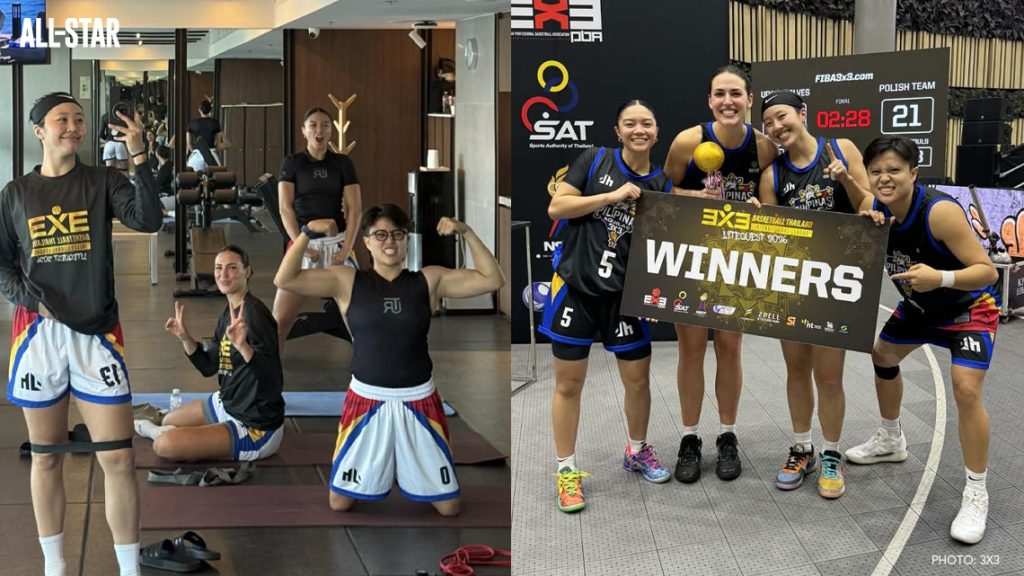
But nothing about how they got there was clean.
It was physical. Demanding. Sometimes chaotic.
“Winning a championship in a 3×3 tournament takes a lot of endurance and grittiness,” Means said. “Going 6-0 shows how competitive and determined we were from the jump.”
That competitiveness wasn’t just about proving something to other teams. It was also about proving something to themselves. Because for a group like the Aguilas, the external validation has always felt like less of a priority than the internal belief.
“This team has asked me to give more than just effort on the court,” Cacho said. “It’s asked me to believe in something bigger than myself.”
That belief doesn’t come easy when you’re operating without the usual safety nets.
“Since we’re independent and don’t have all the resources, it’s not always easy.”
But that’s also what sharpens the purpose.
“That’s exactly why I want to help this team grow, not just for us, but for the community and for women’s basketball here in the Philippines.”
The Aguilas exist in a space that is still being built. Opportunities aren’t guaranteed. Pathways aren’t always clear.
There was a time when careers in women’s basketball in the Philippines effectively ended after college. No continuation. No real system to sustain it.
Cacho knows that reality firsthand.
“As a women’s basketball player in the Philippines, you have to be in it for the long haul.”
What they’re doing now sits on top of years of uncertainty.
“Before, these kinds of tournaments were unheard of and basketball stopped after college. But eventually people believed in us and we continued to fight for these opportunities.”
That fight didn’t produce immediate results. It rarely does.
“The path wasn’t linear and definitely wasn’t easy, but the consistent dedication leads to the whole women’s basketball community rising up.”
Even without her voice in this story, Trina Guytingco’s imprint on the Pilipinas Aguilas is also impossible to miss. Long before the wins abroad and the growing attention around the team, Guytingco had already become one of the faces of a generation of Filipina athletes determined to keep women’s basketball visible, relevant, and moving forward.
Her presence alone gives the Aguilas a certain edge and identity, a reminder that this team is built not just on talent, but on players who understand the weight of what they are trying to carry.
And maybe that’s what makes this particular championship feel different. Not just that they won. But what the win represents.
A group that had to figure things out on their own, finding a way to compete, and win outside the country. A group that had to convince people, piece by piece, that this was worth investing in.
A group that, even in the middle of an international tournament, still found moments of normalcy. Like the kind Camille joked about.
“If someone followed the Aguilas around for one day in Thailand, they would be surprised at the amount of caffeine our team can drink in one day. We are all coffee and Thai tea addicts.”
It’s a small detail. Almost throwaway.
But it grounds everything.
Because behind the grind and the bigger picture, this is still a team made up of people figuring things out together. Sharing long days. Finding energy where they can. Leaning on each other when things get heavy.
And in the end, representing something that extends far beyond themselves.
“We’re super grateful for the opportunity to compete internationally and prove ourselves and represent the Philippines as a club team,” Means said. “We take that seriously.”
They didn’t arrive in Thailand as a finished product. They left as something more defined. Not perfect, not complete, but undeniably real.
And maybe that’s the most important part.
Because for the Pilipinas Aguilas, this isn’t the end of the story.
It’s proof that the story is finally moving forward.