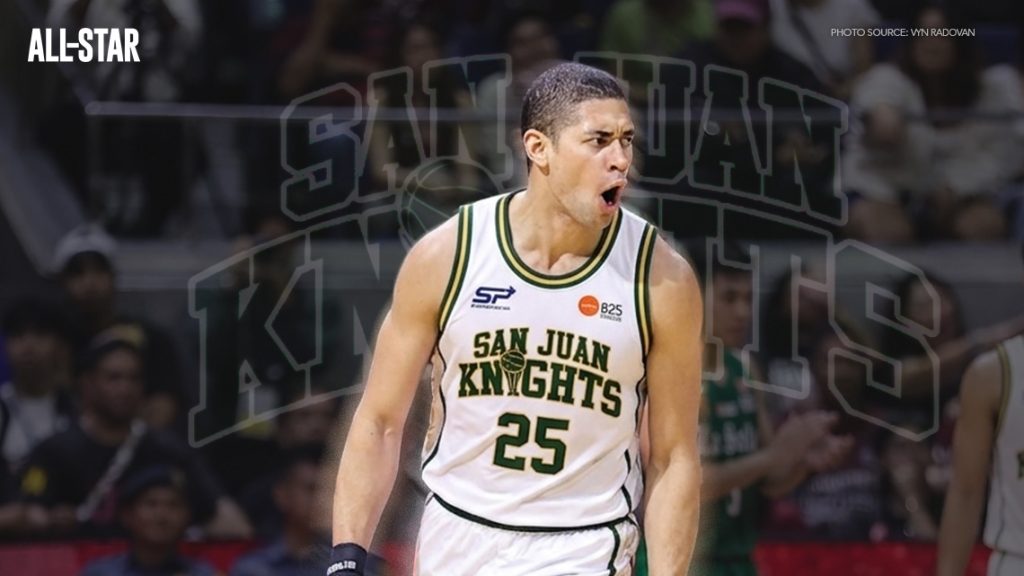
How Mike Phillips Chose San Juan and Kept Doors Open
The Phillips family did not describe Mike’s latest move the way most basketball families might.
They did not begin with contract figures. They did not lead with role, minutes, or the usual language of professional arrival. They did not even start with the obvious headline — that one of the most recognizable players in Philippine college basketball is now headed to the San Juan Knights.
They started with a principle.
Country first.
That was part of what made San Juan make sense. At a moment in Mike Phillips’ career when the map seems to widen by the week — the PBA draft looming, overseas possibilities lingering, Gilas Pilipinas waiting in the distance as both an honor and an obligation — the choice was not simply about finding a team. It was about finding the right place to stand while the future was still unfolding.
For a player of Phillips’ stature, that distinction matters.
The easier version of this story is the one that fits neatly into transaction language:
“College star signs with a pro team, prepares for the next phase, keeps moving.”
But nothing about Phillips’ path really feels that simple. Not now, anyway. Not in a basketball culture where elite players are increasingly told that ambition should look a certain way, where “going abroad” has become its own shorthand for growth, and where every move is instantly interpreted as either a leap forward or a compromise.
Phillips’ decision to join San Juan in the MPBL is more complex than that. More interesting, too.
According to his older brother Benjamin Phillips, speaking on behalf of the family, San Juan presented something more valuable than a quick professional landing spot. The team had a plan for Mike to get competitive game reps while preparing for a potential Gilas call-up in the next FIBA window. It offered rhythm without rigidity and structure without closing off possibility. It gave him a chance to start living as a pro while preserving the flexibility to answer a bigger call if it came.
That matters because Phillips is not entering this stage of his career as an unknown trying to be discovered. He is entering it as a player already widely-respected.
And in some parts of Katipunan, feared.
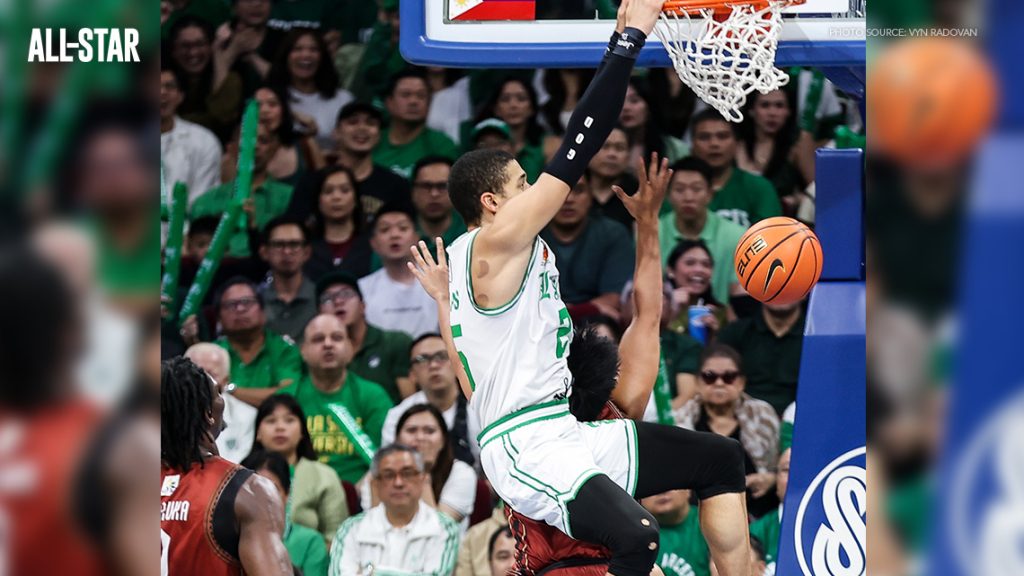
For the last several years, Mike Phillips has lived at the center of some of the most emotionally charged basketball in the country. He became one of La Salle’s defining icons, the kind of player whose impact stretched beyond the stat sheet and into the emotional architecture of what a winning culture is. He played with force, urgency, and a sense of presence that made him difficult to ignore even before he became impossible to overlook.
He was the type of player fans identified immediately — not just by jersey or school, but by style. All energy. All collision. All heartbeat.
By the time the next step arrived, the usual questions had arrived with it.
“What now?“
That question carries more weight in Philippine basketball than it used to. Once upon a time, the traditional path was easier to understand. A star emerged in college, entered the PBA draft, climbed into the local professional system, and built a life from there. That route still exists, of course. It still means something. It still puts food in the table. But the landscape has changed. Leagues abroad are no longer distant fantasies. They are real options, active possibilities, and in some circles, increasingly seen as the natural destination for players with enough talent to widen their market.
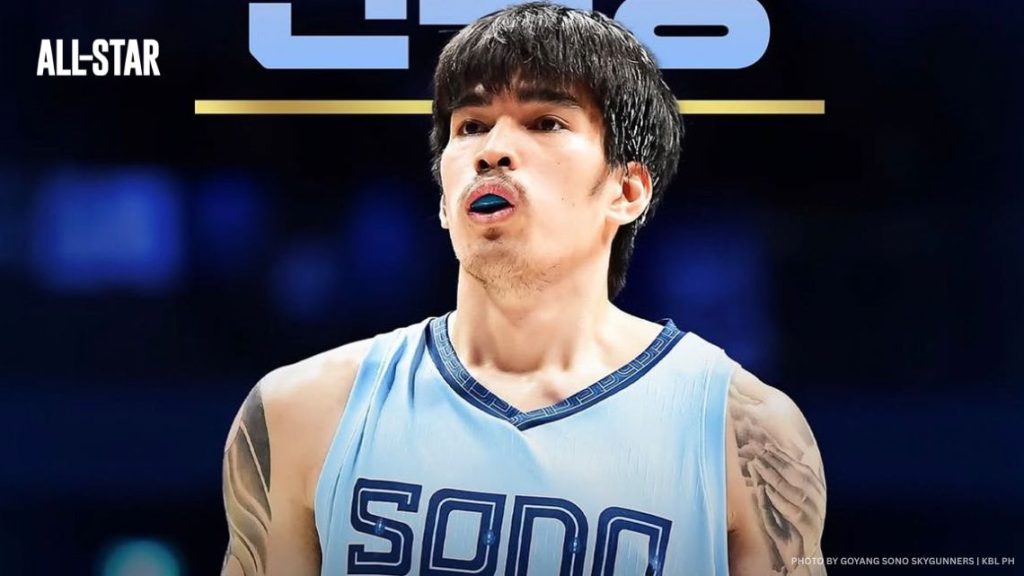
RELATED: First Interview With Newly Crowned KBL ROY, Kevin Quiambao
Phillips knows that. So does his family.
That is why this move is best understood not as a narrowing of ambition, but as a refusal to rush into one final definition of it.
Benjamin said the family is still evaluating different professional opportunities as they come. There have been inquiries from different places, including other parts of Oceania and Europe, but nothing they are prepared to present as finalized. The focus, at least for now, is more immediate: get Mike ready, keep him sharp, and place him in an environment where he can stay in game shape while the next layer of his career comes into focus.
In that sense, San Juan is not the end of the conversation. It is the place where the conversation can continue without losing momentum.
It is also, in its own way, a revealing choice.
Because for all the talk about options and windows and future paths, one of the strongest pulls in Mike Phillips’ story is still the Philippines itself. Benjamin described Mike’s connection to the country not as a convenient talking point, but as something far more rooted. There is family here. There are mentors here. There is La Salle, and all that came with it. There is familiarity, support, and the kind of emotional grounding that cannot be manufactured by opportunity alone.
That helps explain another part of the family’s thinking: why the PBA still matters to Mike even in an era when many of the best college players are encouraged to look elsewhere first.
Benjamin did not frame the PBA as a fallback. He described it instead as something Mike has always wanted to do at some point in his career. It remains on the radar, just as the upcoming draft remains on the radar. Not because the old path must be followed out of obligation, but because some dreams still carry their own gravity no matter how many new doors open around them.
San Juan helps him do that.
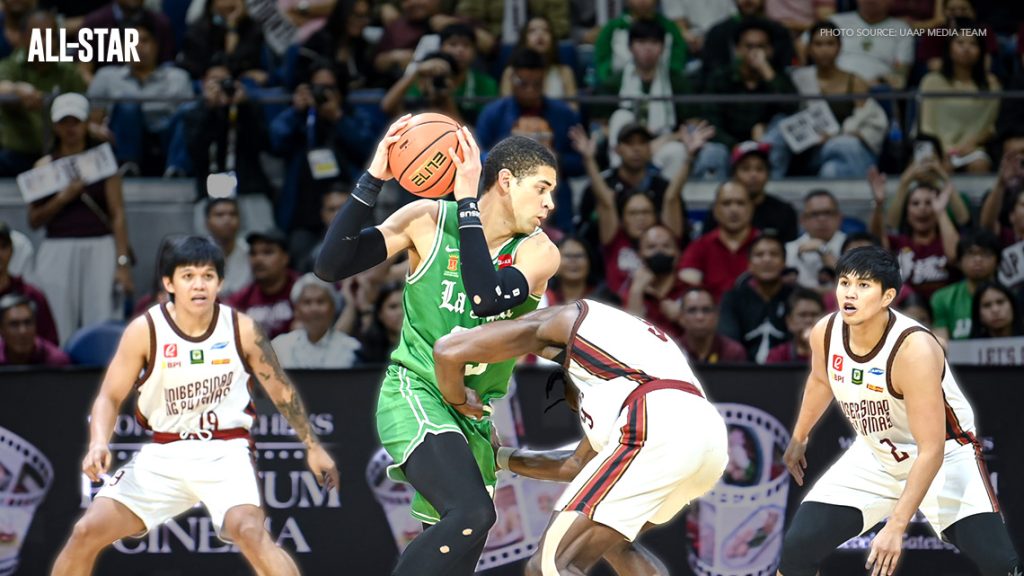
And if there is something almost poetic about the destination, it is this: some of the players Phillips now joins are the same players he used to battle in the fiercest battles of his life.
That is the strange intimacy of Philippine basketball. One season’s adversary becomes the next season’s teammate. A rivalry hardens over years, only to dissolve inside a new locker room. The emotional residue remains, of course. So do the memories. The collisions do not disappear just because the jerseys change. But that, Benjamin said, is part of what excites Mike. The UAAP produces top-level players, and one of the fun parts of turning pro is getting to share the floor with the very same talents you once had to survive.
Professional basketball is often described in transactional language, but players still experience it in human terms. They remember who was on the other side. They remember the games that mattered.
Then there is the family itself, which gives this story an even wider texture.
The Phillips brothers have never existed in only one lane.
Basketball may be the center of gravity, but it is not the whole story.
Benjamin knows the game from the inside, but he also speaks with the distance of someone who understands that careers are not built on talent alone. And Isaiah, the middle child, has followed a life that stretches beyond a simple sports template — from his own time as a Green Archer to boxing ambitions tied to the Philippines, and now, police training that reflects yet another form of discipline and service.
There is one detail from Benjamin’s account that lingers:
Manny Pacquiao, he said, personally reached out to Mike to express interest in having him play in the league.
In the way Benjamin described it, it landed as meaning. As a gesture the family genuinely appreciated. In basketball stories, it is often the smallest human moments that reveal the most — a call, a message, a sign that someone powerful saw something in your journey and decided it was worth inviting.
For Mike Phillips, it is a bridge season. A proving season. A strategic pause that still moves at full speed. A chance to get his feet wet as a pro, as Benjamin put it, while making an impact on what the family believes is a strong team. A chance to stay ready for Gilas. A chance to keep the PBA draft in view. A chance to keep listening as the future continues to speak in more than one direction.
For now, San Juan is the place where Mike Phillips can stay ready for all of it.
And for a player standing at the intersection of home, duty, ambition, and possibility, that may be exactly the point.