From Out of Nowhere to MVP: Shevana Laput’s La Salle Story
When the final point dropped, and the De La Salle Lady Spikers secured retribution, the moment almost didn’t feel real for Shevana Laput.
Following a Finals series against National University that carried the weight, pressure, and expectations from the past two defeats, the Lady Spikers found themselves back on top of the UAAP women’s volleyball hierarchy. La Salle had fallen short in back-to-back Finals before Season 88, but this time, the ending was theirs to write.
It was not just a championship. It was a statement.
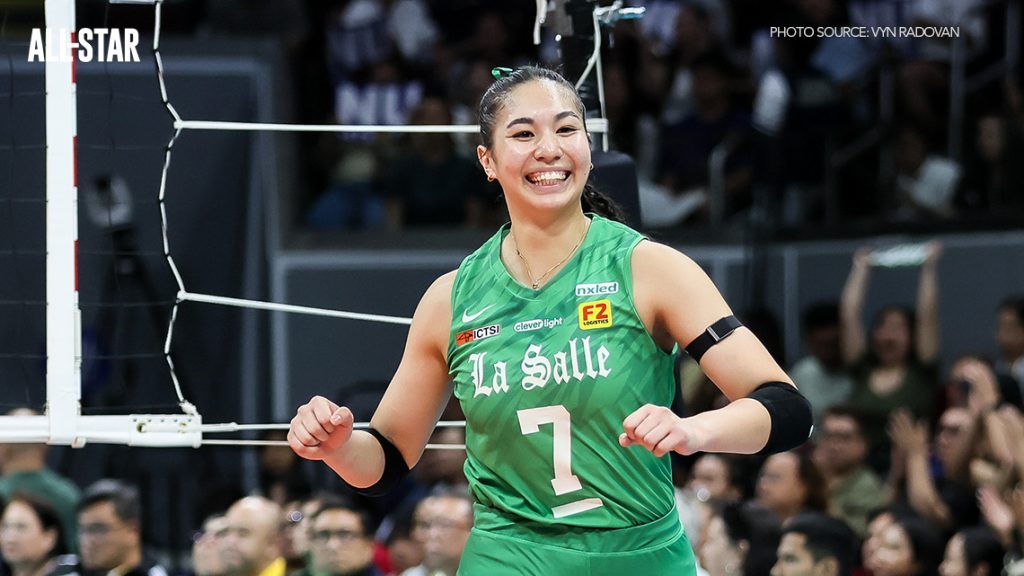
The Lady Spikers swept NU in Game 2, 25-22, 25-16, 25-16, completed a perfect 16-0 season, reclaimed the crown, and brought a 13th UAAP women’s volleyball title back to Taft. Fittingly, it was Laput who delivered the championship-clinching point, one final swing that sealed both the match and the title.
But even in that moment, her first reaction wasn’t immediate celebration.
“I was like, ‘We’re at championship point?’ No way. This is not happening right now. But it happened, and I’m so grateful that we got this because it means everything to us.”
The moment carried weight beyond the trophy itself.
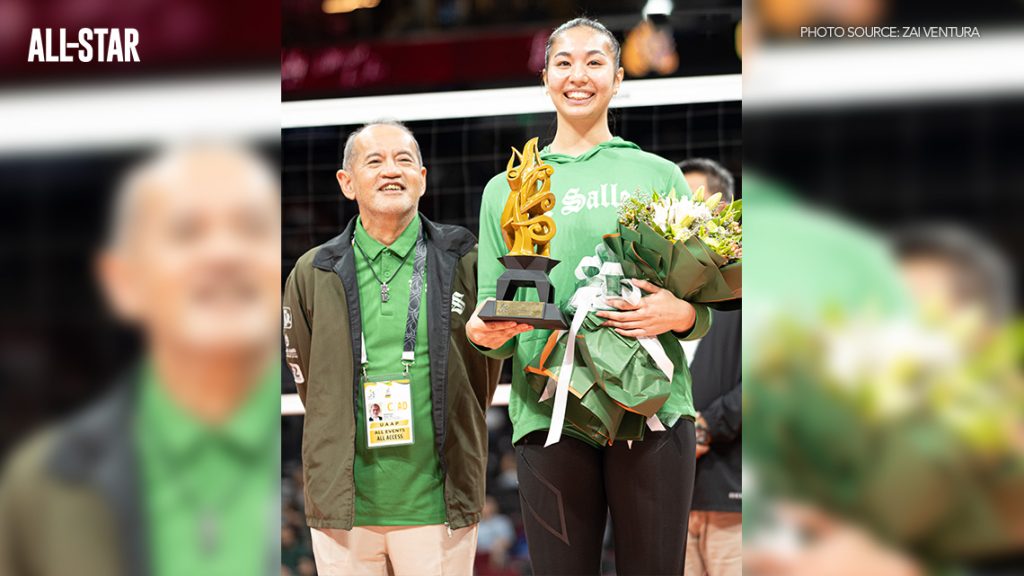
It capped a Finals MVP performance, a captain’s season, and a journey that started in a place far from the taraflex. In the clincher, Laput finished with 20 points, eight digs, and six blocks, leading La Salle when the moment demanded someone steady enough to close. She had already been recognized as the league’s Best Opposite Spiker, but that last game gave her something even bigger: a championship moment that belonged unmistakably to her.
Because years ago, volleyball wasn’t even part of the plan.
A door closes, another one opens
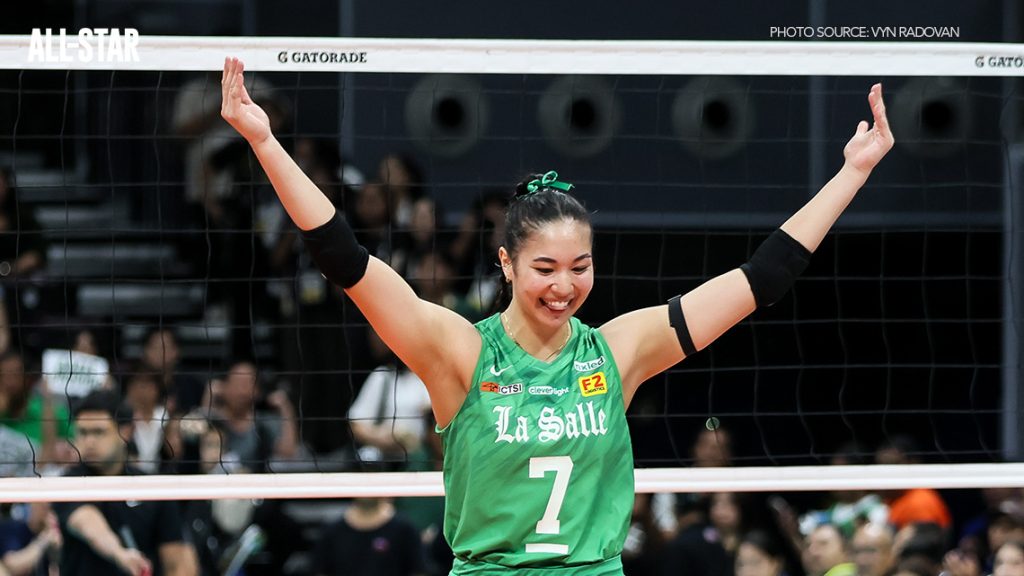
Long before she became one of La Salle’s biggest offensive weapons, Laput’s life in sports looked completely different. Growing up in Australia, volleyball wasn’t the sport she expected to pursue.
“I did martial arts and track and field there.”
At the time, her athletic background revolved around speed, discipline, and individual competition. She had competed in athletics, including long jump and triple jump, and had built her identity around a sport where every result depended on her own body, timing, and control.
Volleyball entered her life unexpectedly, and largely because of family.
“It was really because of my kuya. He did a one-and-done here for La Salle.”
Her older brother, James Laput, had his own La Salle story as a former Green Archer on the basketball hardwood. While he was studying in the United States, their family rarely had opportunities to visit him. But when he spent a season in the Philippines playing for DLSU, everything shifted.
“Because he was studying in America, our family never visited him. We just went for his graduation. So when he was here, we were like, ‘Okay, we’ll watch a game because the Philippines is so close.’”
That trip ended up changing the direction of her athletic career entirely. At first, she wasn’t even supposed to be part of the environment she would eventually call home.
“We watched his training once,” she said of James’ tenure.
Then curiosity took over. Not from her, but from the coaches she met during her visit.
“Literally, I walked across, and the coaches noticed me. And they straight away went to me, ‘Do you play volleyball?’ I said, ‘No.’”
Here’s the important bit:
“But actually, in a way, I was looking for a way out of track and field because I had lost my passion for it. Stuff happened, so I lost my passion for it, and volleyball came out of nowhere, and I tried that.”
And just like that, a sport she had never truly considered suddenly became part of her future.
And lead her to glory.
Never Say Die
She was then invited to join a La Salle training camp for three weeks.
That experience immediately introduced her to the intensity of the Lady Spikers’ system, one that has long been defined by discipline, repetition, and the standards of head coach Ramil de Jesus. For Laput, who was still learning the sport, it was a brutal trial by fire.
“I learned the La Salle system. I remember it was hard. I couldn’t walk up and down the stairs and everything.”
The adjustment wasn’t easy. The physicality that volleyball asked of her wasn’t something she was used to. Track and field had demanded power and explosiveness, but volleyball asked for those things again and again, in rallies, in coverage, in blocking, in transition, and in pressure moments where one mistake could swing everything.
“I wanted to quit. I was like, ‘I don’t want to do this anymore.’”
But something about the environment kept pulling her back in. The way she fit in and adjusted to the team gave her reasons to stay.
“There was that sisterhood. There was that and, you know, they are a winning team.”
For someone naturally competitive, that culture mattered.
“Something about that drew me to it because, being very competitive, wanting to win, I wanted to go there.”
And from there, everything changed.
“So that’s how I started. My volleyball started with La Salle, and it’s going to end with La Salle.”
That line means more now than it would have years ago.
Laput did not arrive as a finished volleyball product. She was a project, a 6-foot-2 athlete learning a new sport in a new country, trying to turn raw tools into reliable production. But La Salle stayed patient, and Laput grew into one of the league’s most dangerous right-side attackers.
By Season 88, she was no longer just potential. She was the captain of a team chasing redemption. She was the player La Salle trusted in the biggest points. She was the one who turned a perfect season from a possibility into history.

Never Shall We Fail
During Laput’s time with La Salle, she learned a lot, but one thing stood out.
“It taught me that Animo Spirit. To never say die, but that kind of thing, always fighting, laban, all that.”
And maybe that’s why the championship point felt so meaningful. Not just because it ended a match. Not just because it secured a title. Not just because it gave La Salle a “Sweep 16” season that the community will forever embrace as part of the program’s history.
It mattered because it completed a journey that started unexpectedly.
Laput’s story was never supposed to begin with volleyball. But it found her anyway.
And in the end, when La Salle needed one last point to return to the top, volleyball found its way back to her.