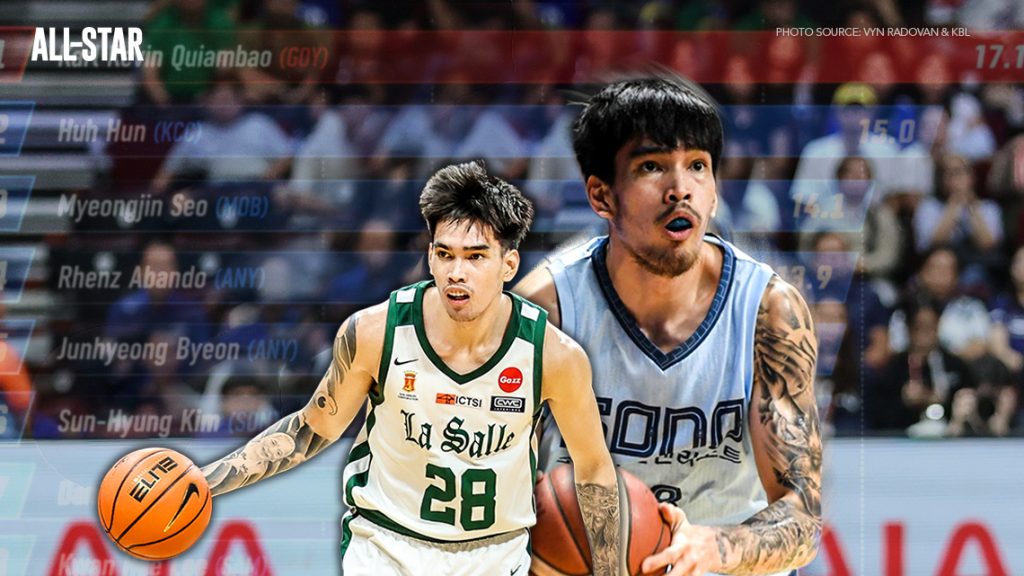
A Data-Driven Look at the Rise of Kevin Quiambao
The KBL rookie season of Kevin Quiambao was nothing short of a breakout.
After putting together an impressive first official season with the Sky Gunners in South Korea, the Filipino standout secured the league’s Rookie of the Year (ROY) award before elevating his game even further in the playoffs, powering Sono to a Finals appearance in their first playoff run and proving he belongs on one of Asia’s biggest basketball stages.
But beyond the highlights and accolades, the advanced numbers tell an equally-compelling story.
In terms of Player Efficiency Rating (PER), a metric that measures a player’s overall impact and efficiency on the court, KQ ranked No. 1 among all shooting guards in the league this season:
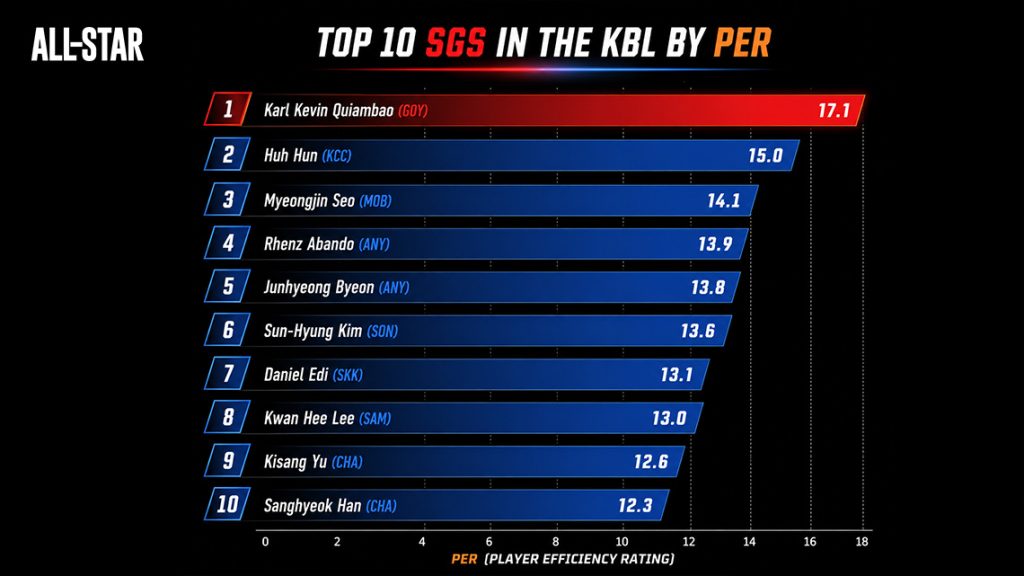
For context, the average PER across the KBL is 11.4, placing KQ well above the league norm with a mark of 17.1.
That level of efficiency is further reflected in his overall statistical output, where he leads all shooting guards in total points, rebounds, assists, and steals, and ranks second in blocks behind fellow Filipino Rhenz Abando.
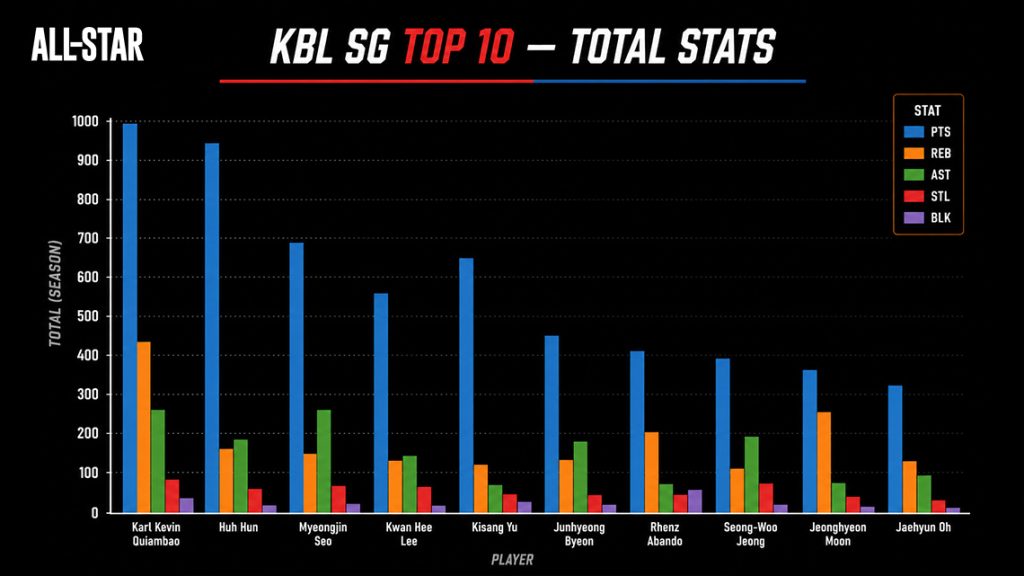
For a shooting guard, the job description is simple: score efficiently and defend. KQ is doing both — at the same time, at an elite level.
Among KBL SGs, Quiambao carries one of the heaviest scoring loads and still converts at the same rate as the league’s most efficient players.
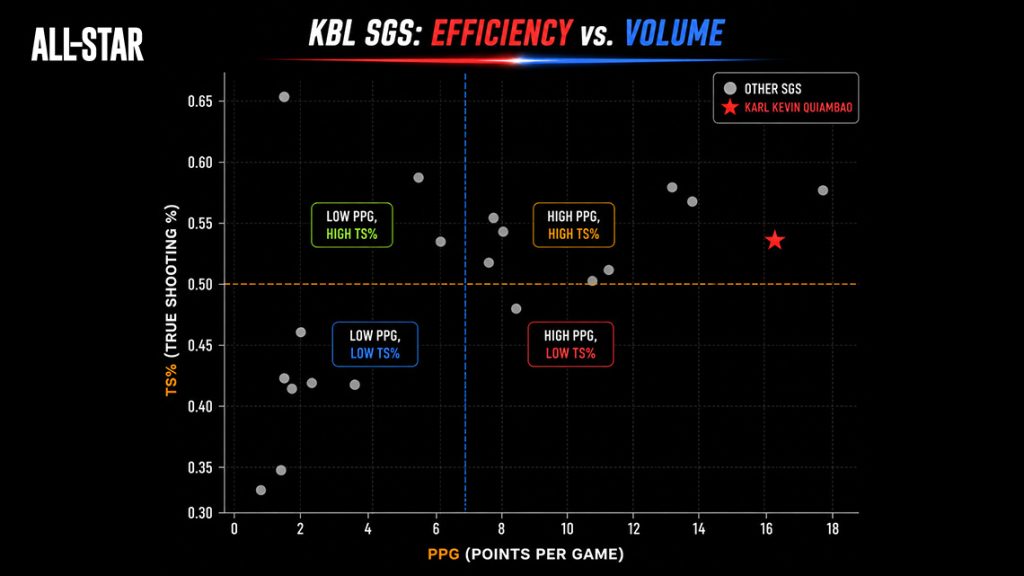
Averaging 15.3 points per game on 54% true shooting, he sits at the far end of the high-efficiency tier — more volume than almost anyone in that company, without giving up the efficiency that comes with it.
But scoring efficiently is only half the story. What separates KQ from a pure scorer is what he does on the other end.
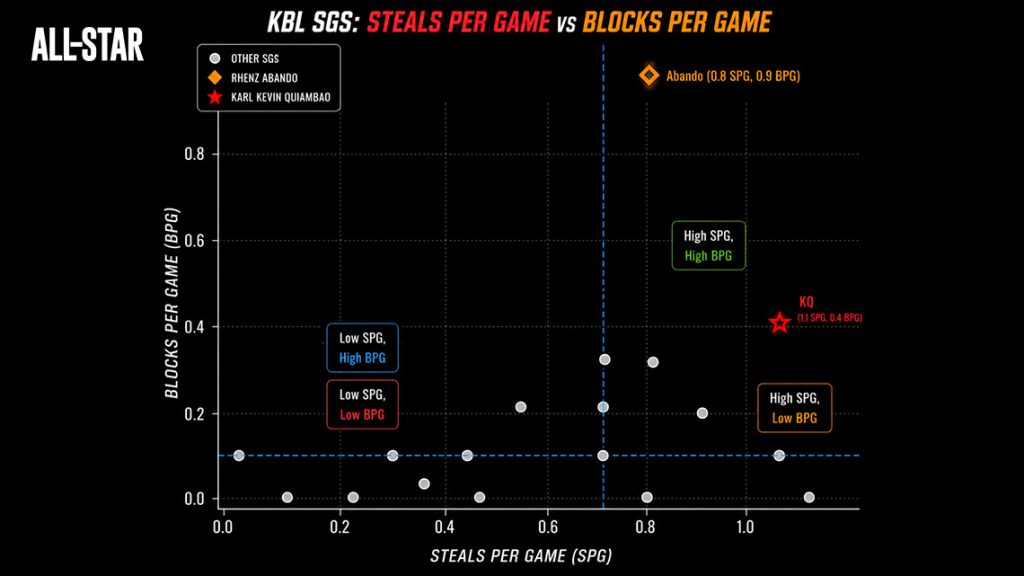
While Abando holds the edge in blocks, Quiambao is no slouch in that department either. Also, with 1.1 steals per game, leading all SGs, his perimeter disruption rounds out one of the most complete defensive profiles in the league.
Beyond the stats, the eye test further validates his defensive impact.
He possesses natural defensive instincts, consistently reading actions before they fully develop and reacting quickly on the floor. His lateral quickness and active hands make him a constant disruptive presence, particularly in help-side situations and passing lanes.
That anticipation and activity level explain not only his ability to generate steals on the perimeter, but also his knack for coming up with timely blocks.
On top of that, KQ also stands out as the leading rebounder at his position.
Using a metric called Rebound% (Rebounding Percentage), we can estimate the share of available rebounds a player secures while they are on the floor.
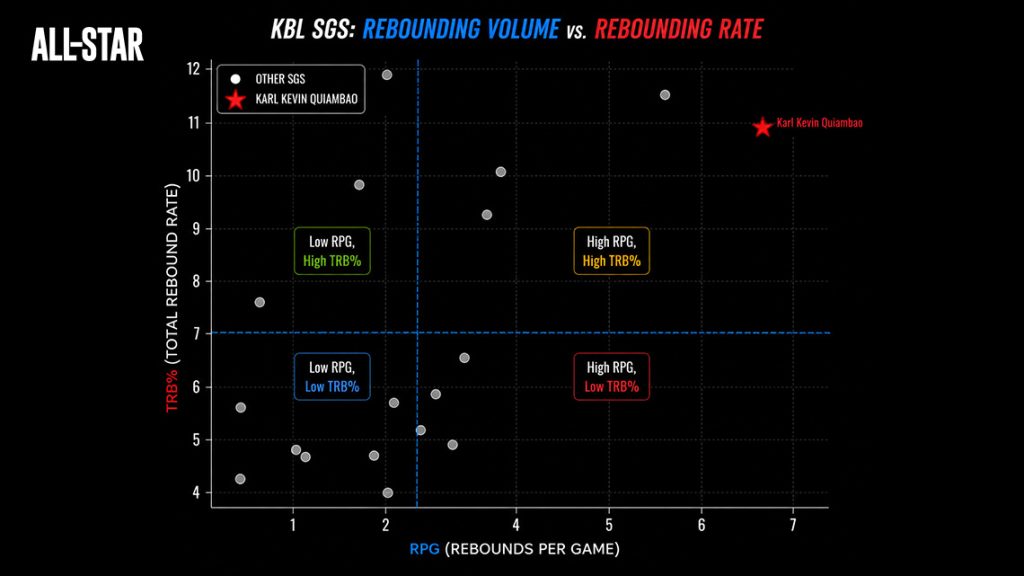
Leading with 6.7 rebounds per game and a 10.9 rebound%, he shows both strong raw rebounding numbers and solid efficiency in grabbing available boards, proving that he consistently turns rebounding chances into extra possessions.
With this kind of all-around production, it’s easy to see why he’s become a reliable presence for the SkyGunners.
Already one of the country’s brightest young stars back home, Quiambao carried that same impact abroad, and it’s exactly what makes him stand out in the KBL.
However, the signs of his rise were already evident long before he arrived in South Korea, during his collegiate stint with La Salle in the UAAP.
With that in mind, let’s take a closer look at the foundation that shaped KQ into the player he is today.
A Dominant College Career
ROTY. Mythical Team. MVP. Finals MVP. Champion. KQ’s UAAP career wasn’t just decorated. It was complete.
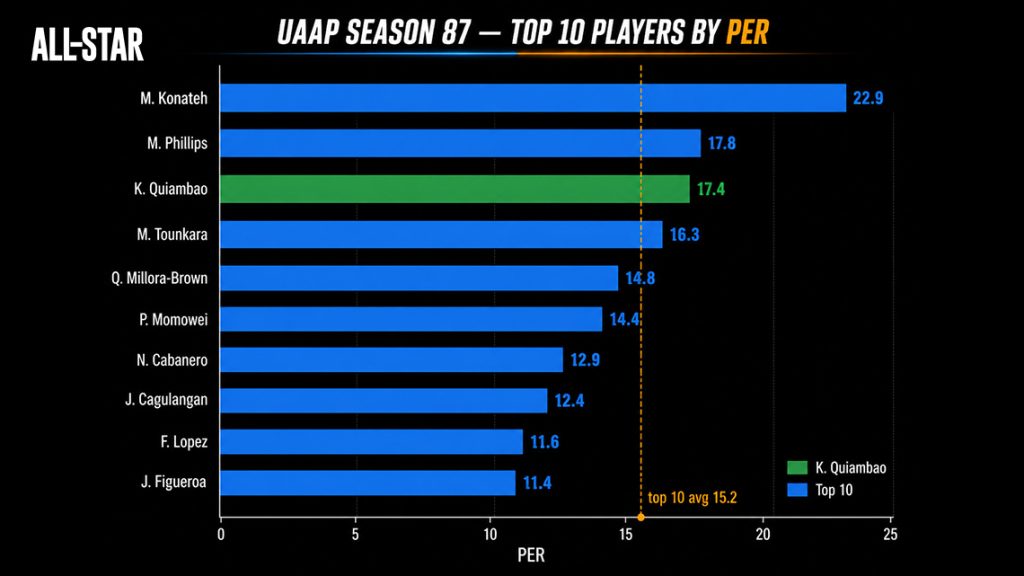
In Season 87, his final collegiate season, the La Salle superstar posted a PER of 17.4 during the elimination round, the third highest in the league.
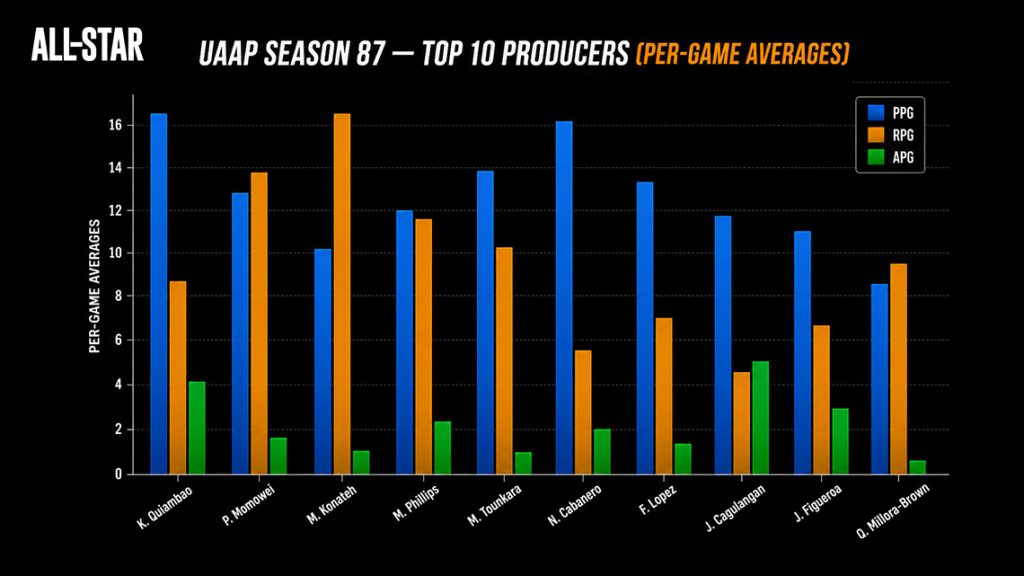
This was largely driven by his dominant across-the-board performance, ranking 1st in points per game (16.6), 4th in assists per game (4.1), and 6th in rebounds per game (8.6).
Being the league’s leading scorer carries weight. It invites questions about both volume and efficiency. But KQ answers both convincingly.
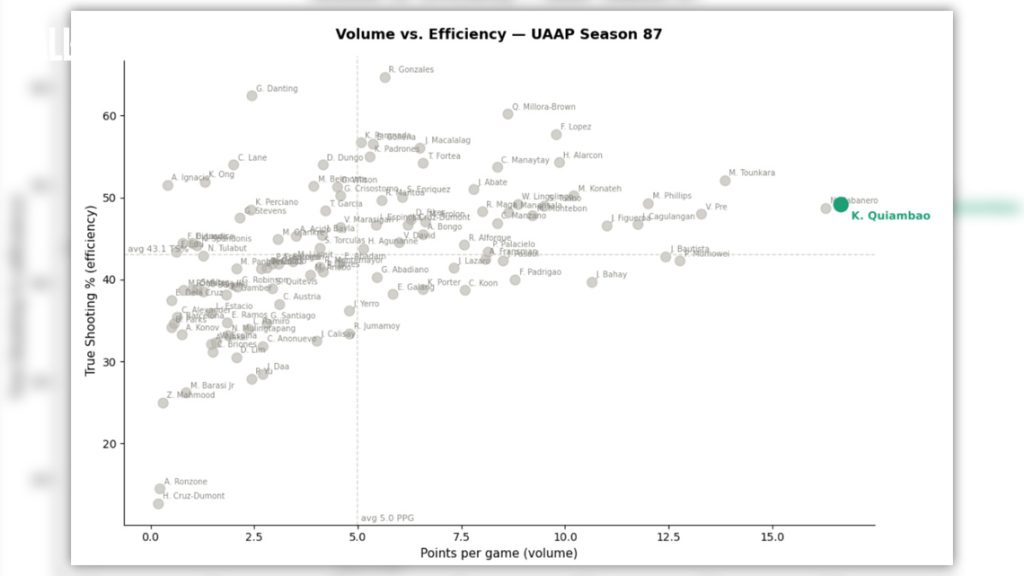
Separated from the rest of the competition, Quiambao stands in the top right corner, scoring the most while doing so at an elite level of efficiency.
And it doesn’t stop there. Quiambao carries that same aspect of efficiency from beyond the arc, the most valued weapon in today’s game.
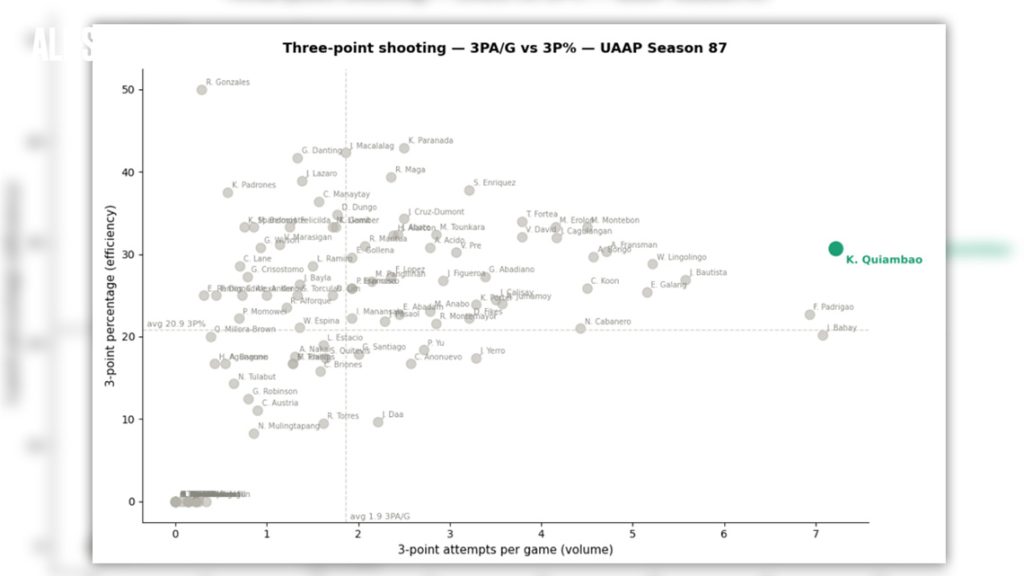
When you’re launching seven threes a night and converting at the rate of the league’s best shooters, big scoring nights aren’t a surprise. They’re inevitable.
KQ is no liability on the defensive end either. Ranking above the 80th percentile in stocks (combined steals and blocks), he firmly established himself as one of the better defenders in the league.
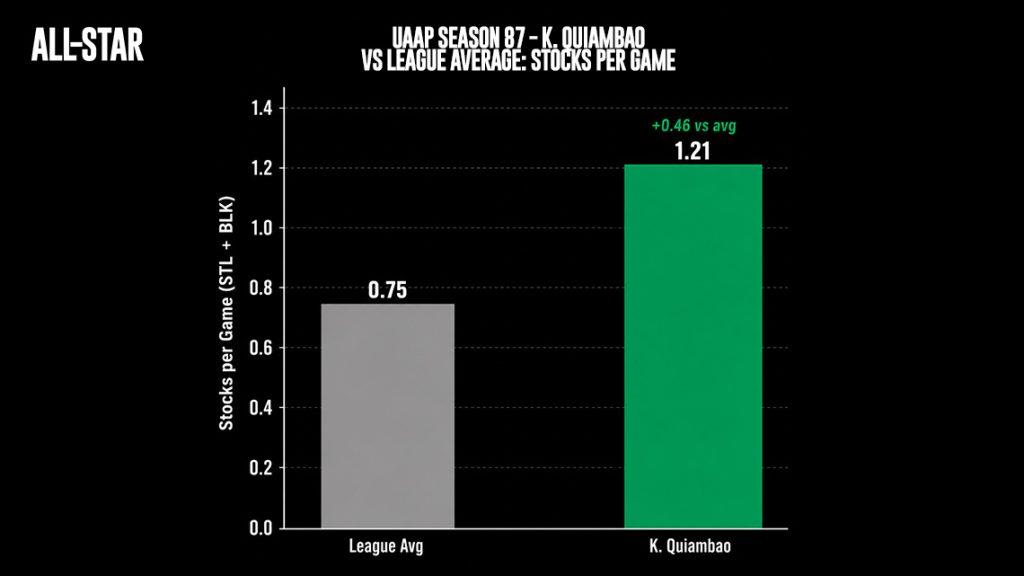
Now, shifting from the defensive side to rebounding, take a look at this.
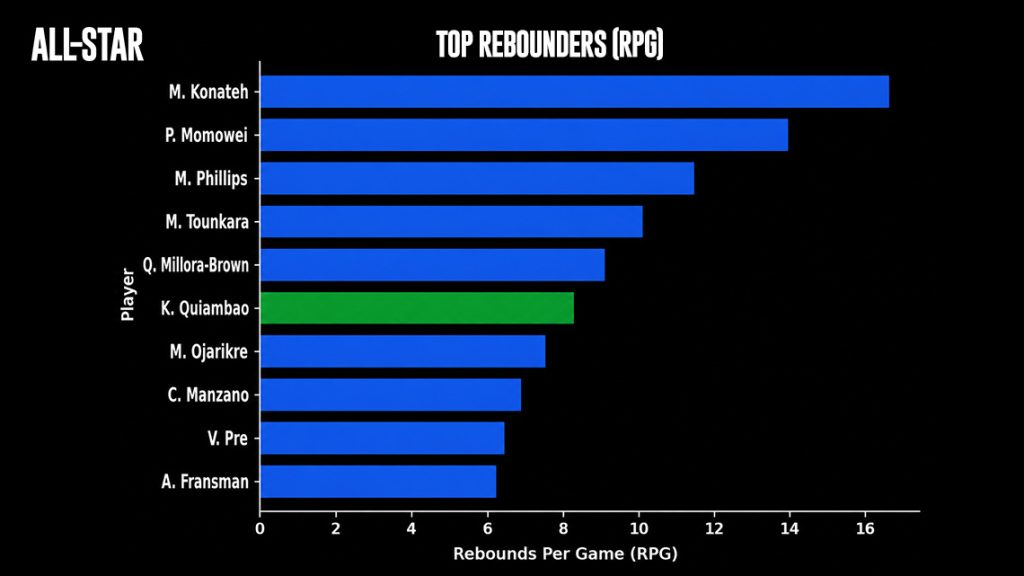
Everyone above KQ in the rankings is either an FSA or the high-motor Mike Phillips and the towering Quentin Millora-Brown. Notably, KQ also outrebounds other FSAs like OJ Ojarikre, premier UAAP big men such as Cedrick Manzano and Veejay Pre, as well as the high-flying AJ Fransman.
It’s also worth noting that Quiambao played as a big man during his NU Bullpups days, which helps explain why his rebounding instincts remain intact even as he’s developed other areas of his game.
Connect all the dots, and his success in the KBL comes as no surprise. A two-way wing who can fill up the stat sheet on both ends, Quiambao is exactly the kind of player every professional team is looking for.
Nonetheless, there is always room for improvement. As KQ sets his sights on the next level, there are still areas of his game waiting to be unlocked. Here’s where that growth could come from.
Room for Improvement
We’ve all seen flashes of KQ’s playmaking ability. Whether in a La Salle or Gilas jersey, he has never been shy about finding the open man and making the highlight reel. He was even compared to three-time NBA MVP Nikola Jokic in that aspect.
That vision has carried over to the KBL, where he ranks top 3 in assists per game among shooting guards. The catch? He’s also top 3 in turnovers.
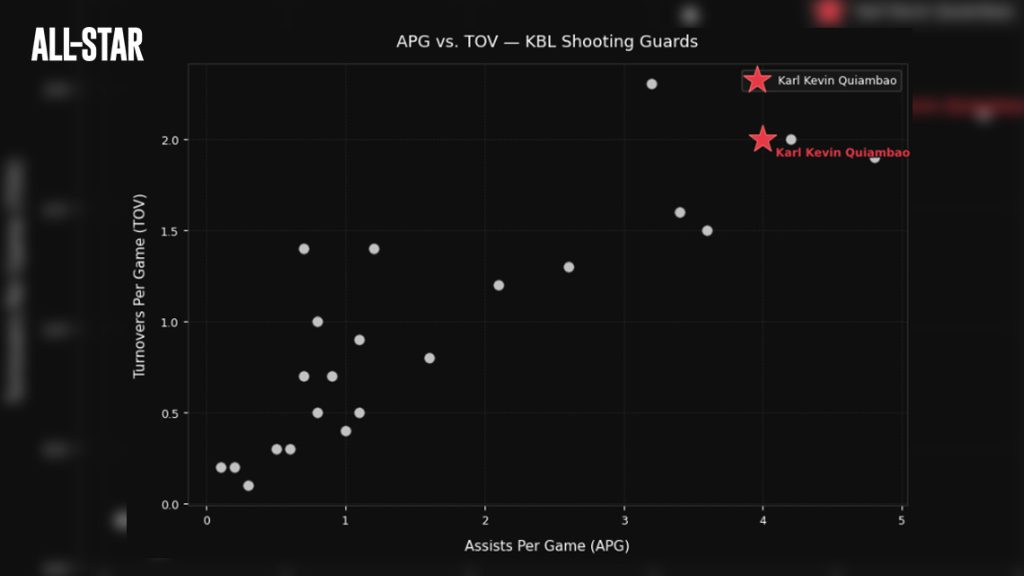
As gifted a passer as he is, his full potential can’t be unlocked if the ball keeps finding the wrong hands. For every two assists, there’s a turnover, which makes the playmaking impact feel almost neutralized.
This isn’t a new problem either. It didn’t just start in the KBL, but in La Salle.
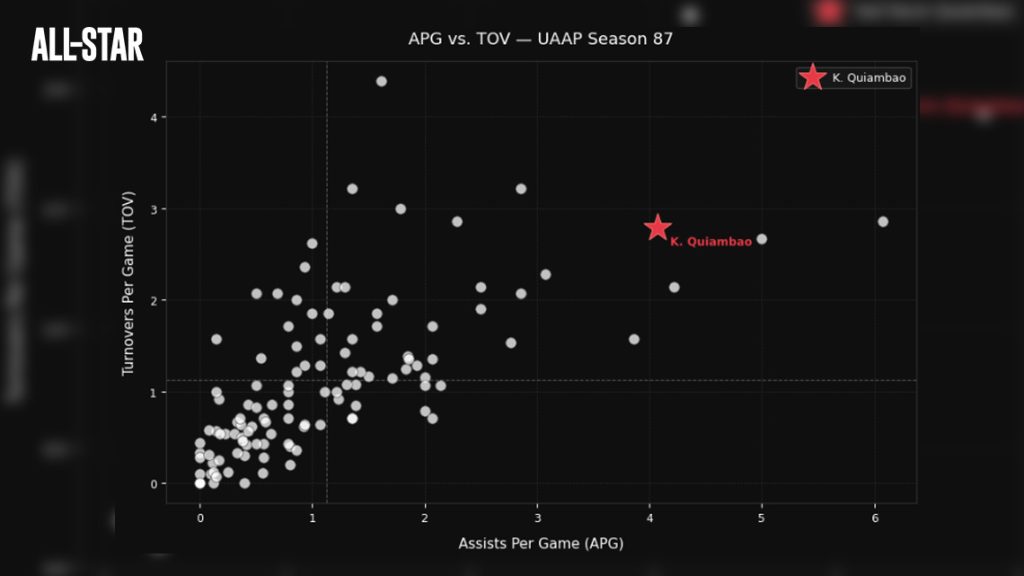
High assists, high turnovers — they’re two sides of the same coin for KQ. It’s hard to celebrate ranking fourth in assists when you’re seventh in turnovers at the same time.
Additionally, his three-point shooting deserves a closer look. Yes, he was one of the best shooters in the UAAP during his final season there, but that aspect of his game has remained stagnant since entering the KBL.
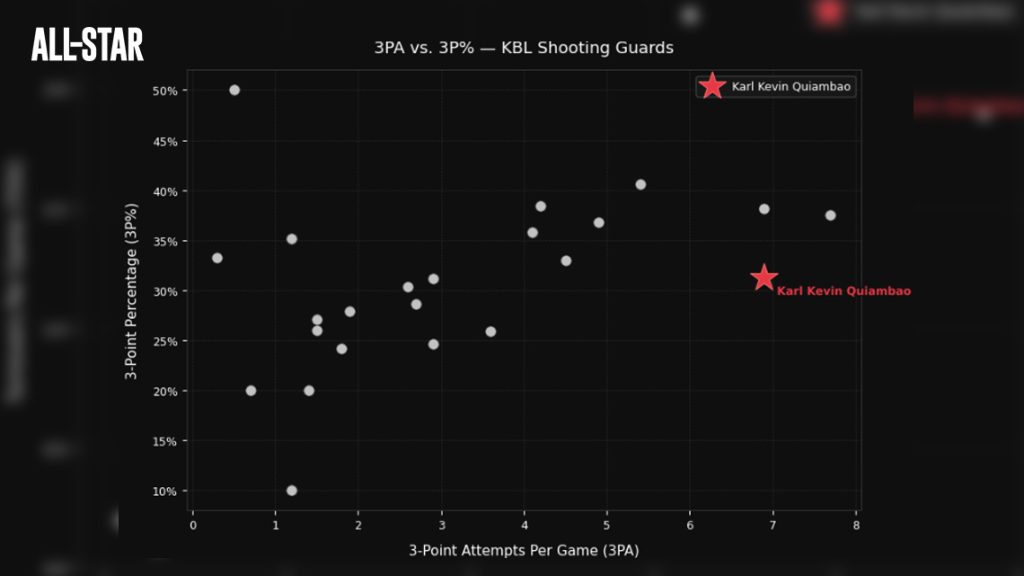
Although it isn’t exactly bad, the chart reflects a similar pattern to what he showed during his UAAP stint.
Shooting at just 31% from deep, there are many players in his position who are doing better from beyond the arc.
Improving his efficiency from three-point range would be a huge boost to KQ’s game, especially given the volume of shots he takes.
Lastly, it’s worth noting that Quimbao leads the KBL in minutes played.
However, despite the significant workload and extended playing time, his overall production falls short compared to other players logging similarly heavy minutes.
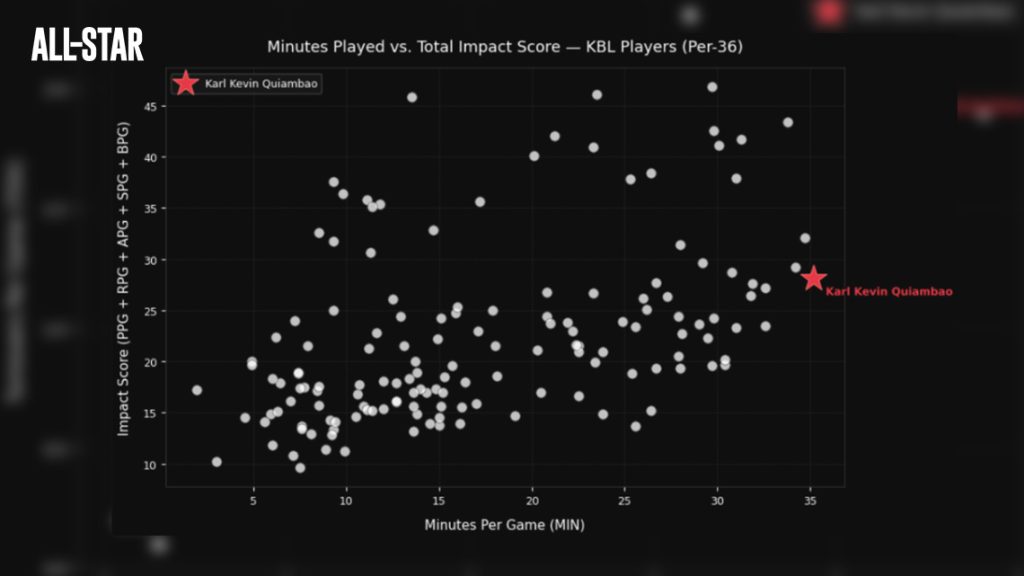
From a per-36-minute perspective, several players outperform KQ in overall production, raising concerns about his efficiency on a per-minute basis.
Looking from a wider perspective, none of this is meant as reasons to doubt KQ. For Filipino basketball fans, it’s about wanting him to reach his full potential. These are just areas where he can still improve.
At the shooting guard position, KQ already stands out. However, on a league-wide level, he is still just below the very top players in the KBL. Still, for a first-year pro, this is already a strong accomplishment.
Once he sharpens these areas, he will find himself right up there sooner rather than later.
This is just the beginning, and he’ll only get better from here.