Dear Athlete, Which Flag Is Really Yours?
In the sports world, there’s no honor quite like fighting for flag and country. You can compete for a franchise, a city, or even yourself, but it’s a different level of intensity when you’re wearing your nation’s colors.
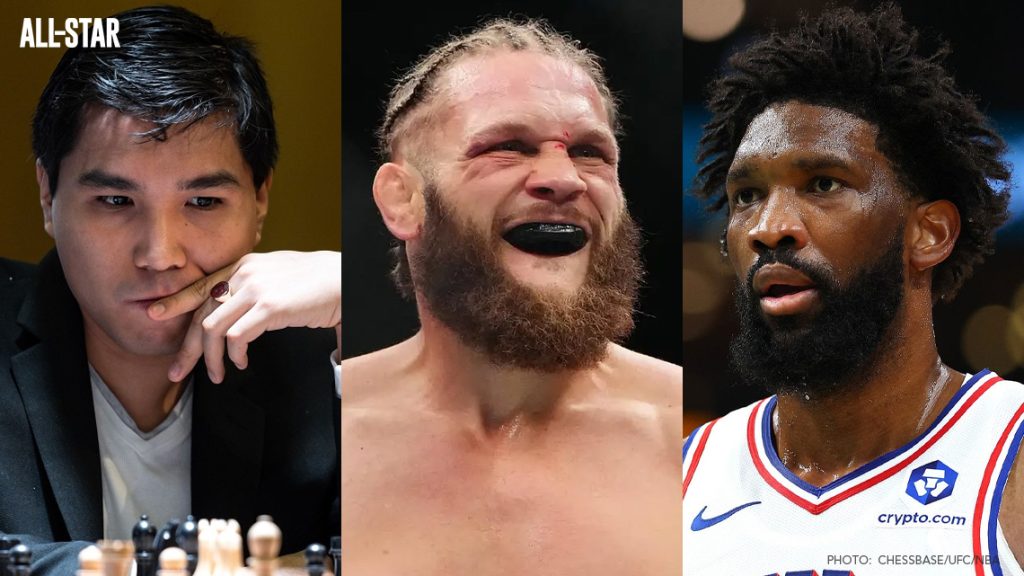
With that said, help me make sense of Rafael Fiziev, please.
This UFC fighter was born in Kazakhstan. His father is Azerbaijani and his mother is Russian. When Fiziev was a child, his family moved to Kyrgyzstan; in his adulthood, he has spent considerable time honing his skills in Thailand. Oh, and he relocated to Deerfield, Florida during the pandemic.
This potpourri of patriotism could be confusing to us, but not to Fiziev himself. Back in June 2025, after winning the co-main of a UFC card in Azerbaijan’s capital of Baku, the 33-year-old competitor proudly declared his allegiance. “I cannot lose in my home. I cannot lose in front of these people,” Fiziev told analyst Michael Bisping. “I’m happy to represent my homeland.”
In this day and age, we need to talk about this “homeland” thing. Is it the country you were born in, the site of your formative years? Or is it the country where you polished your craft, earned a living to support your family, and built your career?
This last one is going to sting: Can you leave your nation of origin when it no longer supports you, and do you have the right to find another “home” if you’ve found a place that supports you more?
“He Didn’t Commit”
Thinking of Fiziev and his kaleidoscope of a passport, I can’t help but have flashes of Joel Embiid. Ahead of the 2024 Paris Olympics, the Philadelphia 76ers big man was hotly pursued by France and the United States, two countries that he holds citizenship in. Adding complexity to the issue was the tense political situation between France and Cameroon, his country of birth.
“There’s a lot of pushback as far as basically kicking out the French because it’s been so many years of oppression,” Embiid told The New York Times in July 2024. “I still got my family living in Cameroon, and I don’t want to put them through any of that stuff. I want them to be safe, and the relationship between France and Cameroon or Africa in general is just not good.”
Ultimately, Embiid decided to join the Avengers-like lineup of Team USA. According to Joe Vardon of The Athletic, the higher-ups of the French national team felt wronged by Embiid in this situation. “We asked him then if he still was with us. He was like, ‘Yes, I still want to play for France,'” general manager Boris Diaw shared with Vardon. “But then, he didn’t commit.”
“A Country That’s Been So Good to Me”
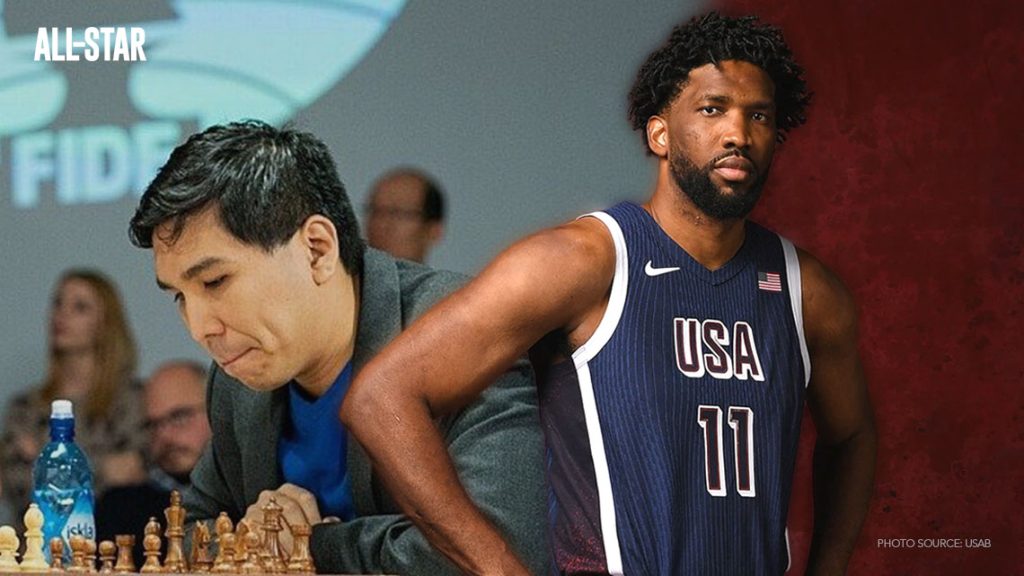
Speaking of painful things, there’s another tale of citizenship that hits close to home. Remember when Wesley So said “Game over” to representing the Philippines?
In 2014, the three-time Filipino Chess Champion decided to immigrate to the United States. A year prior, So had competed in a tournament that he apparently wasn’t supposed to take part in. But, when the dust settled at the World University Games, So came away with the first-ever gold medal for the Philippines. Despite this milestone, So claimed that the National Chess Federation of the Philippines did not give him due recognition, even going so far as to consider it an act of disobedience. The episode became one of the most talked-about athlete-federation disputes in Philippine sports at the time.
Fast forward seven years later, and So punctuated the saga by becoming a U.S. citizen. Since relocating to the States, the youngest chess grandmaster in Philippine history had become the inaugural Fischer Random World Champion. At the time that his U.S. citizenship became official, So had this to say about his new home: “I want to give back to a country that has been so good to me…I like this attitude and the tremendous generosity of American culture.”
It’s an MMA World
What’s more painful, then: A devastating lead hook followed by a rear leg kick to the ribs, or a rising hope for representation dashed by a definitive immigration?
Perhaps, in more ways than one, Rafael Fiziev will dish out suffering when he steps into the octagon this weekend. In only the second UFC event held in Azerbaijan, Fiziev (13-5-0) will soak in the homecourt advantage against Mexico’s Manuel Torres (17-3-0).
This won’t be a walk in the park, as Torres wields both a Muay Thai background and a robust submission game, having tapped out seven opponents in his career. Fiziev, meanwhile, is both a prolific kickboxer and a Brazilian jiu-jitsu blue belt.
That’s the beauty of MMA, I guess: a graceful assortment of fighting styles that allows each combatant to have a distinct identity. Maybe that’s how athletes (and, more importantly, fans) should approach the issue of nationality in 2026. In an undeniably globalized world, the choice of which flag to wave is swayed by not only origin, but also logistics, profession, and prosperity. We’re told to love our country, yes, but countries should love us back.
“We are humans. We are winners,” Fiziev told a roaring crowd in Baku last year. “Azerbaijan is a winner.”
Catch Rafael Fiziev vs. Manuel Torres live on UFC Fight Pass this Sunday (Manila time). The event is scheduled to start at 12:00am.
Stay tuned to ALL-STAR for live, round-by-round coverage of the Fiziev vs. Torres main event.
For more exclusive UFC stories and updates, click here.