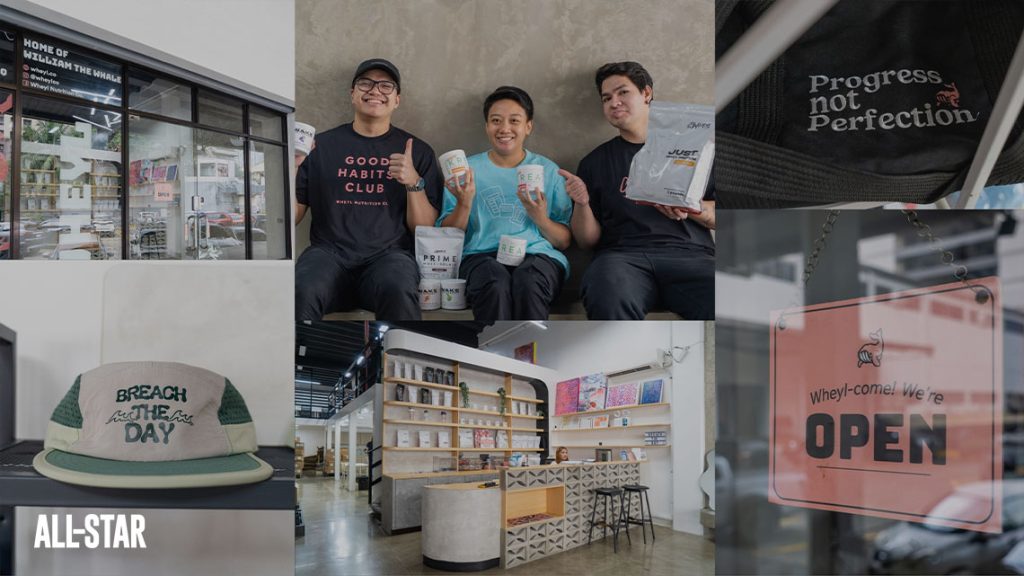
Tale of Wheyl: Starting Small, Building a Filipino Fitness Community
There is something deeply inspiring about building a dream out of very little and refusing to let go of it. Long before Wheyl became one of the country’s most recognizable local supplement brands, it was simply an idea shared by Jason Reyes and Vergil Ruaro, both co-founders, and Patty Montero, co-founder and General Manager. Together, they believed fitness nutrition in the Philippines could be better, more welcoming, and more proudly our own.
Today, Wheyl stands as proof that a homegrown brand can earn trust, build community, and expand its product offering without losing its local soul.
That story begins not in a corporate boardroom or a flashy startup office, but in the ordinary uncertainty of early adulthood.
The people behind Wheyl were navigating their first jobs, thinking about what kind of future they wanted, and sensing that they were meant to build something for themselves. What they had was not a huge financial advantage or a polished master plan. What they had was instinct, hunger and a willingness to start before everything felt ready.
The brand officially launched in 2017, but its roots stretch back to the months before that, when the founders began asking a simple but important question: “why was there no affordable and approachable sports nutrition brand that truly felt made for Filipinos?”
The founders saw the supplement space at the time as intimidating, exclusive, and heavily defined by imported brands with a tough, hyper-masculine image.
The founders believed that, for many people who simply wanted to get healthier, get stronger, or start taking fitness more seriously, the world of protein powders and performance supplements did not exactly feel inviting.
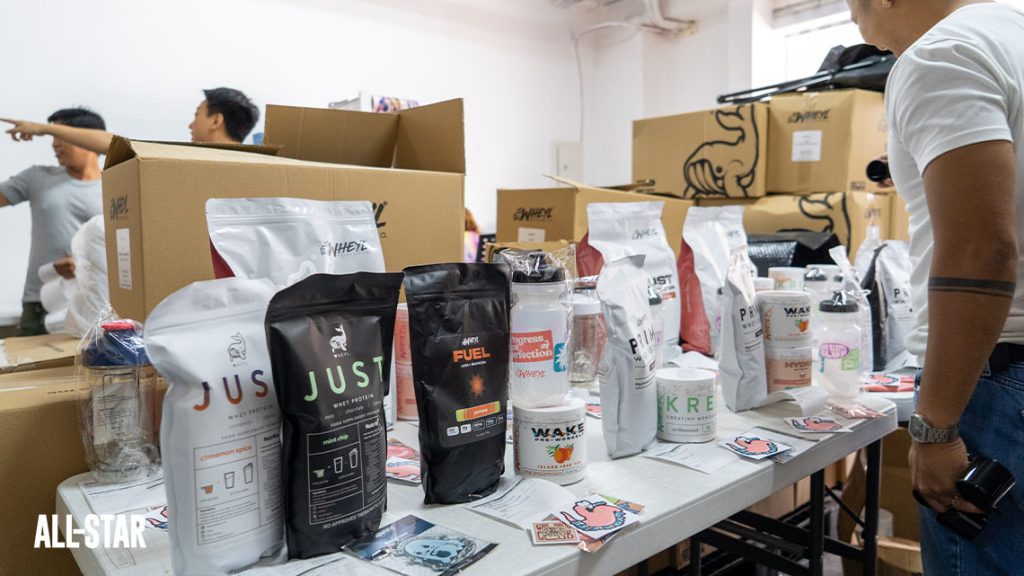
Wheyl saw that gap clearly
“We saw that it was a good time to think of something in fitness and also realizing that there’s no affordable, approachable sports nutrition brand,” co-founder Vergil Ruaro says.
That realization became the spark. The founders began working on the brand while still balancing full-time responsibilities, figuring things out as they went along. They had to think through everything from sourcing and packaging to branding and flavor. Nothing about the process was easy, and nothing was handed to them. In fact, the company started with what some would consider a challenging amount of money for a large-scale business.
“We just really started small. It was completely bootstrapped,” Vergil says.
They started with just PHP77,000.
For most people, that amount would hardly seem enough to launch a consumer brand.
But Wheyl did not have the luxury of waiting for the perfect conditions. The founders had to make every peso stretch. They had to convince suppliers to believe in an idea before the business could prove itself at scale.
“It was really about selling the idea to suppliers too. We didn’t have a lot of money. We couldn’t buy a lot of raw materials. But here’s the vision for the brand, something new, fresh. We want to reach a wide range of people,” Vergil recalls.
That vision shaped the brand from the very beginning. Wheyl was not trying to speak only to hardcore bodybuilders or elite athletes. It wanted to reach the beginner, the curious first-timer, the student trying to get stronger, the office worker squeezing in workouts after long days, or the athlete-in-progress who did not see themselves reflected in the brands already on the market.
That’s why its early branding choices mattered. Even in the smallest details, Wheyl wanted to make sports nutrition feel less intimidating and more accessible.
“We were heavily into the pink and black branding, just trying to make it as gender neutral as possible and remove all the intimidation as we can from whey protein,” Vergil says.

Wheyl wanted to open the door wider.
Vergil recalls that, at the time, the imported products they encountered tended to carry what he describes as “really masculine” branding.
Even so, the first version of the product was far from perfect. The founders are honest enough to laugh about that now. Their first offering, Salted Chocolate whey protein, did not have the “posh” people now associate with the brand. It was rough around the edges, homemade in feel, and still a work in progress.
“The initial launch was far from perfect. However, we did not stop there. Brick by brick, we used every single feedback and built the best formula we could ever have,” Vergil admits.
That honesty says a lot about why the brand has endured. Wheyl did not become successful because it launched flawlessly. It became successful because it listened, adapted, and kept improving. It treated early traction not as proof that it had already made it, but as encouragement to work even harder.
“We kept improving,” Vergil says.
In the early days, selling the product was as hands-on and grassroots as it gets. The founders sold to friends, teammates, and classmates. They posted in Ateneo Trade, a Facebook marketplace group for the Ateneo community, met up with buyers in Katipunan, and spent long days doing person-to-person pickups. It was the kind of work that doesn’t look glamorous from the outside, but often defines whether a young business survives. Those early interactions gave them something more valuable than revenue: they gave them proof that people were responding.
“We attracted the kind of people we wanted to attract,” Vergil recalls. “That’s where we kind of got validation that, ‘Hey, we have something here.’”
There is always a stage where a business is still fragile, still uncertain, and still easy to dismiss. But if the right people show up and believe in it early, that can change everything. In Wheyl’s case, those people were not just buying protein. They were buying into a new idea of what a Filipino fitness brand could look like.
Years later, the scale of the company would become far bigger than the founders ever imagined. From that modest beginning, Wheyl has grown into a profitable business with an expanding product line and a growing footprint across multiple sports and communities. But even now, the people behind it speak about that growth with a kind of disbelief.
“Hell no. Not at all, dude. Not at all. We never expected it to be like this,” co-founder Jason Reyes admits.
And yet, growth alone does not explain the brand’s staying power. Many businesses grow fast. Fewer build something that people genuinely want to be part of. Wheyl’s strength seems to come not only from its products, but from the authentic culture it has built around them.
“A big catalyst was also how great of a team we built, how fun it is to work at Wheyl,” the brand says.
That team-first mindset shows up in how the founders talk about success. For them, growth is not simply a matter of pushing sales higher every year. It is also about taking care of the people building the company from within.
“We strive to be a people-first company, first and foremost,” Jason says. “Our priority all the time is, first of all, we gotta reward our people.”
That philosophy feels especially important at a time when so many startup success stories are told only through revenue, valuation, and scale. Wheyl offers a different picture. Here, business growth is not detached from human growth. The brand’s leaders seem to understand that if the people behind the product feel valued, the energy extends outward into the community as well.
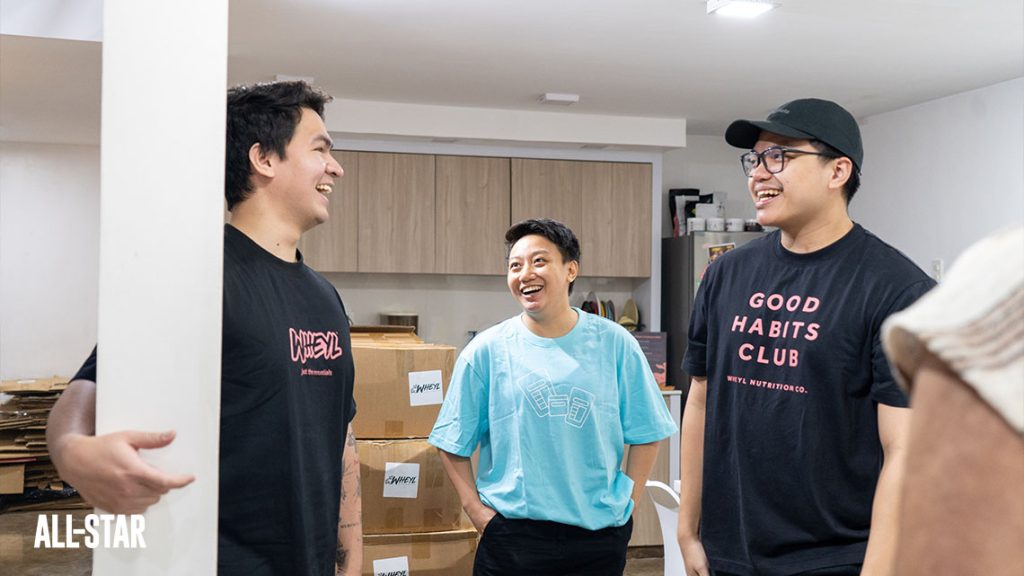
Community, in fact, appears to be one of the defining threads in the Wheyl story.
The company’s direction has been shaped by the people around it: lifters, runners, CrossFit athletes, powerlifters, climbers, students, beginners, and everyday consumers who care about fitness and performance.
“It helps that we have such a fitness-oriented team,” co-founder and General Manager Patty Montero says. “We just so happen to attract people who are into fitness and also love the brand.”
That cannot be easily manufactured. It is not simply marketing to a community from the outside. It is part of that community. It listens to what people are asking for, notices what gaps exist, and responds with products that make sense for real use.
“It’s a mix of personal experiences as well as what we get from the community,” Patty says. “We take that feedback seriously.”
That passion has translated into support across a wide range of sports. Wheyl has made a point of showing up for both mainstream and niche communities. The company traces a meaningful part of its early growth to CrossFit, whose athletes embraced the brand in its formative years.
“We started off with CrossFit athletes. That’s where we got our growth,” Jason says. “If you just give to them what they need and give it genuinely, they’ll give back for sure.”
From there, the support expanded. The brand has worked with athletes in weightlifting, powerlifting, running, obstacle course racing, climbing, basketball, volleyball, and more. It is even currently supporting the Philippine national climbing team, a reflection of its effort to go beyond the biggest, most visible sports and invest in a wider athletic ecosystem.
“We try to make sure that we support diverse sports as much as possible,” Jason states.
That commitment says something larger about what the company wants to become. Wheyl is not just interested in selling supplements. It wants to play a role in helping Filipino athletes grow, especially those who may not always receive the attention or resources they deserve.
“We have so many promising athletes that if only they were funded properly or they were given proper support, the sky’s the limit for them, honestly,” Jason says.
In that sense, Wheyl’s story is bigger than business.
It is also about belief: belief in Filipino consumers, belief in Filipino athletes, and belief in the idea that local brands do not have to think small.
The company’s rise challenges an old assumption that global always means better and local always means catching up. Wheyl’s journey suggests otherwise. It shows that quality, relevance, and trust can be built here, by people who understand the local market because they are part of it.
That same mindset can be seen in the company’s latest move: the launch of Wheyl Energy Gels, designed for Filipino athletes looking for fast-acting fuel that is smooth, reliable, and easy on the gut.
The launch also reflects how much broader the Wheyl vision has become. What started as a small whey protein idea has grown into a full-scale performance and wellness brand that is still listening, still learning, and still building.
For aspiring founders, that may be the most powerful part of the story. Wheyl did not begin with unlimited capital, sophisticated infrastructure, or certainty that it would work. It began with a gap in the market, a willingness to act, and enough resilience to keep going through the awkward, imperfect stages that most people never see.
Choosing to build something of their own changed everything.
In a country filled with young people who are creative, driven, and full of ideas, Wheyl offers a compelling reminder that great brands do not always start big.
Sometimes they begin with honest, hard-earned capital, a clear sense of purpose, and the courage to keep improving.
Most of all, it is a story that makes you think maybe the next great Filipino brand is already being imagined somewhere right now, by people brave enough to start small and dream big.
Photos Via: Thomas Borja