Gilas Fans Should Start Paying Attention to Hans Patagoc
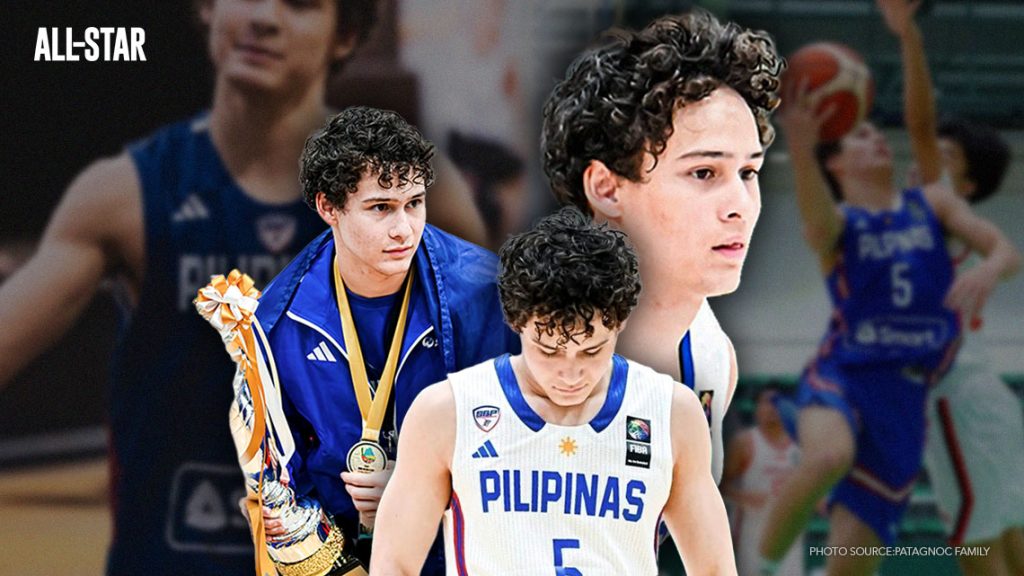
Hans Patagoc is a 17-year-old, 6-foot-1 prospect from the Class of 2027 at Obra D. Tompkins High School who plays primarily at point guard and has already built a resume that stretches from U.S. high school basketball to Fil-Am circuits and the Gilas Pilipinas Youth program.
A young guard from Katy, Texas. A high-IQ point guard. A shooter. A competitor. A player with college interest, international experience, and the kind of early resume that makes people in basketball circles start quietly asking the same question: how good can he become?
But that version skips the parts that explain why any of this matters.
It skips the backyard in Texas, where lights had to be set up so a young Hans could keep shooting after dark. It skips the hours spent dribbling alone, the workouts he asked his father to record so he could study his technique, the virtual training sessions during the pandemic so he would not lose a step. It skips the times he was one of the smallest players on the floor and had to turn being overlooked into fuel.
And it skips the moment when a young hopeful, raised thousands of miles away from Manila, stood in a Gilas Pilipinas jersey, heard the Philippine national anthem before a game, and turned what started as a childhood activity into something much bigger.
“Watching Hans represent the Philippines means more to our family than words can fully express,” his father, Glyn, said in an exclusive interview with ALL-STAR Magazine.
“We never imagined that wearing the Gilas jersey would even be a possibility. Hearing the Philippine national anthem before games and seeing him take the court representing his heritage was an emotional moment that brought tears to my eyes.”
That is the heart of this story.
Before Gilas, the national team attention, and the college conversations, Hans was a kid in Katy, a city just outside Houston, trying to find his place in a basketball community that his family describes as filled with former NBA and professional players.
His father remembers the first turning point clearly: Hans was in third grade when a friend invited him to join a club team called the Warriors, which later became The Lab Basketball. By chance, his coach was Karon Bradley, a former Marquette player who played alongside Dwyane Wade during the Golden Eagles’ Sweet 16 NCAA run in 2003, and later played professionally in Europe.
The family’s expectations then were modest at best.
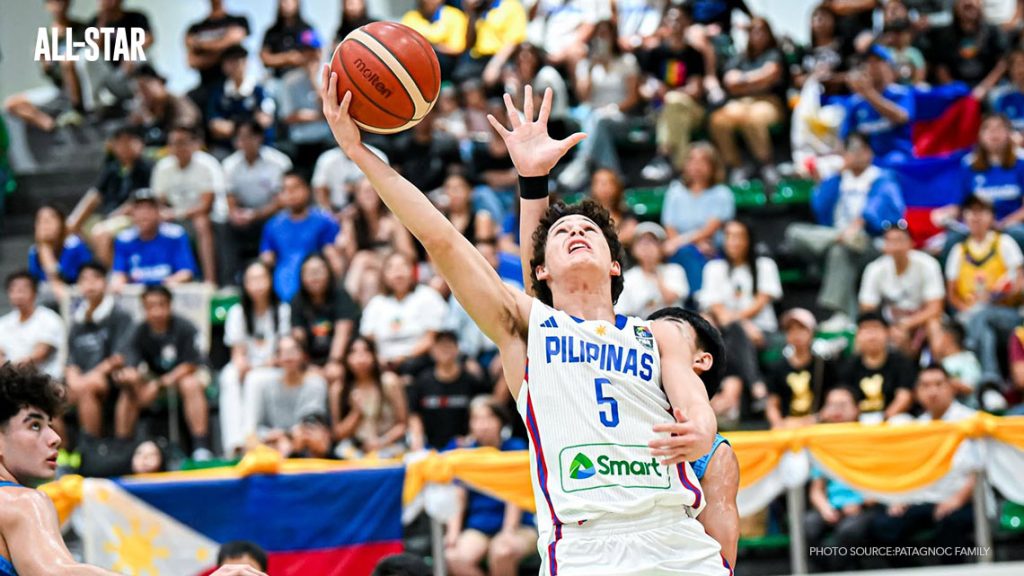
“At the time, our goal for Hans was simple,” his father said. “We hoped he could one day make his high school varsity team. We didn’t know any better.”
Then Bradley gave them a different vision. At the end of that season, he told the family he believed Hans had the potential to play college basketball. He pointed to the young guard’s competitiveness, athleticism, ball-handling, shooting, basketball IQ, and motor.
“Hearing that from someone with his experience changed our perspective,” his father said. “From that point forward, Hans committed himself to improving every day.”
That daily commitment became the quiet foundation for what followed.
Hans would eventually learn from coaches and mentors connected to names with deep basketball experience, including programs tied to Nenê Hilario, Brian Skinner, Tony Crocker, and Rashard Lewis. He would grow through high school competition, AAU circuits, Filipino-American tournaments, and eventually the Gilas Youth setup.
But his own explanation for the journey is simple. He describes it like a series of doors that opened because he kept showing up.
“I think my high school has helped me a lot by giving me great experience playing against high-level players and teams,” Hans said “I’ve had a lot of great coaches in AAU which helped me get better and developed my skills to where I’m at now.”
In 2023, Hans attended the Fil-Am Nation Select Global Summit in Houston. It was not part of some grand, carefully-mapped plan. According to him, it was a “last minute decision.” But that decision helped redirect the course of his basketball life.
“It made a huge impact on me. By being in the top 20, I was invited to play in Manila Live/NBTC, which started the journey of playing with Gilas.”
For many young Filipino-American players, the road to Philippine basketball does not begin with a passport or a national team invitation. It begins in community gyms, local tournaments, family conversations, and weekends spent discovering that basketball can be a bridge to a place they know through parents, relatives, food, language, and lore.
For Hans, one of the earliest bridges was the United States Filipino Basketball Association. He was 12 when he was invited to represent Houston in the Intercity tournament, competing against Fil-Am players from different cities.
“We’ve won it the last three years in a row,” Hans proudly stated.
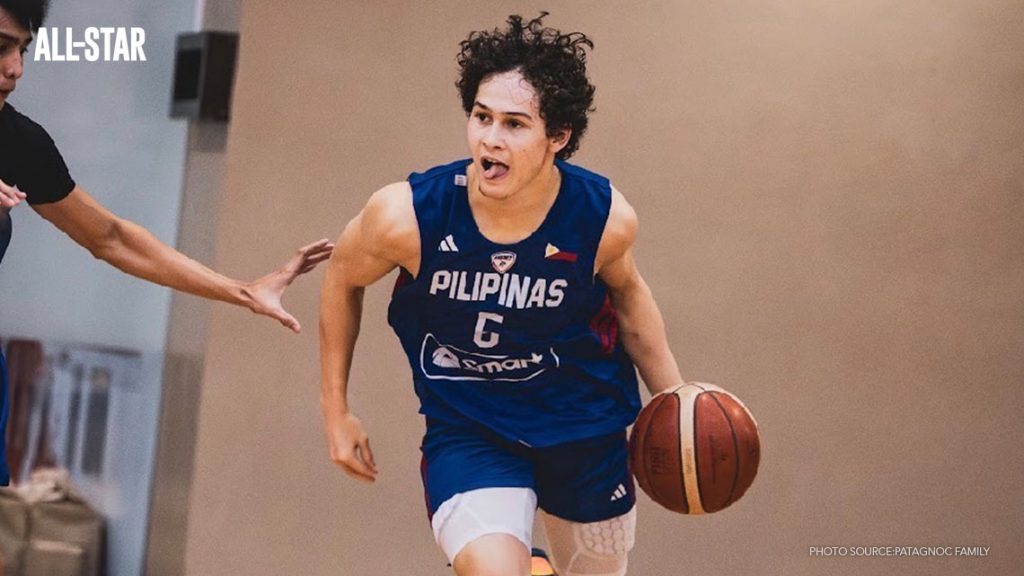
His father said Hans grew up around a strong Filipino community in Houston. He watched his father play in local Filipino basketball leagues. He was surrounded by organizations and community leaders who used basketball as a way to bring families together. Through that environment, his Filipino identity did not exist separately from basketball. It grew with it.
“The Filipino community in Houston has also played a huge role in keeping those connections strong,” his father said.
That community eventually connected with Fil-Am Nation, Coach Rodel Lizan, and Coach Cris Gopez, who helped guide the family through Hans’ Manila Live and NBTC experience and, just as importantly, the process of securing his dual citizenship and Philippine passport before he turned 16, so he could become eligible to play for Gilas.
The basketball opportunity was one thing. The paperwork, planning, and timing behind it were another.
“Seeing Hans wear the Gilas jersey felt like the culmination of all those years of staying connected to our heritage while building a life here in the United States,” his father said. “It was a moment of immense pride for our entire family here in the States and back home in the Philippines.”
The journey became real after Manila Live and NBTC, when Hans was invited to work out with Gilas coaches. Later, Gilas Youth mentor Juno Sauler followed him on Instagram. Communication followed. A relationship formed.
For Sauler, what stood out was not just the skill.
“His maturity and basketball IQ,” Sauler highlighted when asked by ALL-STAR. “He plays with good pace, makes the right reads, and comes in with a coachable attitude.”
His SEABA U18 stint included 14 points, six assists, and five rebounds against Vietnam, followed by 14 points, three rebounds, and three steals against Thailand.
Young guards are often judged by what they can do with the ball in their hands. Sauler’s description points to something underrated: whether a player can enter a team environment, absorb a system, understand his role, and impact winning without needing the game to revolve around him in heliocentric fashion.
Hans believes that is where he thrives.
“I would agree with the description as a winning PG,” Hans said. “I will do everything needed to win a game, such as diving for loose balls, giving what the defense gives me whether it’s playmaking or scoring.”
He continued: “I’m always sprinting back on defense and blocking shots when needed, going to the boards for rebounds and staying active. I’ve also been described as someone with a high basketball IQ.”
In the Gilas Youth environment, Hans was joining a group with limited preparation time, different teammates, a different system, and the weight of a country attached to every possession.
“What it taught me was that I can adapt quickly in new situations,” Hans said. “Playing with a new group for such a short amount of time, everyone being talented, I had to find ways to be effective whether it was being a facilitator or a scorer, at the same time being active and doing what it takes to win.”
Sauler saw the same thing.
“He understood his role and showed excellent feel for the game,” Sauler said. “Adjustment was easy for him and he could follow team concepts we were instilling.”
There was one moment during the SEABA U18 qualifiers when the meaning of it all became impossible to miss.
It was not a shot. It was not a box-score line. It was not even a play.
It was the fans.
“When all the fans stayed after the games to meet the team and how excited they were to cheer us on, that made me realize how important these games were and how impactful it was for the Philippines,” Hans said.
“Then afterwards, all the media, social media posts being seen by people around the world with hundreds of thousand views.”
That is often when a young player starts to understand the difference between attention and responsibility. Attention is people watching. Responsibility is realizing why they care.
Hans is still learning that balance. He is young enough to be at the beginning of his story, but accomplished enough that people are already watching the next chapters. He has college interests.
His family is not closing the door on where basketball may eventually take him, with his father saying Hans’ first choice is still to play Division I in the United States, but that spending a month with Gilas, making the 12-man roster, and building friendships in the Philippines “opened our eyes for sure about the possibility of playing in the country.”
He has strong academics. He has represented the Philippines. He has played against high-level competition in the United States and experienced the demands of international youth basketball.
Still, when asked how he balances pride with the work ahead, his answer is short.
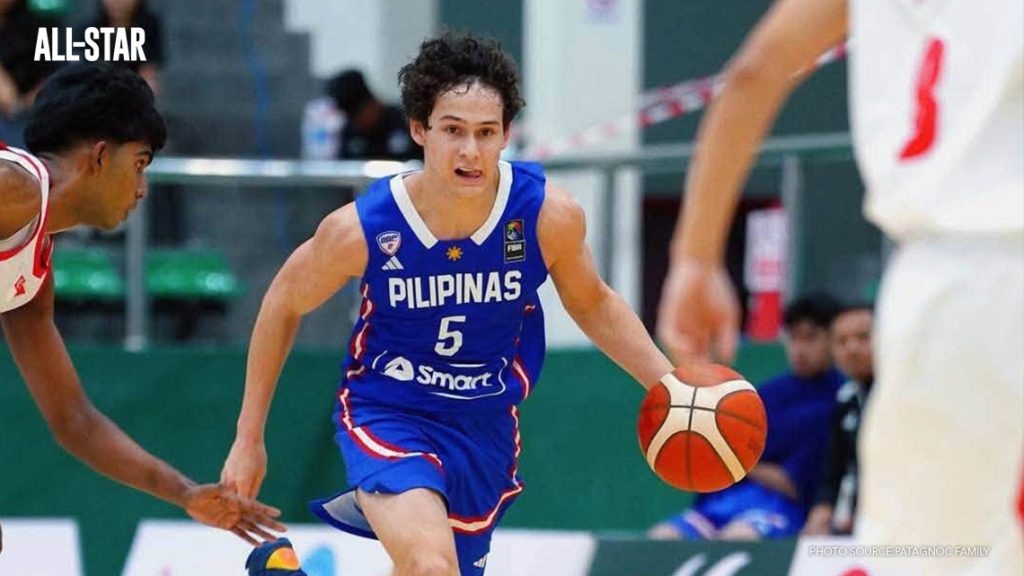
“There’s always another level to reach.”
For a guard, pace is control. IQ is trust. Paint touches are pressure. A young player who understands those three things already understands that basketball is not just about getting to his spots. It is about bending the defense, forcing decisions, and creating advantages for everyone else.
Hans also knows what must come next.
“Be more consistent making tough and contested shots,” he said. “Getting stronger and bigger.”
Sauler identified a similar development path.
“If he continues to develop physically and improve his shooting and playmaking, he has a very high ceiling.”
His father has seen it too closely to romanticize it. He has seen the sacrifice behind the promise.
At the end of this past school year, Hans finished his final exam on May 21 and went straight to the airport to fly to Manila for the Gilas U18 tryout. He missed graduation events and end-of-school celebrations with teammates and friends, many of them seniors heading off to college. Priceless memories.
Those are the details that do not always make it into highlight reels.
“What people don’t always see is the drive behind the scenes,” his father said. “Every time he was overlooked, he responded by working even harder.”
He added: “Hans is naturally quiet and reserved, but once he steps on the basketball court, he becomes fearless, he communicates, and he’s got the inner drive to win.”
That is why his story is not just about where he is now. It is about what all of this might become.
There will be more games, more evaluations, more recruiting conversations, more flights, more practices, and more nights when the work happens away from the cameras.
There will be people who discover him through a Gilas box score, others through a college offer graphic, and others through a clip on social media.
But the people closest to Hans know the real story started much earlier.
It started with a third-grade coach who saw something. A family that listened. A backyard that stayed lit after dark. A Filipino-American community that kept him connected. A last-minute camp decision in Houston. A passport. A national team invitation. A jersey. An anthem.
And a young guard who is beginning to understand that the dream he is chasing is no longer only his own.
“What I want people to realize,” Hans said, “is that it’s not easy, but it’s all worth it.”