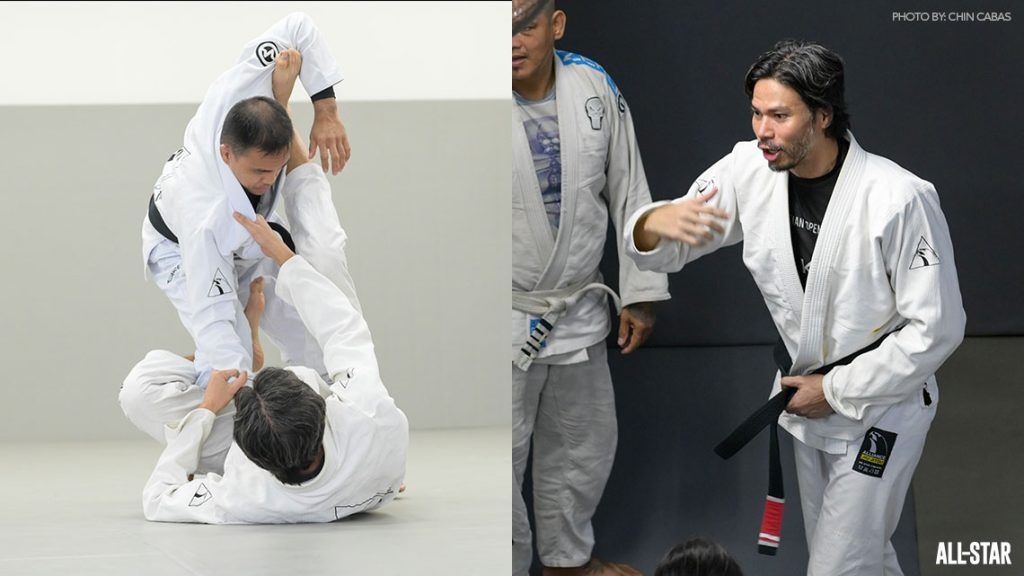
Mark Entrata: Finding Life Through Jiu-Jitsu
For Alliance head instructor Mark Entrata, Brazilian Jiu-Jitsu started as a way to learn how to fight. Nearly two decades later, it has become a way for him to understand movement, change and life itself.
Before Brazilian Jiu-Jitsu, Mark Entrata was more interested in art than sports.
As a kid, he loved drawing. He also became interested in playing guitar. Basketball was something he played mainly because his friends did, but it was never something he was particularly passionate about.
“I did basketball more to be with my friends,” Entrata says. “It’s not something that I’m like, ‘Oh my God, I can’t wait to play basketball.’”
Jiu-Jitsu was different.
Entrata discovered the sport when he was 22. At the time, Brazilian Jiu-Jitsu was still growing in the Philippines, but what immediately caught his attention was seeing smaller practitioners defeat much bigger opponents.
“I saw smaller guys beat bigger guys. I’m like, now that’s interesting.”
For Entrata, there was something fascinating about the idea that technique could overcome size and strength.
“Now there’s science behind it. Not brute strength, not speed.”
That curiosity was enough to get him started. Once he began training, however, he quickly realized there was much more to Jiu-Jitsu than learning how to fight.
It Started With Curiosity
Entrata describes Jiu-Jitsu as a puzzle. You learn a concept, try it, see what happens and then figure out what to change when it doesn’t work.
“You understand the concept and see, but what if I try it this way?” he says. “Two things will happen. Either it works or it doesn’t.”
That process kept him interested. There is a structure to Jiu-Jitsu, but there is also room to experiment and find your own solutions.
For someone who grew up drawing and exploring different forms of art, that part of the sport felt familiar. Entrata saw the same kind of creativity in movement and technique that he had found in drawing.
“I love the art part of it,” he says.
Over time, that curiosity turned into a lifelong commitment. Entrata has now been teaching Jiu-Jitsu for almost 20 years, and in 2018, he officially became part of Professor Rubens “Cobrinha” Charles Maciel’s Alliance team.
Today, Entrata is a Brazilian Jiu-Jitsu black belt and head instructor of Alliance in the Philippines. But after all these years, some of the biggest lessons he takes from Jiu-Jitsu have little to do with technique.
Jiu-Jitsu Doesn’t Lie
One of the things Entrata values most about Jiu-Jitsu is how honest it can be.
“You cannot fake,” he says. “You cannot emotionally convince me that this works.”
A technique either works or it doesn’t. No amount of confidence can change the result.
“If it’s BS, it’s BS because it will not work,” Entrata says. “Regardless how you feel about it.”
That idea has also changed the way he looks at life outside the academy. People can convince themselves that something is true, or that someone is the best at what they do, but eventually, reality has a way of providing an answer.
“You can fool yourself that this person is the best,” he says. “But what is the result?”
For Entrata, Jiu-Jitsu constantly brings him back to that reality. You train, make mistakes, learn from them and try again. The mats give you very little room to hide from what actually works.
Knowing When to Let Go
Some of Entrata’s lessons from Jiu-Jitsu are surprisingly simple. Take grips, for example.
A good grip can give you control, but when the situation changes, that same grip can suddenly become a disadvantage. What worked a few seconds ago may no longer be the right answer.
“You have good grips, but if the situation changes, sometimes those same grips that you had will be worse for you,” he explains.
For Entrata, the lesson is bigger than Jiu-Jitsu: sometimes you have to know when to let go.
“Meaning, what’s the lesson there? Know when to let go.”
It is an idea he sees reflected in everyday life. Holding on to something simply because it worked before can sometimes prevent you from moving forward. Just as positions change on the mat, circumstances change outside of it, and you have to be willing to adapt.
“It’s those parallels in life,” Entrata says.
Nearly Two Decades on the Mats
After almost two decades of training and teaching, Entrata’s relationship with Jiu-Jitsu has naturally changed. What started as curiosity has become his profession, but the sport continues to give him new things to think about.
His journey eventually brought him under Cobrinha’s guidance, officially joining Alliance in 2018. Since then, Entrata has continued to develop not only as a practitioner but also as an instructor.
His role today is about more than teaching techniques. He is also helping people discover a sport that can initially seem intimidating, particularly for those who have never considered themselves athletes.
That perspective is personal for Entrata. He knows what it is like to enter Jiu-Jitsu without a traditional sporting background, and he understands that becoming better does not always mean becoming the strongest person in the room.
Sometimes, progress means becoming comfortable with being uncomfortable. Sometimes, it means accepting that you do not know something and being willing to learn from someone else.
And sometimes, it means asking the person who just caught you exactly what they did.
What Makes a Good Black Belt?
After spending so many years in Jiu-Jitsu, Entrata has seen all kinds of people walk through the academy doors. Some are naturally athletic, while others have little experience with sports. Some arrive confident, while others are shy or unsure of themselves.
Those differences have shaped the way Entrata looks at his role as an instructor. He pays particular attention to the people who may not immediately see themselves as athletes or competitors, because he has seen how much they can change through training.
During the interview, he talks about one young student, who was shy when he first started. Joseph lost his first Jiu-Jitsu match, but he continued competing. Eventually, the losses turned into wins, and he went on to put together a strong run of victories.
For Entrata, seeing that kind of transformation is one of the most rewarding parts of teaching.
It is not only about producing better competitors. Sometimes, the most meaningful progress is seeing someone become more confident, more capable and more willing to challenge themselves than when they first walked through the door.
Still Learning
Being a black belt does not mean Entrata believes he has figured everything out. If anything, Jiu-Jitsu has taught him that there is always something else to learn.
The sport has given him a way to test ideas, accept mistakes and adapt when things do not go according to plan. It has also given him a different way of looking at the world, where experience matters, but so does the willingness to question what you think you already know.
That may be what has kept him on the mats for so long.
What began at 22 as curiosity about how a smaller person could defeat a bigger one eventually became something much bigger. Jiu-Jitsu became his profession, his art and a way of understanding the world around him.
Nearly 20 years later, Mark Entrata is still learning from it.
And for him, that may be the point.