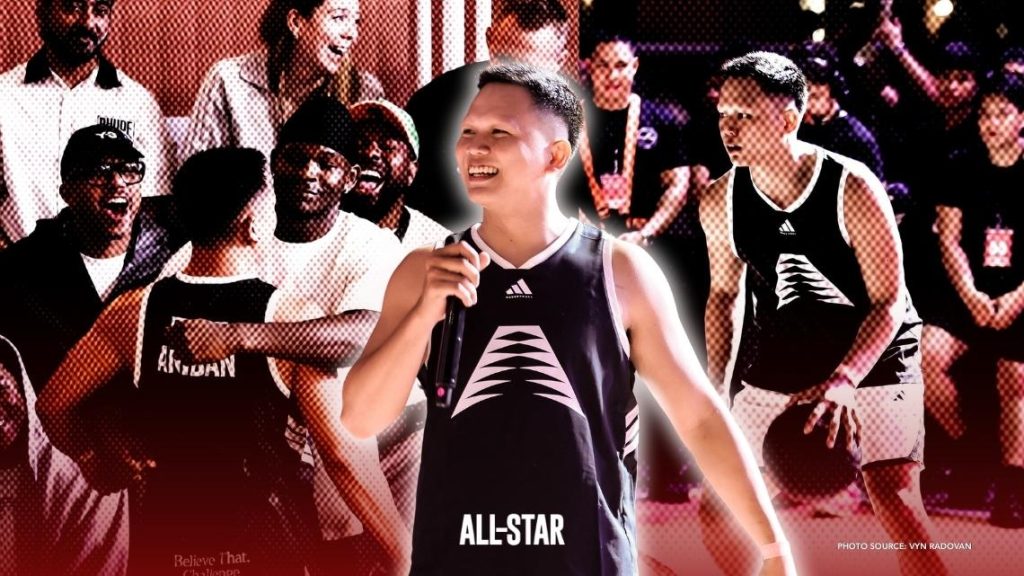
Russelle Aniban Stayed Ready for the Moment That Found Him
On the final possession of the Believe That Challenge, Russelle Aniban gave himself an ultimatum:
“Hindi na ako puwedeng matalo, at hindi na puwedeng mapunta ulit sa kanya yung bola.”
He backed his defender down, worked toward his left, and found the position to unleash a shot he wanted. The winning basket fell. Russ immediately sprinted toward Anthony Edwards, adidas’ special guest of the weekend, with adrenaline spilling out in every direction.
“Come on, Ant! Let’s go, Ant! Give me a chance! Let’s play, just once!”
It looked like a spontaneous explosion from a newly crowned champion. In truth, nearly everything about that moment had been years in the making.
The easiest version of Russ’ story would begin with the NBA superstar waiting courtside and the tournament that placed an overlooked Filipino player in front of him.
The truer version starts much earlier.
The adidas x Foot Locker event did not turn Russ into a vindicated basketball player. It simply revealed one who had kept working long after the usual paths had closed.
Russelle, known to most as Russ, grew up in a broken family and learned responsibility early
Basketball first came to him through his father, whose games Russ watched and eventually tried to imitate. His father’s teammates on the Warriors Team in Balut were among the first people outside his family to believe he could play.
By 2016, Russ was already providing proof. In a comeback win for Manila Patriotic School over Hope Christian, he scored 19 points and made the decisive layup and free throw in the final seconds.
Yet what he remembers most is not his total. It is the energy his team brought against a strong opponent led by Harvey Pagsanjan, a future UAAP, NCAA, and MPBL recruit. Even then, Russ loved the hardest assignment, sought out the best player to guard, and carried a dream of reaching the PBA.
After two years with Manila Patriotic, he earned a tryout with the Letran Squires and made the varsity squad. He played in NCAA Season 93, experienced the Final Four, and joined Letran at the 2018 NBTC. For the first time, his basketball future appeared to have direction.
Academic problems ended his stay after one year
Russelle does not curtain that part of his story. As a teenager, he believed being good at basketball would be enough. Only later did he understand how much the traditional collegiate route provides: regular competition, exposure, a system, and a network that can open the next door.
He tried other schools, including Perpetual, but no move became permanent. A stint with the Bulacan Starks in the NBL also failed to take hold. He stopped training and eventually watched his weight grow to 105 kilograms, not ideal for a perimeter player pursuing basketball.
At 23, Russelle and his partner, Pauline Celada, became parents. Fatherhood changed the way he measured risk and responsibility. He returned to amateur basketball at La Consolacion College Manila and helped win an ISAA championship, but unresolved academics and then the pandemic closed that chapter, too.
So he moved to the edges of the basketball world, where talent can remain active without becoming visible.
Russ waited for paid “dayo” games at Kawit Court in Balut, Tondo, and played in leagues around and beyond Metro Manila. He drove full-time for Lalamove to support his child. At his lowest point, even Pauline suggested that he leave basketball behind for the stability of a regular job.
He understood why. But he still felt he had something left.
“Kung dati ginagawa ko lang ito para sa sarili kong pangarap, ngayon mas malalim na yung dahilan ko,” he said. “Ginagawa ko na ito para sa anak ko.”
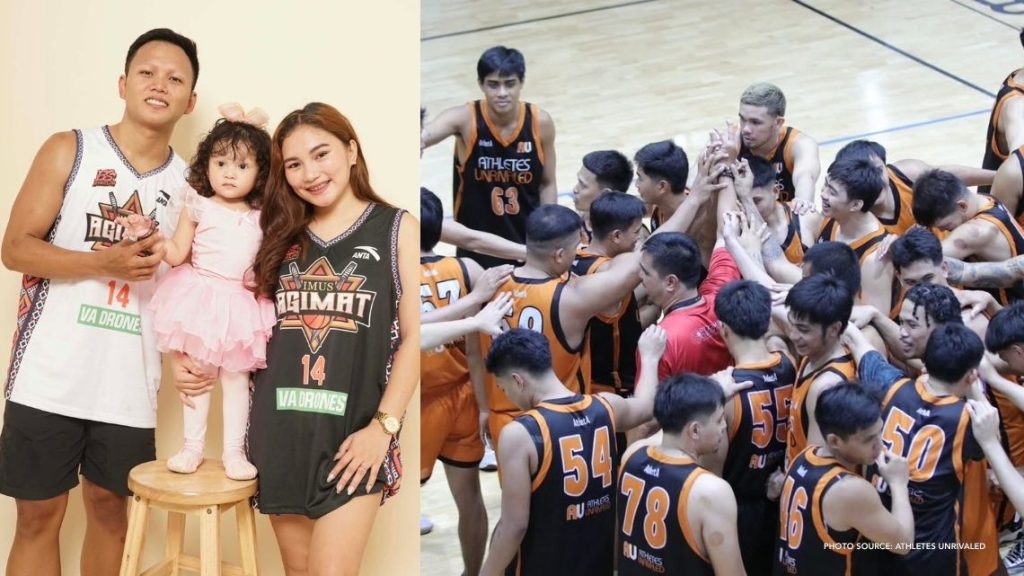
In 2024, another opening appeared. Russ reached the final 24 of an MPBL tryout in Valenzuela but missed the roster. Just when it felt like another rejection, Imus Agimat called and offered him a spot. His half-season stint did not produce the long-term security he needed, but it gave him proof that he could compete at a higher level.
Athletes Unrivaled entered his life at the right time
Russ joined on January 13, 2025, as one of the program’s pioneers. He was then driving for Move It full-time and playing in outside leagues while searching for something more stable. AU gave him regular training, coaching, competition, and a structure that allowed a working father to keep developing.
Jericho Ilagan said AU’s coaches initially saw a big man because of Russ’ build and physicality. The longer they watched, the more they recognized the guard underneath: the handles, feel for space, and instinct for creating a shot.
“With Russ, our job wasn’t to create that fire,” Ilagan said. “It was already there. Our job was to give it structure.”
Russ made AU’s initial pool for a Summer Jam campaign in Melbourne, only for a passport problem to prevent him from joining the final delegation.
Then a cousin tagged him in an Instagram post about the one-on-one tournament connected to Edwards’ Manila visit. Russ knew immediately that he wanted in. There was one practical problem: he needed to purchase a pair of AE 2s to become eligible, and he could not afford them.
After relatives were unable to help, he asked AU co-founder Jensen Ilagan for a salary advance. Before Russ could receive one, Jensen offered to cover the shoes himself.
“Kaya may Athletes Unrivaled para every time na may opportunity, ready tayo,” Jensen told him.
For Russelle, the gesture meant more than footwear. It told him that the people around him did not merely ask him to stay prepared; they were willing to help him reach the starting line.
The tournament’s three-dribble, one-stop format felt familiar. Russ had played that way for years at Kawit Court with cousins and friends. The field began with 16 groups of four, and he entered with a single mission: impose his intensity from the first possession and give nothing away.
In the third round, Lenon threatened to end his run after taking the lead. Russ briefly felt the tournament slipping away, then recovered when the ball returned to him. He stopped thinking beyond the possession in front of him. Conditioning, confidence, composure, physicality, and mentality—the qualities sharpened in quiet gyms and unglamorous leagues—carried him through.
When it was over, Edwards asked what Russ planned to do with the cash prize. Russ said he wanted to upgrade the motorcycle he used in everyday life.
“Okay, you better get a helmet too,” Edwards replied.
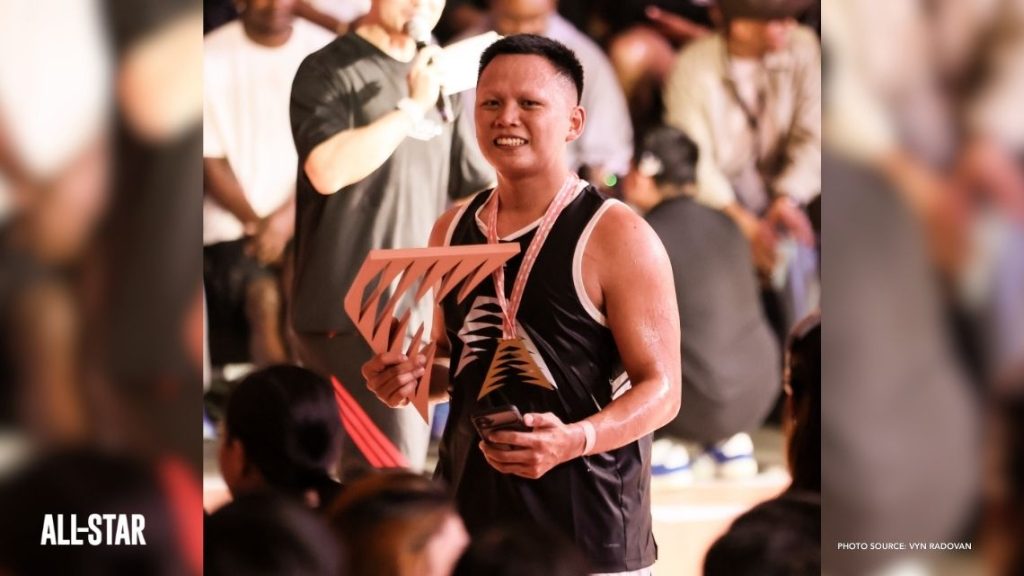
The joke stayed with Russelle. So did what followed: Edwards placed the medal around his neck and put an arm around him. Russ cried. The boy who had dreamed of meeting an NBA star, the father who made deliveries between basketball opportunities, and the player who kept hearing no were suddenly standing in the same frame.
Since the victory, recognition, messages, and new opportunities have arrived. The prize can improve the motorcycle that supports his daily travel, but the deeper reward is the confidence that he belongs when given a real chance. Now he wants a stable place on a good team and an opportunity to prove the tournament was not a one-time performance.
“I think the biggest thing this victory changes for Russ is not necessarily who he is as a basketball player,” Jericho said. “It changes who gets to see him.”
That distinction is the soul of the story.
Anthony Edwards did not discover Russelle Aniban that evening. The tournament gave an audience to work that had been happening for years in school gyms, local leagues, delivery shifts, failed tryouts, family conversations, and practices nobody outside the program was watching.
Russelle was not simply waiting for his opportunity. He was preparing for it. And when the moment finally found him, everyone else was able to see what had been there all along.