What the Tri-Nation Friendlies Revealed About the Philippines
The scorelines were identical. Two matches, two convincing 5-1 victories over Guam and Myanmar.
But beyond the goals and results, the recently concluded Tri-Nation Friendlies offered a glimpse into what the Philippines could become ahead of the ASEAN Hyundai Cup.
For a squad still building chemistry and integrating new faces, the tournament served as an important measuring stick. The Philippines not only produced goals in abundance but also displayed cohesion, confidence, and a growing understanding across the pitch. Among the positives was the performance of striker Jens Sebastian Rasmussen, who came off the bench to score twice late in the second half against Myanmar. The brace could prove to be a significant confidence boost for the towering forward as the Philippines prepares for the challenges ahead.
“Its hard to describe but its one of the best feelings to score for the country,” Rasmussen said.
Several newcomers immediately made their mark. Players such as Cole Mrowka and Kenji Nishioka showcased the quality they can bring to the national team setup, while established members of the squad continued to provide stability and leadership.

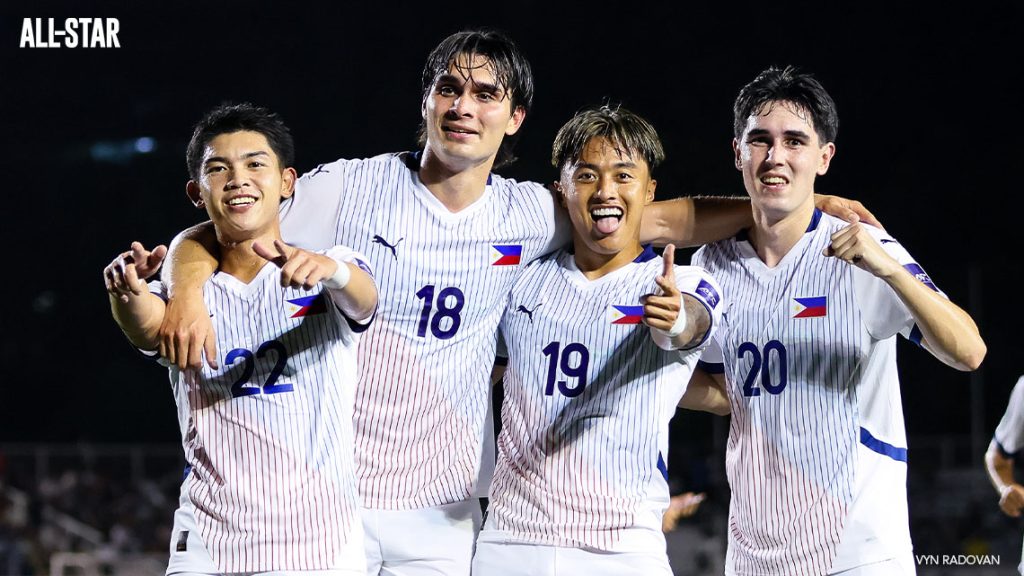
What stood out most, however, was the growing chemistry within the squad. Despite several new faces joining the national team setup, the Philippines looked comfortable and cohesive throughout the tournament. The understanding between players was evident in their attacking play, while contributions came from all over the pitch—including defenders Jeff and Paul Tabinas, who both found themselves on the scoresheet. It showed a team becoming more comfortable playing together.
“It will not be easy. Everyone is motivated and to fight for the competition. In the Southeast Asia a lot of teams are good and high quality but I think we can compete also,” Jeff Tabinas said
The performances arrive at an important time for the Philippines, who have been drawn into a challenging Group B at the ASEAN Hyundai Cup. Awaiting them are regional powerhouses Thailand and Malaysia, alongside Laos and Myanmar.
On paper, it is one of the tournament’s toughest groups.
Yet the Tri-Nation Friendlies showed that this Philippine side possesses both the talent and depth to compete. The attacking football, squad chemistry, and impact of new recruits suggest a team capable of going toe-to-toe with Southeast Asia’s best. The squad’s depth was equally evident from the bench, with Cholo Bugas making an immediate impact in the second half against Myanmar, providing two assists and helping maintain the team’s attacking intensity. It was another reminder that the Philippines have game-changers available beyond the starting eleven.

“We are very confident we can reach the final stage of the Hyundai Cup,” said Bugas.
The road ahead will be demanding, and tougher tests undoubtedly await. But if the Tri-Nation Friendlies proved anything, it is that this Philippine squad is beginning to find its identity.
And with the ASEAN Hyundai Cup fast approaching, there is growing reason to believe that the Philippines can be more than just participants—they can be genuine contenders. Their campaign begins on July 28, 2026, against a familiar opponent in Myanmar, offering the Philippines an early opportunity to build on the momentum gained from the Tri-Nation Friendlies and make a strong start to their tournament journey.
For more exclusive football stories, click here.