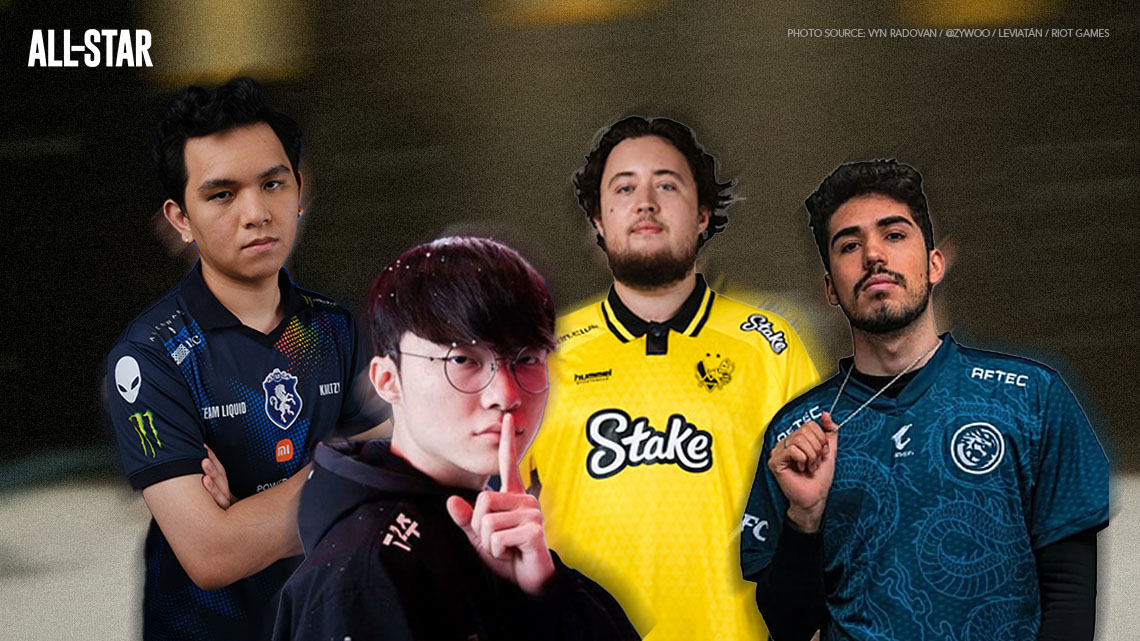
LOADING: 2026. Esports’ Billion-Dollar Future
The future of esports is always a year away. Long enough to promise everything. Close enough to demand proof. As 2026 loads, the billion-dollar industry finds itself less interested in growth charts and more concerned with permanence—who lasts, who leads, and who survives relevance.
The “Six-Star” King: Faker’s Absolute Reign
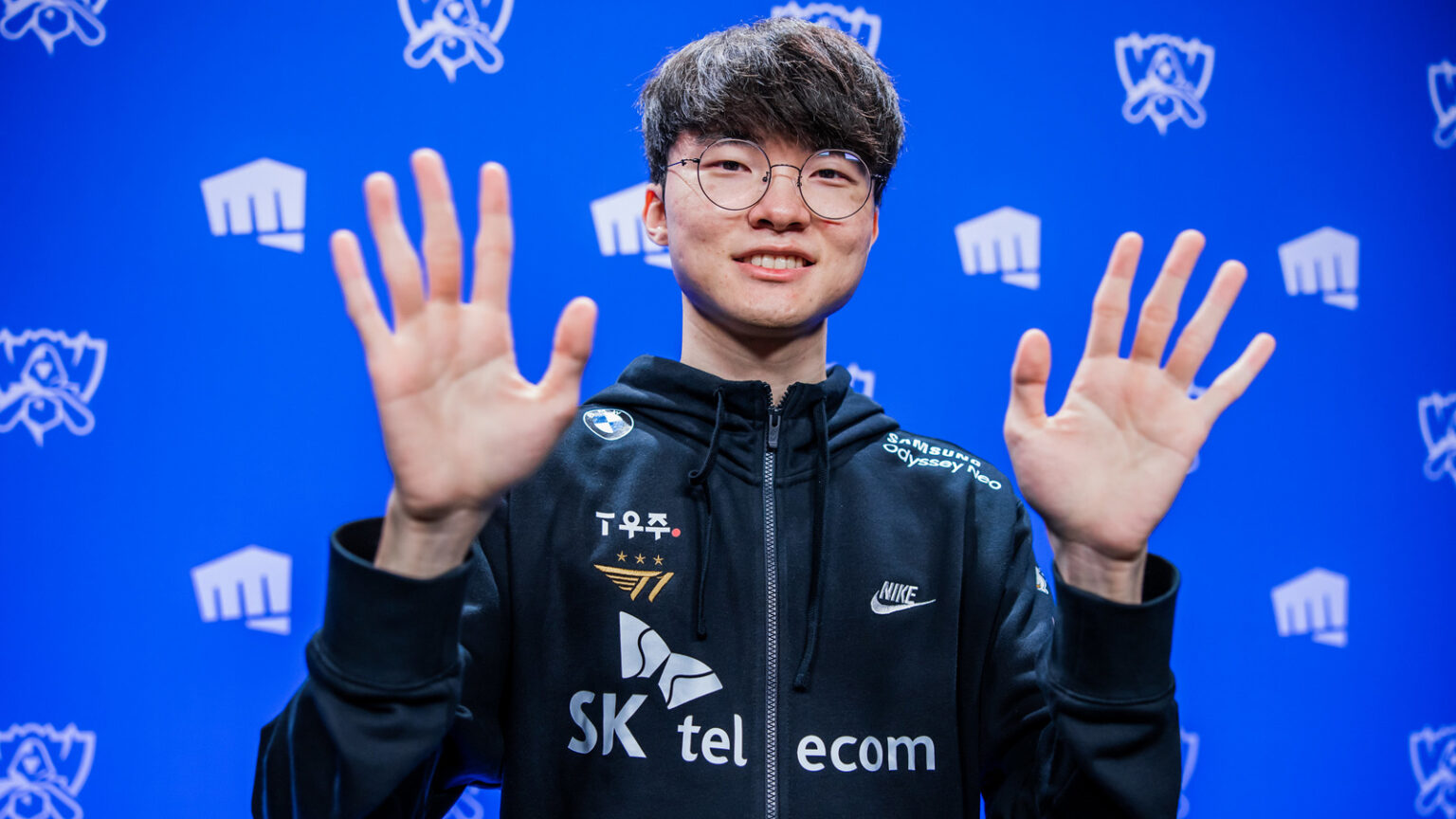
This is the mandatory lead story. T1 and Faker winning Worlds 2025 for their 6th title (defeating KT Rolster in a record-breaking final) is a shift in the GOAT conversation from “one of the best” to “the only one.”
They keep trying to end him. The game patches itself into new shapes, the meta revolts, time does what it always does to prodigies. And still Faker wins.
Worlds 2025 was not supposed to be about coronation. It was framed as nostalgia, maybe even sentimentality—a final bow against a league that no longer looks like the one he entered. Instead, Faker and T1 dismantled KT Rolster in a record-breaking final and claimed a sixth world title, turning the GOAT debate into a formality. “One of the best” finally gave way to “the only one.”
League of Legends is engineered to erase dynasties. Rosters implode, orgs panic, stars burn out. T1 did something radical: they stayed. Through reinvention rather than replacement, the core endured while the rest of the world fractured around them.
And now there is 2026, hovering like a dare. For anyone else, it would be a victory lap. For Faker, it reads less like an ending and more like another inconvenience. Longevity, here, is not survival. It is dominance stretched across eras—undeniable, inconvenient, and still unfinished.
Team Liquid Philippines’ Quest for the Golden Road
For the first time in history, a Filipino team is poised to achieve the Golden Road. In esports parlance, the Golden Road is the rare feat of winning all major tournaments in a single calendar year. All eyes are on Team Liquid Philippines as they gun for the country’s sixth M-series world championship in Mobile Legends: Bang Bang esports.
Team Liquid is the biggest story of 2025, with KarlTzy at its center. In January 2026, they are poised to make history in M7 as the first Filipino team to achieve the Golden Road, the rare feat of winning every major title in a single calendar year.
To “complete the road,” a team must win:
- Domestic Season 1 (MPL PH S15) – [CHECK]
- The International Mid-Season (MSC 2025 / Esports World Cup) – [CHECK]
- Domestic Season 2 (MPL PH S16) – [CHECK]
- The World Championship (M7 World Championship) – [PENDING]
At the center of Team Liquid’s mission for the Golden Road is Karl Gabriel Nepomuceno, better known as KarlTzy, who was widely baptized as the MLBB esports GOAT after he and his team won the MSC 2025 at the Esports World Cup, the missing piece in KarlTzy’s trophy cabinet.

If Liquid completes the road in January 2026, the story for the rest of the year becomes: “The Bounty.” Every team in the 2026 MPL and the EWC will be built specifically to “slay the giants,” Team Liquid Philippines.
The King’s Gambit: HoK Goes Global
Honor of Kings has been around for quite a while, but 2025 was the year the “sleeping giant” woke up. With the launch of the Honor of Kings Global Pro League (GPL) and a massive $10M mid-season prize pool in Riyadh, the MOBA landscape is being redrawn. In 2026, the question isn’t if China will dominate, but which region—Brazil, EMEA, or Southeast Asia—will be the first to topple the Great Wall.
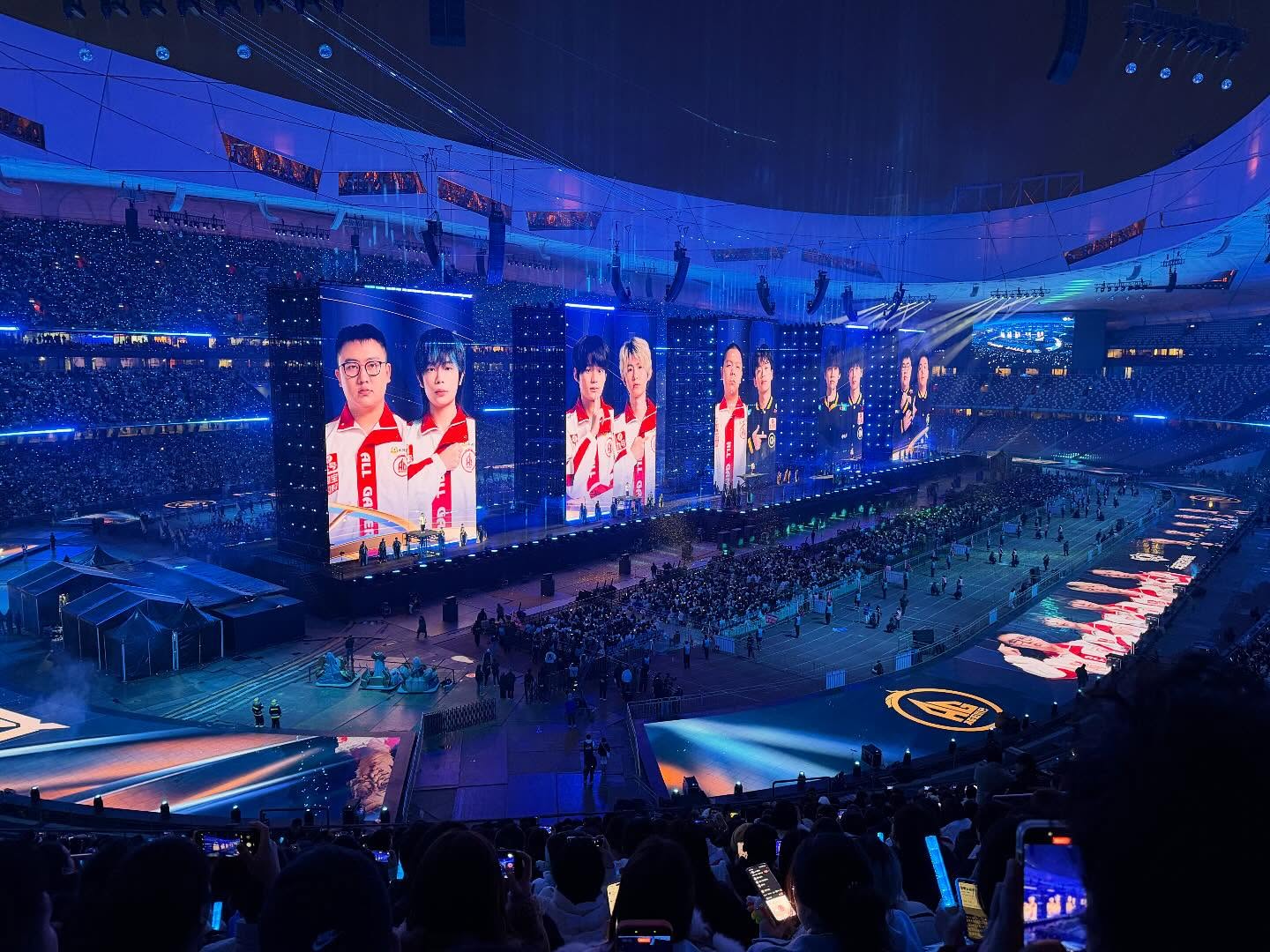
2026 is the year Honor of Kings (HoK) goes for the throat:
- The Global Pro League (GPL): HoK will launch its formal regional leagues (Spring and Fall splits).
- The Roadmap: From the Invitational S4 in early 2026 to the KIC 2026 finale, HoK is spending millions on exclusive skins and “Nation Clash” events to lure the global fanbases.
The “Perspective Pivot”: PUBG’s TPP Gamble
In a move that has divided the community, PUBG Esports is officially transitioning to Third-Person Perspective (TPP) in 2026.
- What to expect: A massive influx of casual players watching the pro scene, but a potential exodus of “purist” veterans. This will be the biggest experiment in bridging the gap between “pro play” and “everyday play.”
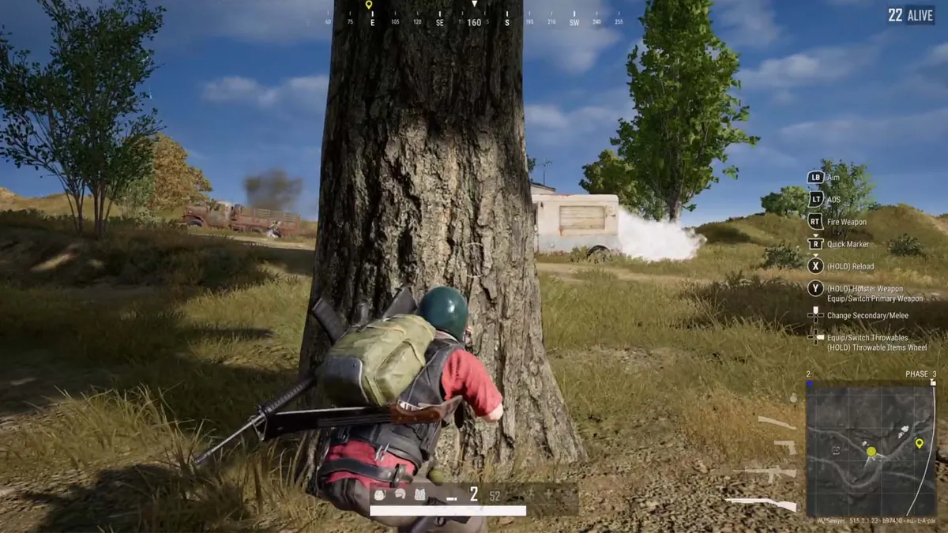
For years, PUBG Esports treated First-Person Perspective as doctrine: harder, purer, closer to an idealized version of competitive integrity. Third-Person was popular, yes—but rarely taken seriously. In 2026, that line disappears.
The shift to TPP is not a rules tweak; it is a philosophy change. PUBG is choosing familiarity over orthodoxy, accessibility over appeasing its most devoted purists. The result will be immediate and uneven. Viewership is likely to swell as casual players finally recognize what they see on screen—the angles, the peeks, the habits they know from everyday play. At the same time, a quieter exit is inevitable: veterans who built their identities around FPP’s discipline may decide the game they mastered no longer exists.
What follows is PUBG’s boldest experiment yet: can a esport thrive by mirroring its player base instead of distancing itself from it? TPP is a gamble on relevance—and relevance, in 2026, may matter more than reverence.
The LCK-to-LCS Migration 2.0
With promising stars like Zinie (KT Rolster Challengers) and Saint moving to North America for 2026, the LCS (now part of the LTA) is no longer a “retirement home.”
- What to expect: A revitalized North American scene. Expect Shopify Rebellion and Cloud9 to challenge the global hierarchy as they integrate elite Korean mechanical talent with Western aggression.
North America has heard the joke often enough to internalize it. For years, North America’s League of Legends Championship Series or LCS was framed as a soft landing—a place where Korean talent went not to evolve, but to exhale. That reputation is now being tested.
With emerging names like Zinie from KT Rolster Challengers and Saint crossing the Pacific for 2026, the migration feels different this time. These are not veterans cashing in on reputation. They are prospects choosing a new proving ground. The rebranded LTA, by extension, is no longer selling comfort. It is selling opportunity.
The results won’t be immediate, but the intent is clear. Organizations like Shopify Rebellion and Cloud9 are betting that elite Korean mechanics, when paired with Western aggression and looser macro instincts, can produce something unpredictable—and therefore dangerous—on the global stage.
Migration 2.0 is not about saving careers. It is about rerouting ambition. And if it works, North America stops being a punchline and starts becoming a variable again.
Esports’ Billion Dollar Hypergrowth
1. The Sponsorship Giant (35% of Revenue)
Brands like Red Bull, Mastercard, and Coca-Cola are no longer just “testing” esports. They are signing multi-year, nine-figure deals. For 2026, we are seeing “non-endemic” brands (car companies, banks, fashion labels) making up the bulk of the money, moving away from just keyboards and energy drinks.
2. The Riyadh Effect (The EWC Catalyst)
The Esports World Cup (EWC) fundamentally changed the math.
- In 2024, the prize pool was $60M.
- In 2025, it jumped past $70M.
- For 2026, the Saudi government’s $20 Million Club Partner Program investment alone is designed to stabilize 40 global organizations, ensuring they stay profitable regardless of tournament results.
3. Media Rights & Streaming Wars
While Twitch remains the dominant player (holding ~61% of viewership), YouTube Gaming and Kick are aggressively outbidding each other for exclusive broadcast rights. These media deals are projected to grow at a 25% CAGR, turning viewership numbers into cold, hard cash.
4. Mobile Gaming’s “Micro-Economy”
Games like MLBB and Honor of Kings generate billions in total revenue, but their esports segments specifically are now self-sustaining.
- Honor of Kings consistently generates over $100M per month in China alone.
- In 2026, the expansion of the Global Pro League (GPL) for HoK and the M7 World Championship in Jakarta are expected to drive record-breaking ticket and digital pass sales (like the “Battle Pass” models used to fund Dota 2’s The International).
5. The Betting Surge
A massive (and often invisible) part of the “Billion-Dollar” tag is esports wagering. By 2026, the global esports betting market is expected to account for a significant portion of the ecosystem’s total value, driven by the legalization of sports betting in more US states and European markets.
The Final Forecast
2026 will not save esports. It will expose it.
The year ahead is built on choices already made—about access, longevity, and where ambition is allowed to migrate. Some bets will age well. Others will look expensive and unnecessary. By the end of it, the industry won’t be bigger in spirit. It will simply be clearer.
For more exclusive esports stories, click here.