
Jacob Bayla, Sean Chambers, and the UAAP’s Unwritten Rulebook
Since the final Avengers: Doomsday trailer just dropped, let’s call Jacob Bayla’s dunk a “Nexus event.”
In the lore of the Marvel Cinematic Universe, a Nexus event is an action that deviates from the established timeline of the future. Simply put, it’s an event that was not supposed to happen.
Imagine if Bayla had decided to dribble out the precious few seconds of that fateful UP-Ateneo game on Nov. 7. In all likelihood, there would be no Louie Alas tirade and subsequent two-game suspension. There would be significantly less chatter about Bayla’s character. And—here’s the best part—there would be much more attention on the actual basketball that had just transpired.
Yet here we are, in a seemingly twisted branch of the UAAP’s Sacred Timeline. A branch that has taken ugly twists and turns, exacerbated by the fact that another key figure in this basketball world seemingly went against a script that is revered like scripture.
Yes, I’m talking about the unwritten rules. Unlike certain calls in the UAAP, there is apparently no challenging these edicts. (Which, I’m going to write here anyway—so now, they’re written instead of unwritten?)
Don’t score a basket in the dying seconds if you have a decisive lead.
Don’t call a timeout late in the game if you’re in firm control.
Perhaps it’s a futile exercise to debate who’s right and wrong when the unwritten rules are “broken.” Maybe the better question to ask is, what principles are really at play here? Ano ba ang ipinaglalaban natin?
Respect and Its Many Faces
The way I see it, the unwritten rules come down to respect. For many years, teams and players have supposedly been bound by the obligation to recognize when they have their opponent beat. This recognition should then be translated into last-minute, even last-second restraint as far as scoring baskets and calling timeouts is concerned.
Can this cultural expectation be deemed counterintuitive to the competitive nature of basketball, which calls for athletes to exhaust all efforts until the final outcome is secured? Yes. But does every part of every culture—institutional, local, national, or global—make sense? Hell no.
I keep using the word “culture” because that’s what the unwritten rules are: the all-encompassing ecosystem that every player and coach walks into when they decide to participate in Philippine basketball. In this country, adherence to the unwritten rules is as entrenched as jeepneys, puto bumbong, and national budget insertions.
So, when Bayla threw down a flimsy-looking dunk in that Battle of Katipunan installment, he was defying a principle of basketball culture that had existed long before he was born. I would swear this under oath: The moment that dunk went down, my first reaction was, “Dapat ‘di mo na ‘yun ginawa.” Not because I’m any sort of cultural purist, but because, from a pragmatic perspective, I knew exactly what would unfold in the subsequent moments.
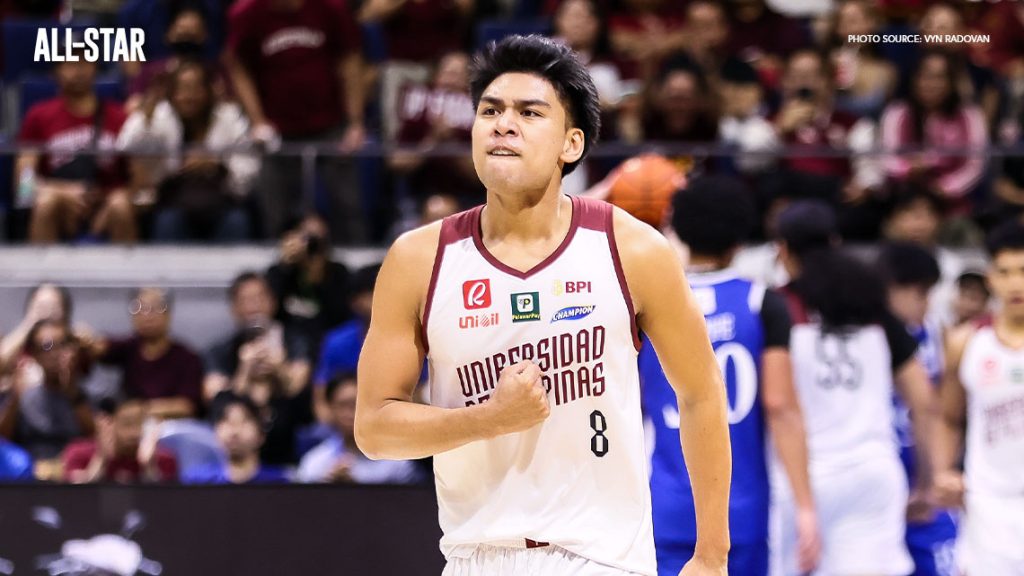
The expletives. The finger-pointing. The pull-aparts. You could see it coming a mile away, and to be quite frank, Bayla could have saved himself the trouble by second-guessing (of all shots) a dunk.
But does that necessarily make Bayla a detestable basketball player, as many netizens have framed him to be? The truth of the matter is, no UAAP official (the referees of that game included) deemed that dunk to be any sort of infraction. As far as the UAAP’s sanctioned rules—meaning, the ones that are actually written and officially upheld—all Bayla did was to score a field goal. That’s it.
As for the smugness on Bayla’s face while Alas verbally lashed out at him? I’m not sure any of us would be saying mea culpa either in that moment of heated confrontation. On the other hand, if we’re talking about respect, there’s something inappropriate when you have an elder authority figure directing outrage at a young competitor who isn’t within his jurisdiction. Had Alas aired out his grievances to coach Goldwyn Monteverde or other members of the UP staff, I think he would’ve caught less flak.
Consistency Is Key
On that topic, has UST’s Pido Jarencio been given enough flowers? If not, I’m sending something from Dangwa.
You see, the Growling Tigers’ head coach was the level-headed pacifist who pruned a terrible timeline before it could branch out further. On Oct. 14, Jarencio’s hulking star Collins Akowe threw down a dunk—forceful, not flimsy—at the end of the UST-FEU Round 1 matchup. As this happened, FEU coach Sean Chambers stared right at Akowe, disappointment etched all over his face.
Had Jarencio not immediately apologized to Chambers on Akowe’s behalf, who knows how unpleasant that situation could have gotten. With an atmosphere more conducive to diplomacy than fisticuffs, Akowe did the right thing and delivered his own apology to Chambers. Bravo, coach Pido, for the domino effect of your quick thinking.
Ironically, it was a mental lapse that triggered another tense situation weeks later. And no, I’m not taking a shot at Chambers—he said so himself.
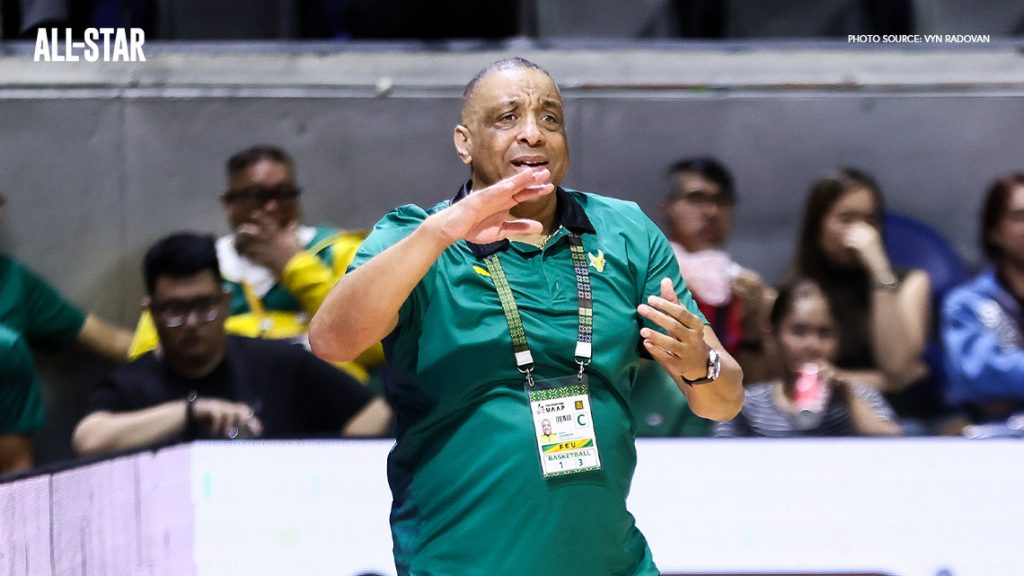
With 1:25 left in the NU-FEU game this past Sunday, NU’s Jeff Napa got hot when Chambers decided to call a timeout. The score: FEU 81, NU 56. In the post-game media interview, Chambers clarified that he meant no offense to Napa and his team. According to Chambers, he called the timeout so he could finally get his key rotation players out of the game.
“I forgot this FIBA rule where you could just put guys on the sideline [for substitution]. And, when the ball goes in, they can come and substitute. But, in my mind, I’m like, get me a timeout so I could get Jorick out, Mo out, and the guys that were just struggling,” Chambers explained.
If we juxtapose those two portraits of Chambers, we can see why there’s been a hostile reaction towards his late-game timeout as well. There appeared to be a lack of consistency between his disappointment over Akowe’s late dunk and his apparent miscalculation in calling that timeout last Sunday. To be fair to Chambers, though, he promptly issued a public statement to explain his side.
It can be argued, of course, that the FEU coach didn’t have to explain anything. It’s not like he committed a grave violation that resulted in physical harm or any sort of detriment to the game. But, knowing exactly how Napa felt at that moment, Chambers extended an olive branch right away.
All these sacred duties about baskets that should not be made and timeouts that should not be called—they’re a handful, to be quite honest. The worst thing about them is that they drive the discourse of fans away from the actual execution of basketball plays. At our core, isn’t that what we watch this game for?
For better or for worse, the part of basketball culture known as unwritten rules is here to stay. Because of these rules, the likes of Bayla, Alas, Jarencio, Chambers, and Napa have found themselves entangled in a dense multiverse of principles and realities. If there’s one timeline worth putting on a pedestal, it is one where respect goes both ways—and where the game itself never gets lost in the noise surrounding it.