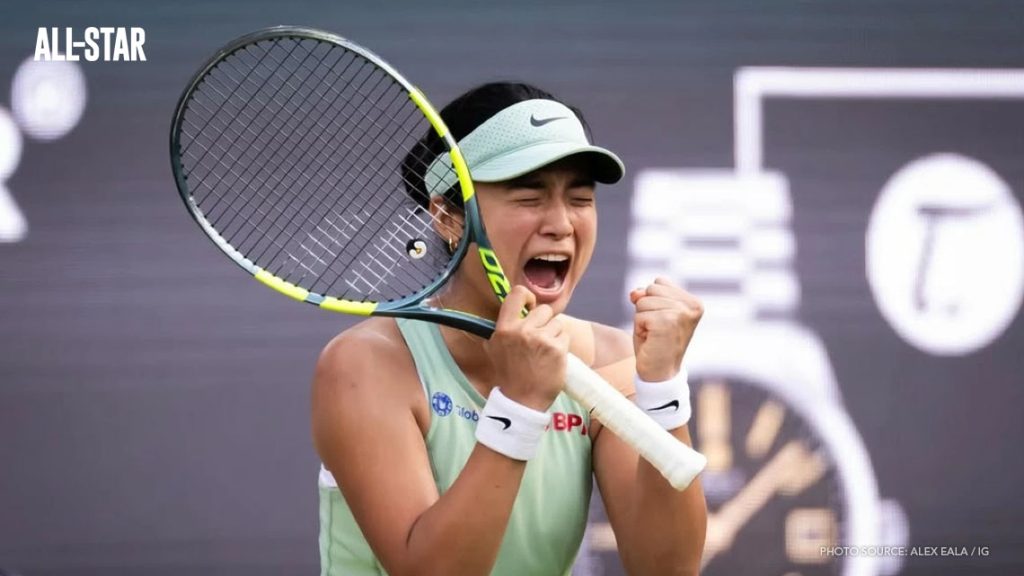
A Recap of Alex Eala’s Wonderful 2026 Season So Far
There wasn’t one tournament that defined Alex Eala’s 2026 season.
Instead, it became a collection of weeks that slowly built on one another. Every tournament seemed to reveal a different version of Eala; one week she was upsetting Top 10 players, another she was learning difficult lessons against some of the world’s best.
There were early exits, career milestones, and breakthrough victories, but more than anything else, the season became proof that the Filipina no longer needed to convince people she belonged on the WTA Tour, and she was showing it every week.
2026 RESULTS:
Her opening tournament in Auckland immediately produced one of her best results of the year. Match after match, Eala looked composed against experienced opponents, piecing together a semifinal run that reminded everyone why she entered 2026 as one of the tour’s rising stars. Although Wang Xinyu eventually stopped her run, reaching the final four of a WTA 250 event gave Eala an early boost before the season’s biggest tournaments began.
That confidence traveled with her to Melbourne.
The Australian Open marked another milestone in her young career as she made her official Grand Slam main draw singles debut. The tournament ended earlier than she had hoped after a first-round defeat, but simply stepping onto one of tennis’ biggest stages as a main-draw player represented another barrier crossed.
Only a few years earlier, qualifying for Grand Slams had been the goal. Now, she has become part of the main draw.
Returning home brought a different challenge altogether.
Competing as a hometown wildcard at the first Philippine Women’s Open meant carrying expectations beyond simply winning matches. Filipino fans packed the stands hoping to see the country’s biggest tennis star make another deep run, and Eala delivered another solid week before eventually falling in the quarterfinals to eventual champion Camila Osorio. While the result ended her tournament earlier than she wanted, it also highlighted how much Philippine tennis has grown alongside her rise, with every match drawing the attention of fans eager to watch her compete at home.
Those opening weeks showcased both sides of Eala’s journey. Auckland demonstrated the level she was capable of reaching, Melbourne reminded her how unforgiving Grand Slam tennis can be, while Manila showed the unique responsibility that comes with being the face of Philippine tennis. By the end of January, however, one thing had already become clear, she wasn’t simply easing into another season. She was already proving she could compete consistently, regardless of the tournament or the expectations surrounding her.
If January established momentum, February completely changed the conversation surrounding Alex Eala.
The Middle East swing became the first stretch of the season where the results matched the belief many had in her potential.
She opened the month in Abu Dhabi, quietly putting together another impressive run through the draw before eventually meeting World No. 11 Ekaterina Alexandrova in the quarterfinals. Even in defeat, Eala continued showing the consistency that had been building since Auckland. She wasn’t collecting isolated wins anymore, she was putting together complete tournaments.
Then came Dubai.
Facing Top 10 star Jasmine Paolini, Eala produced one of the biggest victories of her professional career. Rather than being overwhelmed by the occasion, she played freely, matching Paolini from the baseline and taking her chances when they came. It wasn’t simply an upset because of rankings. It was convincing enough to show that Eala’s game could genuinely trouble some of the world’s elite.
Her run eventually ended in the quarterfinals against World No. 4 Coco Gauff, but the result hardly overshadowed what she had accomplished throughout the week. Sharing the court with one of the tour’s biggest stars became another learning experience, while reaching another deep run in a WTA 1000 event reinforced the progress she had been making.
More importantly, February changed how people talked about Alex Eala. Her victories were no longer framed as surprising breakthroughs or feel-good stories. Defeating a Top 10 player and reaching consecutive quarterfinals proved that her tennis belonged at this level.
Indian Wells brought another breakthrough as she fought her way into the Round of 16, navigating one of the deepest fields in tennis before eventually falling to Linda Noskova. Although the loss ended her campaign, the tournament delivered another career milestone as Eala climbed to a then career-high ranking of World No. 29.
One week later, she arrived in Miami carrying that same confidence.
Victories over Laura Siegemund and Magda Linette once again pushed her into the second week of a WTA 1000 event, showing that her Indian Wells run wasn’t a one-off performance. Karolina Muchova eventually stopped her in the Round of 16, but by then, Eala had already demonstrated something perhaps even more valuable than another deep run.
She had become consistent.
The Sunshine Double often demands quick adjustments between tournaments, different opponents, and physically demanding conditions. Eala embraced all of it.
By the time March came to an end, Alex Eala was quietly becoming one of the tour’s most reliable performers, week after week.
After months of success on hard courts, the European clay swing presented a completely different challenge.
Clay has always demanded patience more than power. Points last longer, movement becomes more important, and players often have to build rallies instead of ending them quickly. It became another opportunity for Eala to test how adaptable her game had become against some of the best players on tour.
Her first stop saw her reach the Round of 16 in Linz, where she opened with a convincing victory over Austria’s Julia Grabher before running into former French Open champion Jeļena Ostapenko.
The match was tightly contested, and although Eala came up short, it became another reminder that she was increasingly comfortable sharing the court with Grand Slam champions.
The following weeks proved more demanding.
At the Stuttgart Open, Leylah Fernandez handed Eala an opening-round exit in one of the tougher draws of the clay season. Madrid offered another opportunity to regroup, and Eala responded with a solid opening-round victory over former Grand Slam finalist Anastasia Pavlyuchenkova before Elise Mertens ended her campaign in the second round.
Rome became one of the brighter moments of the clay swing.
Eala pieced together consecutive victories over Magdalena Fręch and Wang Xinyu, once again displaying the consistency that had defined much of her season. Those wins earned her a place in the Round of 32, where former Wimbledon champion Elena Rybakina eventually proved too much.
The final stretch of the clay season didn’t quite end the way she envisioned.
A physical three-set loss to Oleksandra Oliynykova in Strasbourg prevented her from building more momentum heading into Roland Garros, while the French Open itself ended in disappointment after a first-round defeat to American teenager Iva Jovic.
Every tournament forced Eala to make adjustments against different styles of play, longer rallies, and opponents who had spent years mastering the surface.
Everything seemed to click once the tour moved onto grass.
It began at the Lexus Birmingham Classic, where Eala entered as the tournament’s top seed carrying the expectations that came with being one of the favorites. Instead of allowing the pressure to affect her, she embraced it. Match after match, she controlled the tempo, trusted her aggressive groundstrokes, and swept through the draw to capture her second career WTA 125 title.
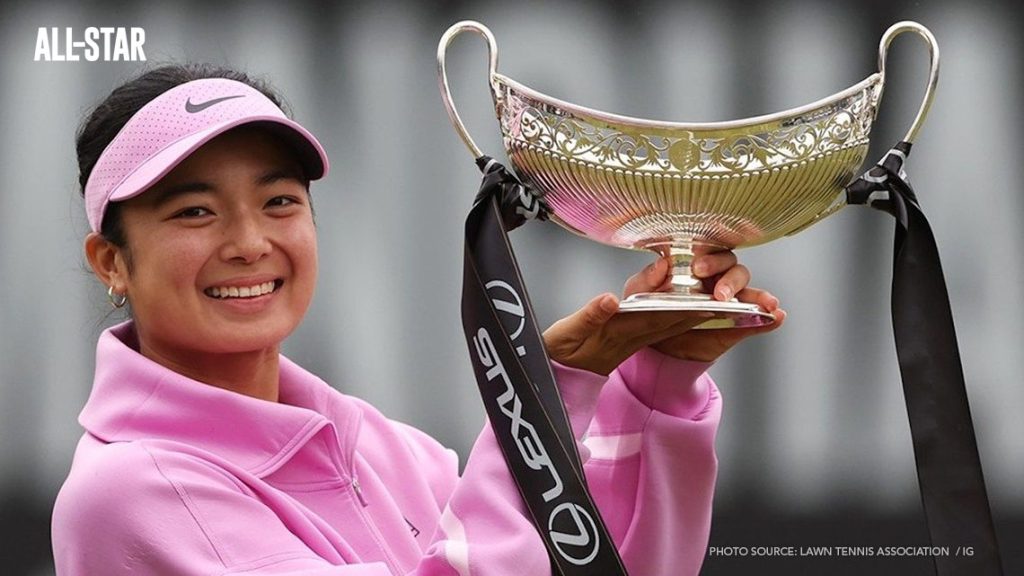
Winning Birmingham gave Eala something every player looks for with Wimbledon close by — confidence.
That confidence traveled with her to Queen’s Club. Although her campaign ended in the Round of 16 against Iva Jovic in a rematch from Roland Garros, the tournament became little more than a brief stop before the week that truly changed everything.
The Berlin Open became the tournament where Alex Eala reminded the tennis world exactly why so many believed in her potential.
Against World No. 2 Elena Rybakina, Eala played fearlessly from the opening point, refusing to be intimidated by one of the biggest servers on tour. She absorbed pressure, redirected pace, and produced one of the biggest victories of her career. Many wondered whether she could repeat that level in her next match.
She answered with another upset.
“I called my dad. I just said, ‘Oh my god!’ We were just screaming, and my mom was there, too. I’m just really happy,” Eala said after.
By the time she reached the semifinals, the conversation had shifted from whether she belonged to how far she could go.
Linda Noskova eventually ended the remarkable run, but Berlin had already accomplished something much bigger than another semifinal appearance: Alex Eala had shown she could beat anyone on tour.
She carried that belief into Wimbledon.
Entering as the tournament’s No. 29 seed, Eala became the first Filipina ever to be seeded in the singles draw of a Grand Slam. The achievement alone marked another milestone for Philippine tennis, but she wasn’t finished making history. The defining moment came in the third round.

“Every dream begins as a seed. Once it grows, it cannot be stopped. Kapag lumago, hindi na hihinto.”
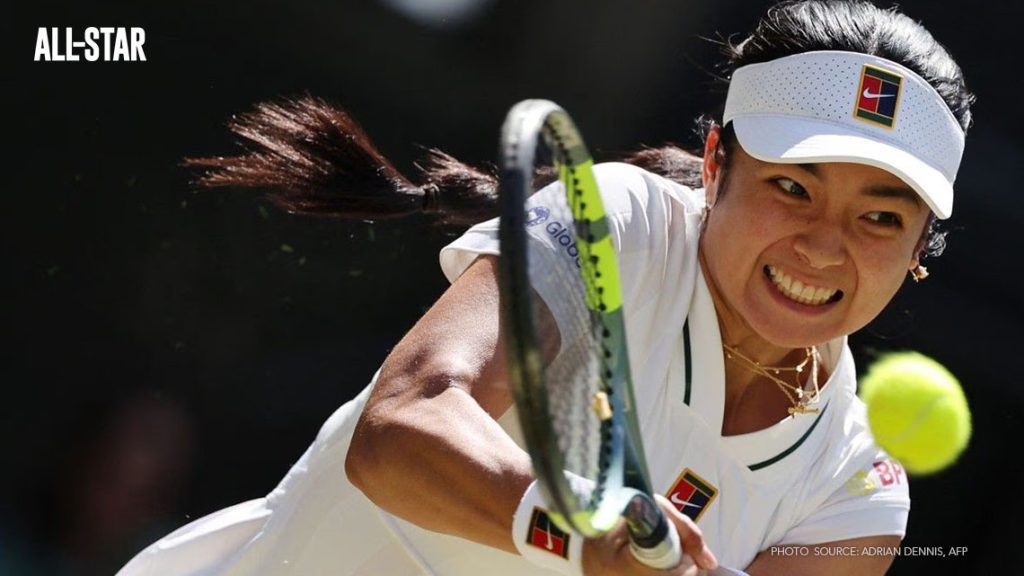
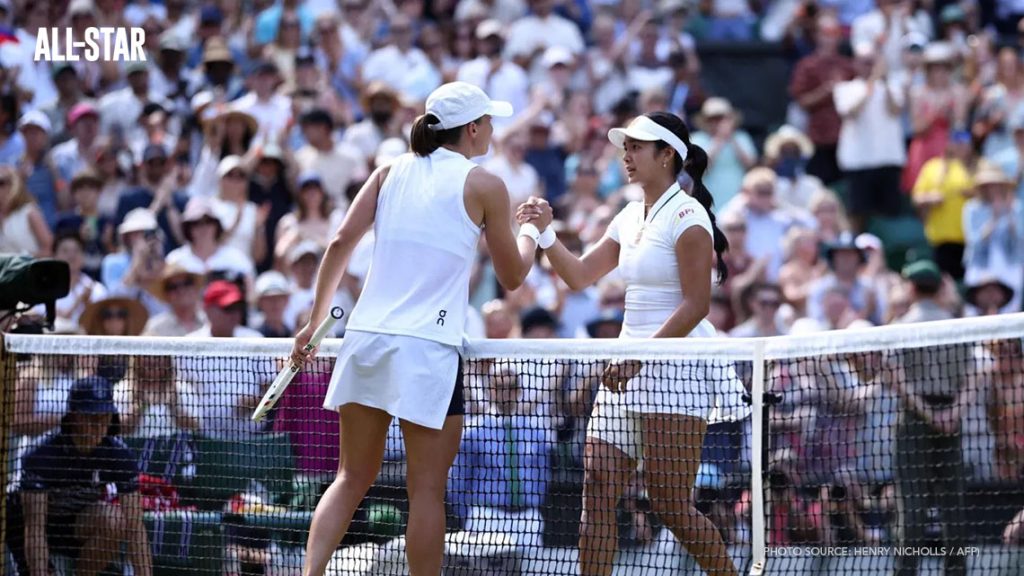
Standing across the net was reigning Wimbledon champion Iga Świątek, one of the biggest names in women’s tennis. Rather than being overwhelmed by the occasion, Eala accepted the challenge. She dictated rallies, stayed composed during pressure moments, and pulled off one of the biggest victories of her professional career to reach the fourth round.
“Maybe for someone like Iga, who has won so many Slams, or maybe someone like Serena or Venus, this achievement may seem small. But for someone who grew up in the Philippines. I went to train with my brother and my grandfather every day after school with my ruffled socks, my light-up shoes, and chubby cheeks. So to her, this is everything.”
Her run eventually ended against World No. 15 Jasmine Paolini on Centre Court.
Grass ultimately became the surface that showcased every part of Eala’s growth. Birmingham demonstrated her ability to handle the pressure of being the favorite. Berlin proved she could defeat the world’s elite on consecutive days. Wimbledon elevated her into another chapter of Philippine sporting history, not only as the country’s first Grand Slam seed, but as a player capable of defeating defending champions on tennis’ biggest stages.
Now ranked a career-best world No. 28, Eala isn’t just enjoying the hottest stretch of her career; she had also established herself as one of the most dangerous players on tour, regardless of the surface.