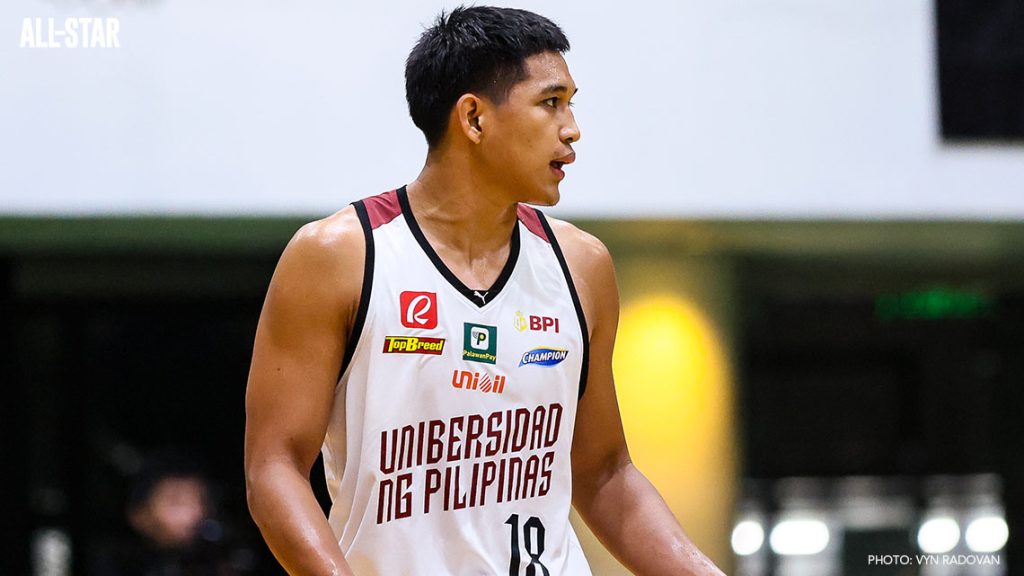
James Payosing Is Learning to Find Home in New Places
For a lot of athletes, transferring schools is usually described as a “fresh start.” But in reality, it rarely feels that simple.
Especially when you’re coming from a championship program, entering one of the most high-profile teams in the UAAP, and trying to adjust to an entirely new environment where expectations already exist before you even play your first official game.
That was the situation James Payosing quietly stepped into when he transferred from the San Beda Red Lions to the UP Fighting Maroons, which was broken by ALL-STAR Magazine Managing Editor Naveen Ganglani.
People naturally noticed the move because of what he already accomplished in San Beda. He was not just another player changing jerseys. He was part of a Red Lions team that brought the NCAA championship back to Mendiola, and in Season 99, he became the Finals MVP by doing the kind of work that doesn’t always look flashy at first: rebounding, defending, chasing loose balls, and scoring when the team needed it.
Before all of that, Payosing’s journey had already taken him far from home. From Bislig City in Surigao del Sur, he made his way through the Mindanao basketball scene before becoming a Red Lion, slowly building the reputation of a tough wing who could affect the game without needing everything to run through him.
But behind the excitement of joining UP came something less visible: the reality of having to start over again in many ways.
New teammates. New coaches. New system. New pressure.
And for Payosing, the adjustment didn’t begin when the season started. It began during the quiet months of residency.
While most people only really pay attention once players finally suit up, residency years often become the most important part of a transfer athlete’s development. There are no games yet, no crowd reactions, no official minutes, but there’s a lot of learning happening behind the scenes.
For Payosing, that year became less about waiting and more about preparing himself mentally for what the UAAP would eventually demand from him.
“Last year, my residency year, yung ginawa ko talaga, hindi muna ako lumalabas,” he said. “And umattend ako kahit residency year ko, uma-attend ako sa training sa Team A. Doon nakapag-adjust ako para alam ko for this year kung ano yung dapat i-adjust ko.”
By the time he officially entered the lineup, he had already spent months understanding how the team moved, how the coaches communicated, and how the culture inside the program operated.
But more than learning the system itself, Payosing spent a lot of time learning from the people around him.
“Naging close din ako sa kanila. Nakipag-communicate ako sa kanila.”
What stood out is that his questions weren’t only tactical. He wasn’t just asking about plays or rotations. He wanted to understand what surviving a UAAP season actually felt like.
“Yung sa mga seniors doon, tinanong ko lang sila kung paano yung mga struggles nila coming through the season.”
That curiosity mattered because the jump from NCAA basketball to UAAP basketball isn’t always just about talent. Sometimes, it’s about learning how to handle a completely different scale of attention and expectation. And slowly, the unfamiliar environment started becoming comfortable.
“Hindi naman ako nanibago.”
Still, even with all the adjustments, one thing about Payosing never really changed: the mindset he carried from San Beda.

Winning.
Not in a selfish way. Not in a “prove everybody wrong” kind of way.
Just the understanding that basketball is always bigger than one player.
“Ang main goal ko na makapag-champion din dito sa UAAP, dito sa UP team.”
That mentality fits naturally into what UP has been trying to sustain over the past few years, a program built around continuity, sacrifice, and players willing to buy into a collective goal rather than individual attention.
But away from basketball, there’s another side to Payosing that feels a lot quieter and more personal.
He cooks.
Somewhere between practices, workouts, film sessions, and the adjustment of living away from home, cooking became one of the ways he grounded himself outside the sport. It was not just content for people to watch online or a random off-day hobby. For him, it started from something more practical, more familiar, and more tied to home.
When asked about videos of him cooking that started circulating online, he immediately admitted it wasn’t just something casual he occasionally did.
“Yung cooking ko, yun din yung hobby ko talaga”
Athletes spend so much of their lives inside rigid schedules and demanding systems that hobbies eventually become more than hobbies. They become spaces where they can feel fully themselves again.
For Payosing, cooking is exactly that.
“Kumbaga ineexperiment ko kung ano ba yung gusto kong maluto.”
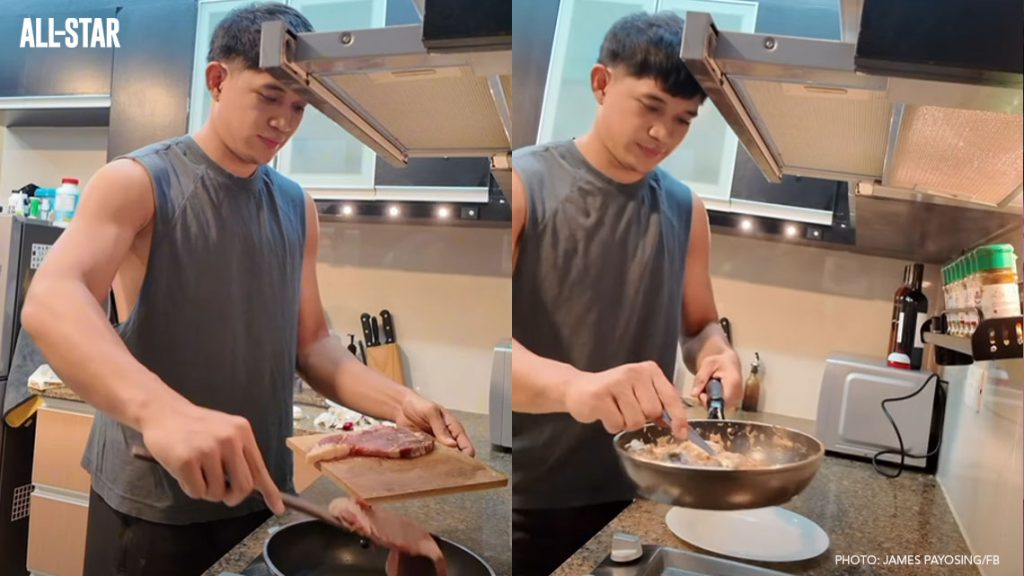
The process sounds familiar to how he approaches basketball. He learns, adjusts, asks questions, and figures out what works for him. There’s no need to make it more dramatic than it is. Sometimes, it’s just a player far from home trying to take care of himself in the middle of a demanding life.
A lot of that connection to food traces back to where he came from. Growing up in Surigao made seafood feel natural to him. It was part of the food he knew, the taste he remembered, and the kind of meal that made a place feel familiar.
“I’m from Surigao talaga. So mahilig talaga ako sa mga seafood. Sanay ako na nagluluto for me,” he said.
“Pagdating dito, mas gusto ko talaga na ako yung mismong nagluluto sa food ko kasi I need more protein.”
Cooking for him is not only about comfort. It is also about preparation. It is about knowing what goes into his body, especially when training demands more from him physically.
But like most people learning how to cook seriously for themselves, Payosing admitted that a lot of his learning process happened through experimentation and YouTube.
“Yung iba, nag-YouTube na lang din ako. Tapos ina-adjust ko lang yung sarili kong timpla.”
Out of everything he cooks, though, one dish still feels closest to home.
“Sinuglaw… Parang inihaw na pork then yung fish inihalo mo siya together with vinegar.”
It has seafood, it has the flavors he grew up with, and it carries the kind of memory that follows someone even after they move to Manila, change schools, and enter a bigger basketball stage.
But the reason it matters to him goes beyond flavor.
“Gusto ko yun kasi parang every time na nakakain ko yun parang I feel like home na nasa Surigao pa din ako. Na nare-remember ko palagi.”
Behind the transfer headlines, the championship reputation, and the pressure of playing for UP, there’s also someone simply trying to adjust to a new chapter while holding onto pieces of where he came from.
Sometimes through basketball. Sometimes through food. And sometimes through the small routines that make unfamiliar places slowly start to feel like home.