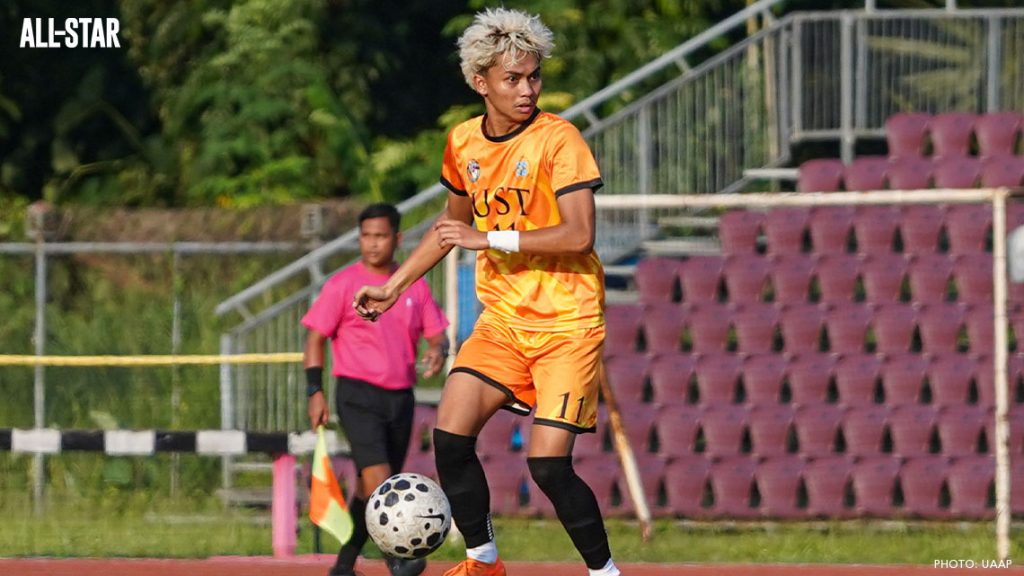
“Pinag Hirapan Ko Lahat”: Kiel Elopre’s Football Journey
UST Golden Booters midfielder Kiel Elopre grew up like most Filipino kids—around basketball, watching Stephen Curry and following the game closely. Football came through his father, who introduced him early and stayed hands-on in his development.
That meant regular training, exposure to different clubs, and constant feedback.
“Papagalitan pa ako sa car rides ng dad ko pag panget laro ko, haha, I think everyone can relate to that,” Kiel shared with ALL-STAR.
It’s a dynamic many young athletes are familiar with, and one that helped shape his discipline.
He wasn’t the standout early on and often went unnoticed compared to others. But through consistency and effort, he worked his way forward.
“Pinag hirapan ko lahat kung nasaan man ako ngayon.”
Kiel also credits Lance Locsin, a former UST teammate, as a key influence in his development. Locsin particularly helped in building his confidence and approach to the game.
“Hindi niya ipinagdamot yung experiences niya sa laro.”
Built Through the Process
UST was always his first choice. He earned his place without connections and secured a scholarship, giving back to his family’s sacrifices. He later embraced a leadership role as captain of the UST Football Juniors. Kiel led the high school side to a UAAP Season 86 finals appearance.
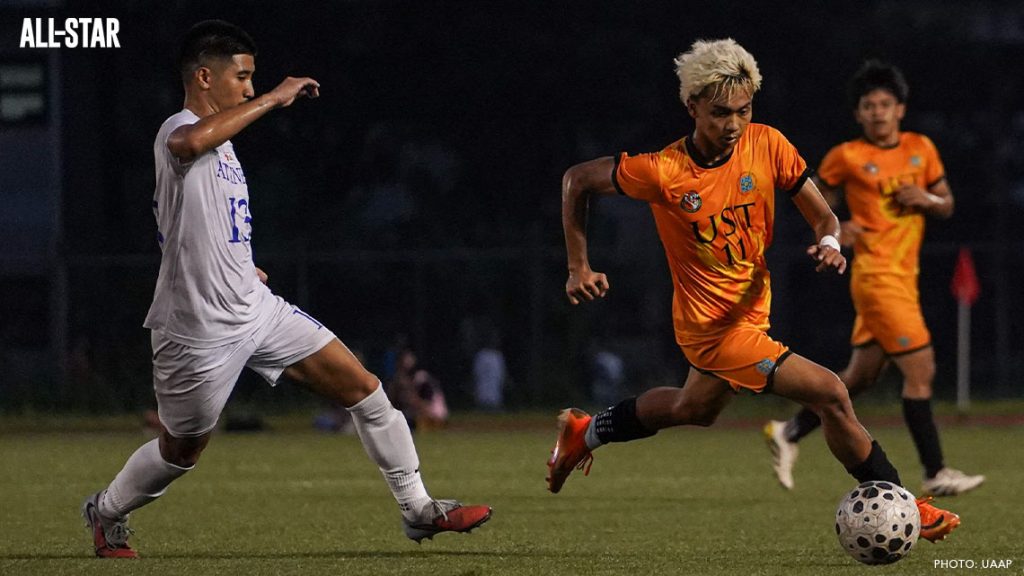
The incoming third-year midfielder points to the sacrifices behind UAAP football—year-round training, missed time with family and friends, and limited rest. Alongside that comes the mental pressure to perform, especially while representing the school and leading as captain.
For Kiel, “Those unseen parts are what make it meaningful. The struggles, the sacrifices, and the work behind the scenes. That’s what really builds you as a player and as a person.”
After UST’s UAAP Season 88 semifinal loss to FEU, Kiel stayed on the grind. Alongside his father and younger brother, he continued training in the offseason, leading to short stints in Spain and Japan.
Learning from Spain
Kiel spent time training with Marcet Football Academy in Barcelona, where the structure immediately stood out. Sessions ran from morning to late afternoon. Each block focused on a specific area—shooting, strength, team play, or passing—with a clear purpose.
Compared to the shorter, more general sessions he was used to, the setup felt more detailed and professional.
“The game there is very fast-paced, more technical, and heavily focused on decision-making and understanding the game,” he shared with ALL-STAR.
Spanish football is widely recognized for its style of play and strong development systems, with clubs consistently producing young talent. For Kiel, the experience offered a broader perspective on development. While he sees the growing talent and football IQ among young players in the Philippines, he believes more consistent systems and structure can help players reach a higher level.
A Different Standard in Japan
If Spain offered a view of structured and technical football, Japan provided a different perspective. As one of Asia’s most consistent producers of professional talent, its development system is built on discipline, high-intensity pressing, technical precision, and strong integration between school football and club pathways.
Kiel trained with Shutoku High School Football Team, where the quality stood out despite a simpler daily schedule. Sessions were highly structured, with a strong emphasis on first touch, quick passing combinations, off-ball movement, and decision-making under pressure.
Compared to his experience in Spain, the game in Japan was more physical and intense. Coordinated pressing, quick transitions, and limited time on the ball forced players to think and act faster.
“It made me realize how important it is to think quickly and play simple but smart,” Kiel shared with ALL-STAR.
Beyond the pitch, it was the discipline and culture that left the biggest impression. From respect within the team to the balance between school and football, it was supported by strong systems and facilities from an early age.
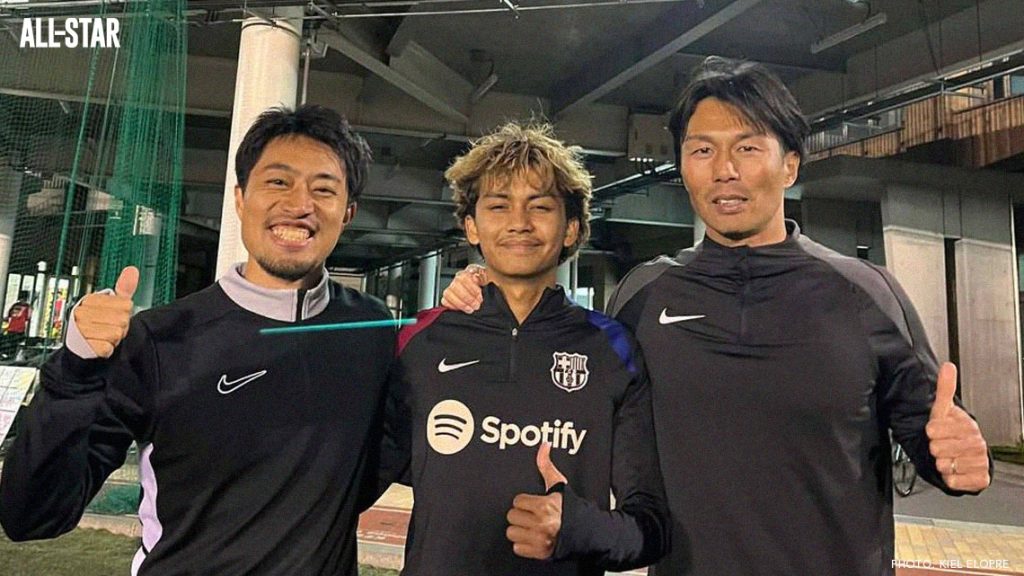
Experiences like these highlight the importance of a consistent system and environment in player development.
While the talent is present in the collegiate scene in the Philippines, more structured support can help players maximize their potential and sustain long-term growth. This includes areas such as periodized training programs, strength and conditioning, recovery protocols, nutrition planning, and a consistent coaching philosophy.
“Football isn’t just about skill, but also about character and relationships,” Kiel shared with ALL-STAR.
With the UAAP continuing to grow and produce players for the professional level, the standard of collegiate football is steadily improving. For Kiel, this is evident in how teams now play. There’s now a mix of structured, possession-based systems and more direct, physical styles.
As the level rises, it presents an opportunity for Philippine football to build on that progress and strengthen support systems around young players.
The Work Behind the Game
Kiel’s perspective on the realities of being a student-athlete highlights a side of collegiate football that often goes unnoticed.
“People usually just see the games, the results, or the highlights,” he shared with ALL-STAR.
“But what they don’t see is the daily grind—early morning trainings, balancing classes, recovery sessions, and still finding time to study and rest. It’s really a constant cycle.”
For Kiel, the journey has always been rooted in the people who pushed him forward.
From his father guiding him through the game and taking him from one training ground to another, to his mother supporting him in small, everyday ways before every match, the foundation was always there.
What once started without much direction has now become something clear—a player steadily working toward heights he once never imagined reaching.
For more exclusive football stories, click here.