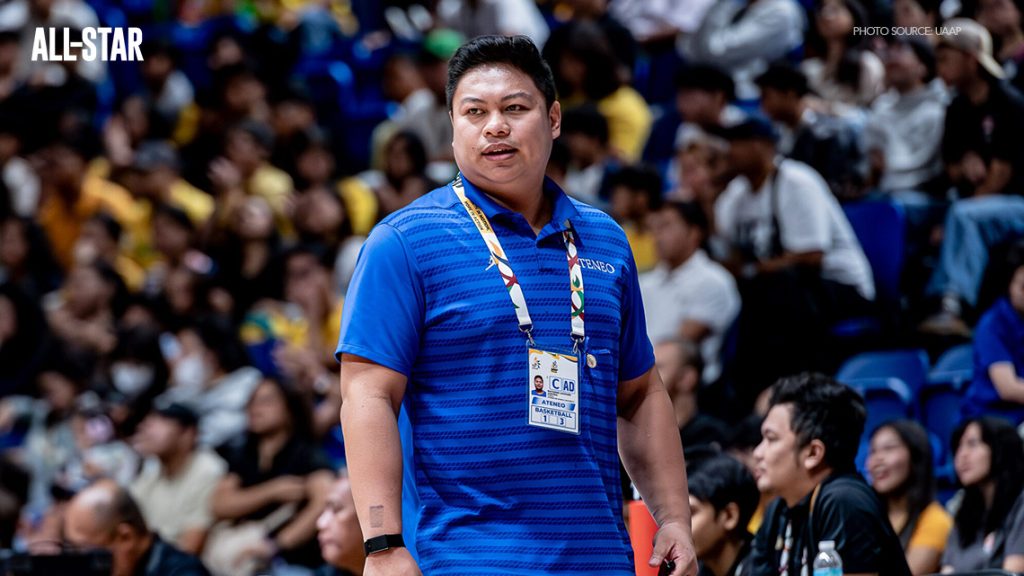
Built for This: Bacon Austria Embraces the Gilas Women’s Challenge
A new era is dawning for the Gilas Pilipinas Women’s National Team after the recent reveal of Bacon Austria as the new Program Head. His appointment to the Samahang Basketball ng Pilipinas (SBP) post drew much attention ahead of the all-important FIBA Women’s Asia Cup in 2027.
Austria took time out of his extremely busy schedule for an exclusive sit-down interview with All-Star Magazine to shed light on his new role, what the immediate future looks like, and the SBP’s plans for a grassroots program.
Balancing national and local commitments
The eldest son of the legendary coach Leo Austria took over as head coach of the Ateneo Blue Eagles’ 19-Under team to open 2026, following the departure of then-mentor Ford Arao. Austria’s impact was immediately felt as they made their first Final Four appearance since UAAP Season 82, securing the third seed.
He soon learned he would have a lot more on his plate as SBP Executive Director Erika Dy approached him with an offer he found difficult to refuse.
“It was all SBP President Ricky Vargas’ idea, actually. They reached out to me to be the next Program Head for the Gilas Women’s program. I looked at it and loved it because I was already involved with women’s basketball as an assistant coach for the Ateneo women’s team before. I’ve always had a special kind of love for the game when it comes to that specific division,” he explained.
But he didn’t accept the offer outright. Austria shared that his commitment to the boys came first before anything else, an understandable sentiment from the lifelong Blue Eagle who earned Juniors MVP honors in Season 69 en route to the title. It was a request that the SBP was more than willing to accommodate. Austria began helping the program in mid-January, but only formally assumed the role after Ateneo’s UAAP campaign ended.
At this point, though, one would wonder what a Program Head does. Given the lofty title, the immediate thought is that he would be focused mainly on building a globally competitive team. However, that’s only part of it.
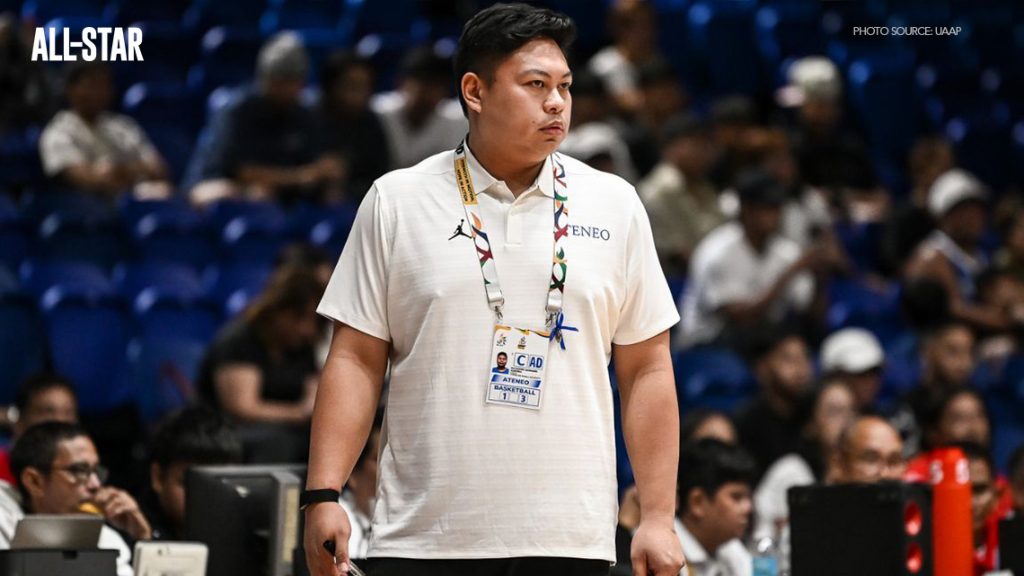
“I’m not just focused on the national teams. Actually, the Program Head is also tasked with building the grassroots program in the Philippines as a whole and our youth teams. It goes beyond fielding a competitive team on the world stage. I feel like that’s my purpose with this position,” Austria mentioned.
The four-time UAAP Men’s Basketball champion understands that there may, and likely will, be criticism heading his way since he’s juggling two roles with high expectations all around. To that, Austria already had a reply waiting in the chamber.
“I’ve been doing that all my life. I believe I’ve been perfectly molded for this opportunity to help the SBP. I have no problem with time management; it was taught to me at an early age, and I’m grateful for it. I essentially have the whole day to focus on the women’s national team program because the high school boys practice late in the afternoon, only about three hours of my day during the school year,” he replied.
The immediate future
Late March began a lengthy head-coaching search for the SBP, as head coach Pat Aquino concluded his 12-year stint with the Gilas Pilipinas Women’s team. For Bacon Austria, that meant his job had officially begun.
“My, well, our first task was to look for a new head coach. There was a pretty lengthy process that involved interviewing 15 foreign head coaches, which was a directive of President Vargas to really bring the program to the next level. We shortlisted some names, then we presented them to Mr. Vargas, who made the final call, leading to coach Burke Toews’ appointment,” he recalled.
“It was a crazy grind because I was doing interviews at wild hours of the day. Sometimes it was at 7 AM; other days, 11 PM, or even 12 MN. The time zone difference was really a challenge for us, but we knew what was at stake, and readily put in that extra effort.”
The process took them two grueling months before selecting Burke ‘BT’ Toews, who began his coaching stint at the high school level with the Canadian Academy in Kobe, Japan, in 2005. At the professional level, his resume includes two consecutive titles with the Fujitsu Red Wave in 2024 and 2025 in the Women’s Japan Basketball League.
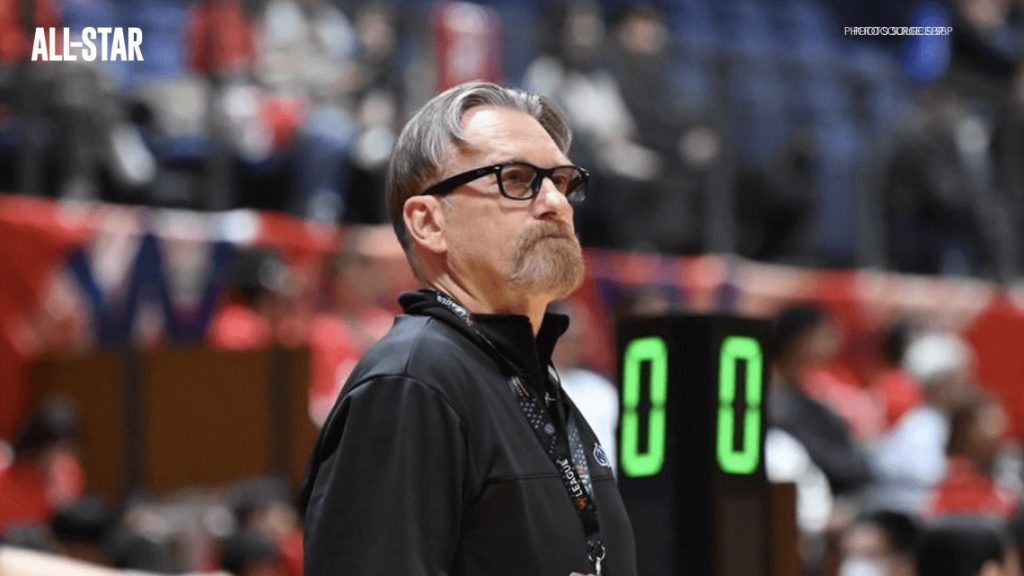
With that task successfully checked off their list, the next is to prepare the pool of players in preparation for the 2027 FIBA Women’s Asia Cup. In this, the 60-year-old Canadian coach has the SBP’s total and unwavering support in how he wants to build the team.
“We’re leaving a huge chunk of that to coach Toews because we want to allow him to mold the team as he sees fit, but definitely some familiar names will be on there. It just really depends on what he wants to do. We’re giving him the free hand to pick which players best fit his system,” said Austria.
“He knows his stuff. He knows most of the girls already; he’s seen their games. He’s doing his due diligence, and we have complete trust in him. But until coach ‘BT’ comes in and tells us directly who his final 12 (players) are, there’s no sure lock.”
He also explained that Toews, once he arrives in the Philippines on a date he opted not to disclose, will first determine how large the general pool of talent will likely be via training camps and practices. Tryouts were also noted as a possibility, allowing the Canadian coach to consider adding under-the-radar talent to his pool.
As with all things new, naysayers would be quick to fire up the negativity machine and aim it at the entirety of the SBP for introducing change to a program that earned their first-ever win against a non-Asian team in this past March’s FIBA Women’s World Cup Qualifying Tournament.
Channelling his father’s greatest trait on the sidelines, Austria preached patience and then some.
“With the new head coach, everyone has to be patient with the change. It doesn’t mean that when you bring in someone new, success is guaranteed. I already know we’re expected to be winning gold medals left and right from the jump. I think that’s unfair to everyone involved, especially the players and coaching staff,” he remarked.
“Changes will come in slowly, gradually. Historical moments on the world stage don’t happen overnight. What we do hope everyone understands is that we’re building towards something special here, and there will be some growing pains.”
Developing and sustaining a grassroots program
Success certainly does not come easily, but what matters most is that there’s a plan in place to ensure that the best outcomes are within reach. The first steps are recognizing what works and what needs improvement at the grassroots level.
“The problem we have now is that women’s basketball doesn’t have an established pipeline for that. You go to the provinces, there’s no league for girls, or if there is, it’s very few. Even here in Manila. In the UAAP, we only have four teams. That speaks volumes about the state of our grassroots program here in the Philippines. I’m glad that UAAP is trying to push for more teams to join. There has also been an increase in tournaments for girls at the grassroots level, but ultimately it’s not yet enough.” Austria stated.
“By no means are we going to demolish what’s already been started because we’re seeing the fruits of it already, but it can always, always be better.”
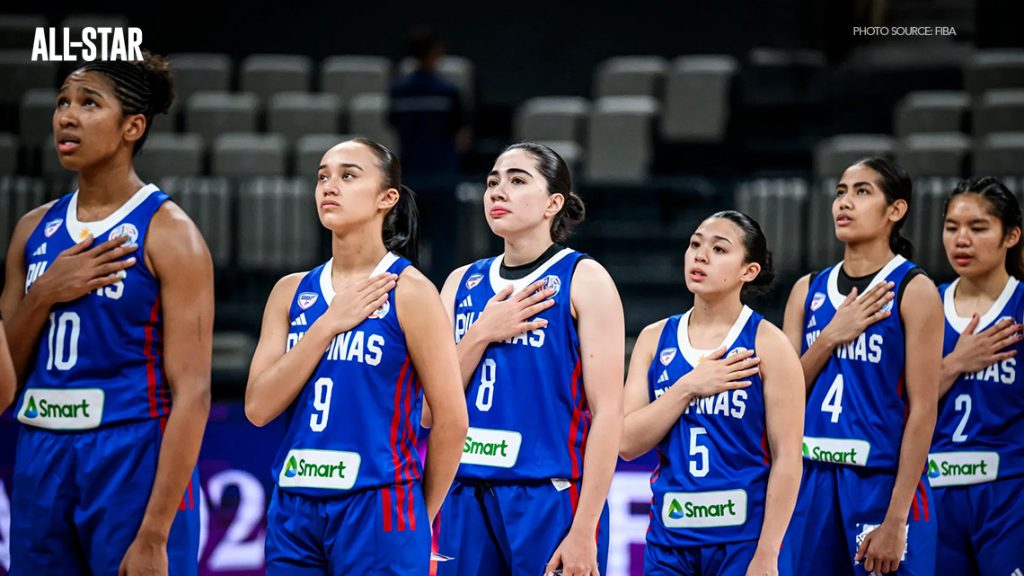
In this regard, his observations are correct. The UAAP does have a 19-Under girls’ division, but the only schools that fielded teams for Season 88 were the NUNS Lady Bullpups, UST Junior Tigresses, Zobel Junior Lady Archers, and Ateneo Blue Eagles.
Due to the small field, it was practically all four teams jockeying for a top-two finish to secure spots in the Finals and duke it out for the crown. NUNS and UST did just that with identical 5-1 records, while Zobel and Ateneo finished with 2-4 and 0-6 records, respectively. UST went on to sweep the series versus NUNS, claiming their third crown in the tournament.
For added context, the girls’ division began in Season 82, with Adamson and UST being declared co-champions as they couldn’t compete in a winner-takes-all Game 3 due to the pandemic. The division formally returned five seasons later, pointing to a lack of continuity and stability at a grassroots level.
Over the coming years, Austria hopes to spearhead a more sustainable grassroots program throughout the country. However, he also acknowledged that it will take more than wishful thinking to make it happen.
“As program head, I think my biggest goal is to build the trust of the community. For the various stakeholders to believe in you and buy into what you want to do? Yeah, you really need to have a good relationship with everyone,” he declared.
“The goal really is to have a program in place where we have a pipeline of grassroots talent to world-class players. It won’t be an overnight thing. It’ll take years. We know how hard it is to establish a grassroots program. You have to keep pushing and pushing for it.”
For more exclusive basketball stories, click here.