
Inside San Beda’s Spain Camp: Why the Red Lions Love Malaga
For years, the preferred offseason destination for San Beda was the United States.
The Red Lions would cross the Pacific and spend their summer working with NBA skills coaches, searching for the little improvements that could eventually make a difference once the NCAA season arrived.
Then Spain called.
An invitation to train under Spanish coach Luis Guil brought San Beda to Malaga in 2025. The Red Lions liked what they found there so much that, according to team manager Jude Roque, some of the defensive concepts they picked up became part of the formula behind their NCAA Season 101 championship.
So when it came time to plan another offseason, San Beda decided there was unfinished business in Europe.
“We usually go to the USA for our summer training. We train with mostly NBA skills coaches like Jordan Lawley,” Roque told me in an exclusive interview. “But last year, we got an invitation to train in Spain under Coach Luis Guil of the Spain Men’s NT and thought about trying it out.
“It turned out very well and learned some defensive concepts that eventually helped us win the S101 title. So we decided to come back this year.”
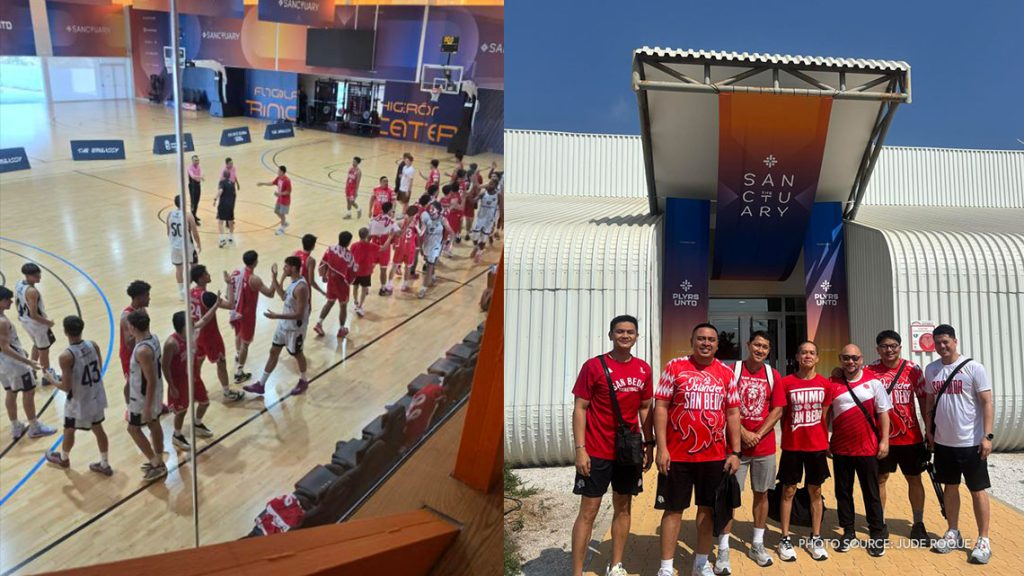
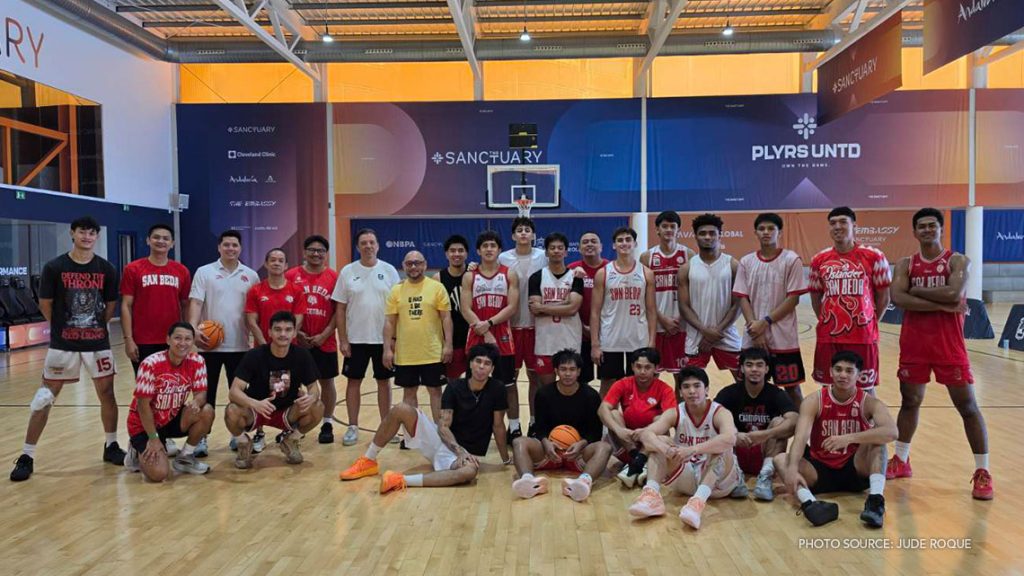
From July 25 to August 3, an 18-man San Beda delegation traded Manila for the Costa del Sol and returned to The Embassy in Fuengirola, Malaga, a high-performance basketball facility that has become a training destination for elite players and teams.
The names associated with the place alone made the surroundings feel different.
Roque said the Red Lions were told Klay Thompson and Jaylen Brown had been working there roughly a week before their arrival. During San Beda’s stay, the team also crossed paths with Argentine basketball legends Luis Scola and Pablo Prigioni, who were at the facility training their sons.
There was no grand basketball summit between them and the Red Lions. Roque said it was simply a casual encounter that ended with San Beda asking for a photograph.
But that was part of the charm of the entire experience.
For 10 days, the defending NCAA champions found themselves practicing in a basketball environment where accomplished European coaches were running sessions and former NBA players could happen to be working out with their children nearby.
San Beda wasn’t there just to sightsee.
Days could be demanding.
The Red Lions practiced for close to two hours in the morning, returned for another session of roughly the same length in the afternoon, and squeezed weight training in between. If San Beda’s first trip to Spain leaned heavily toward defense, the sequel expanded the curriculum.
“This time it was more of a mix of offense and defense,” Roque said. “Not much different from our usual system, but learned a few other options.”
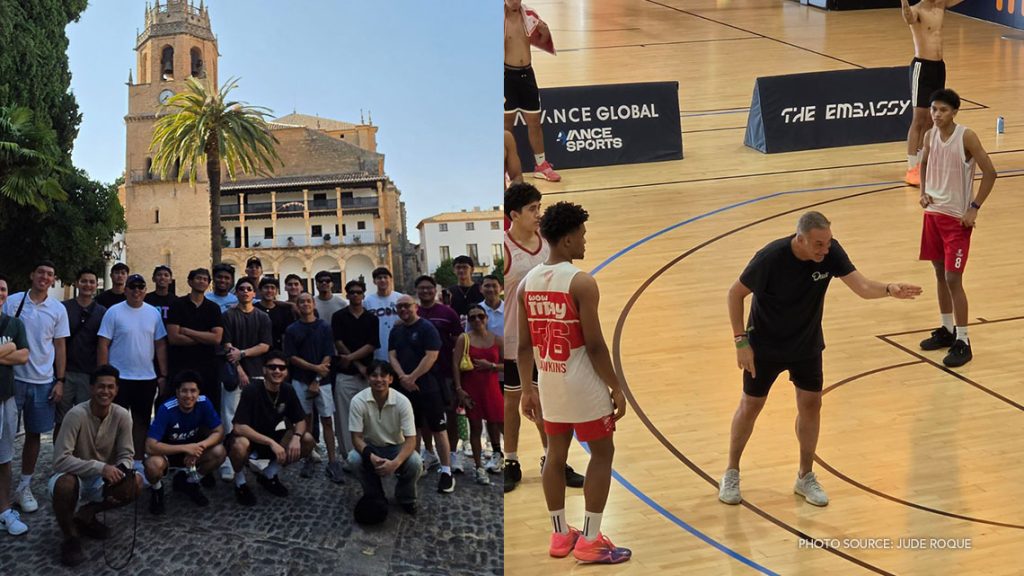
Guil concentrated particularly on defending ball screens, giving the Red Lions different coverages and solutions they could incorporate into Yuri Escueta’s system, aka, “Yuri Ball.”
San Beda also spent two days working with Serbian coach Andrija Gavrilovic, whose lengthy European coaching resume includes experience with Unicaja Malaga and Red Star Belgrade. His classroom was the open floor.
“Coach Luis is more of a defensive specialist and taught us some options against the ball screen,” Roque said. “Coach Andrija focused on transition offense.”
The objective of going to Spain was not to come home playing an entirely different brand of basketball. Escueta already has a system that has proven it can win multiple championships. The value was in adding more answers to it:
A different way to handle a ball screen.
Another option when running in transition.
A coverage that might become useful against a particular opponent months from now, especially as NCAA contenders gather strength.
For a team trying to defend a championship, sometimes an offseason is less about reconstruction than collecting tools, and San Beda had opportunities to test those tools before leaving Spain.
The Red Lions played three games against local third-division club competition featuring combinations of younger players and veterans. San Beda won all three, although none became an easy exhibition victory.
Roque recalled winning by margins of approximately 7, 11, and 4 points.
The results, however, were almost secondary to how Escueta handled the games.
“Coach Yuri rotated the players well,” Roque said. “Since we brought 18 players, three of them had to sit out per game. I thought all the players got almost equal opportunities to play.
“We were able to use the new things we learned during these games.”
San Beda is working with a title-defending roster that includes familiar names such as RC Calimag, Penny Estacio, Jomel Puno, Bismarck Lina, and Aldous Torculas, alongside players still trying to carve out larger roles.
Among the 18 players, Zed Etulle left a particularly strong impression on Guil.
“Coach Luis was impressed with Zed Etulle’s skills, quickness, athleticism, and work ethic,” Roque said.
Menard Songcuya also earned praise from the San Beda team manager for his performance during the camp.
“Menard Songcuya did pretty well also,” Roque added. “All of them, I thought, did pretty well.”
Malaga was never going to be exclusively about what happened between the lines.
Their base was the Holiday World Village in Benalmadena, along Spain’s Costa del Sol. Away from training, the team was given opportunities to experience a part of the world many of its players had never visited.
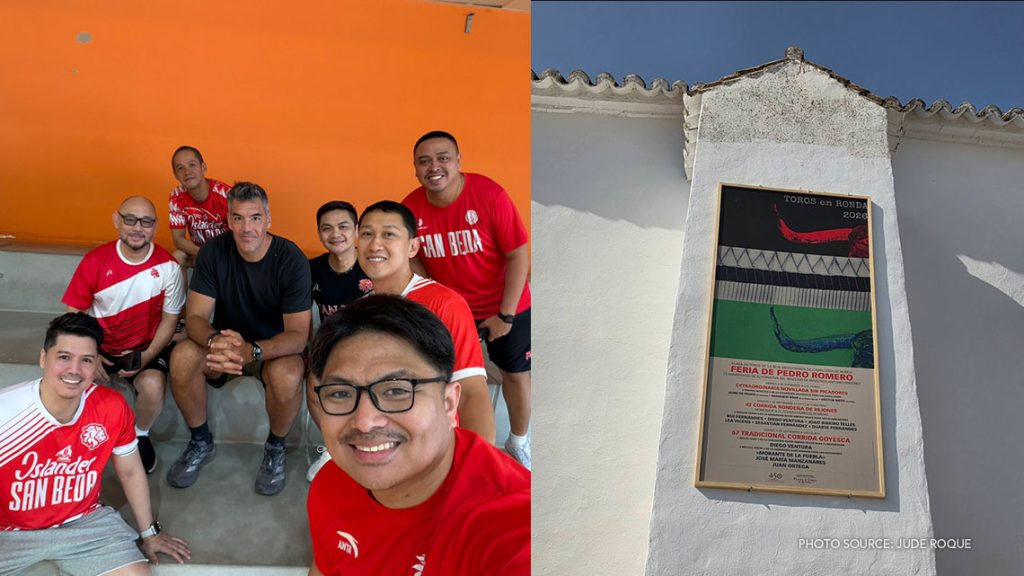
They toured Malaga’s historic center, including the Malaga Cathedral, Roman Theater, and Pablo Picasso Museum. Another trip took the Red Lions to Ronda, the famous Andalusian city built around a dramatic gorge and known for its historic bullring.
For new members of the program in particular, that part of the experience had its own value.
“Apart from the added technical learning, the whole experience was splendid,” Roque said. “Staying together for 10 days and experiencing the culture and the colorful city of Malaga are truly worth the long trip.
“It was especially great for the new players, having to travel to Spain for the first time and learning from some of the best coaches in Europe.”
Nearly four hours of practice can be counted. Games can be won. Defensive coverages can be diagrammed. Transition concepts can be brought home and installed.
But there is also something about putting 18 players together thousands of kilometers away from Manila for 10 days.
They practice together. Eat together. Lift together. Explore a foreign city together. The usual routines disappear, and teammates who might normally see each other mostly inside a gym suddenly spend almost every waking hour in one another’s company.
For a program with championship expectations, chemistry can be another form of offseason work.
Roque estimates the Red Lions are around “90%” of where they need to be.
“I think we still need to fine tune our game,” he said. “But the training camp in Spain surely helped us improve our craft.”
The Red Lions did not travel to Europe because they needed someone to teach them how to win. They have already done that.
They went because maintaining success requires the willingness to keep looking for another answer, even if finding it means traveling halfway around the world.
Last year, something San Beda learned in Spain followed the Red Lions all the way to an NCAA championship.
This year, they have returned home carrying a few more ideas. The interesting part comes next: finding out which of them will matter when the games count.