Roundtable: Can Gilas Win Big in the Asian Games?
Simoun: When I think about Gilas’ upcoming stint in the 2026 Asian Games, I think about depth.
Early on, it was crystal clear that our Asian Games lineup would look quite different from the roster set for the FIBA World Cup Asian Qualifiers. For one, Kai Sotto won’t be there to dominate the paint and pull off game-saving blocks.
Ditto for AJ Edu, Kevin Quiambao, and Dwight Ramos, who all have obligations to fulfill as the B.League and KBL are set to tip off. From the looks of it, East Asia commitments will also keep the likes of Quentin Millora-Brown and Mike Phillips from suiting up for our national team.
So now, Gilas turns to the PBA for the composition of its Asian Games squad. According to Quinito Henson, a total of 11 PBA players have been chosen to suit up against the South Korean national team in a pair of tuneups. We know who these players are, but the question is, are they the best all-PBA lineup that we can field when the Asian Games tip off?
To answer this question, I’ve enlisted the help of two brilliant basketball minds. Gentlemen, introduce yourselves.
Naveen: I’m about to answer these questions before having my first coffee of the day. I’m proud of myself. This is a growth mo —
Nevermind, couldn’t do it. I’m caffeinated, baby. LFG.
Andre: I’m Andre — just your ordinary guy who loves basketball. The only difference? I’m interested enough in the game that I’m willing to do what most people would rather avoid: math. I crunch numbers, dig through stats, and turn them into insights that hopefully help us see the game we love a little differently.
S: He’s too modest to say it out loud, so I will: When it comes to data-driven analysis, Andre makes his peers look like mere mortals. Navs and I will attest that, in the ALL-STAR classroom, Andre’s the perennial candidate for Best in Math. Ikaw na.
Alright, class. Let the recitation begin.
Backcourt
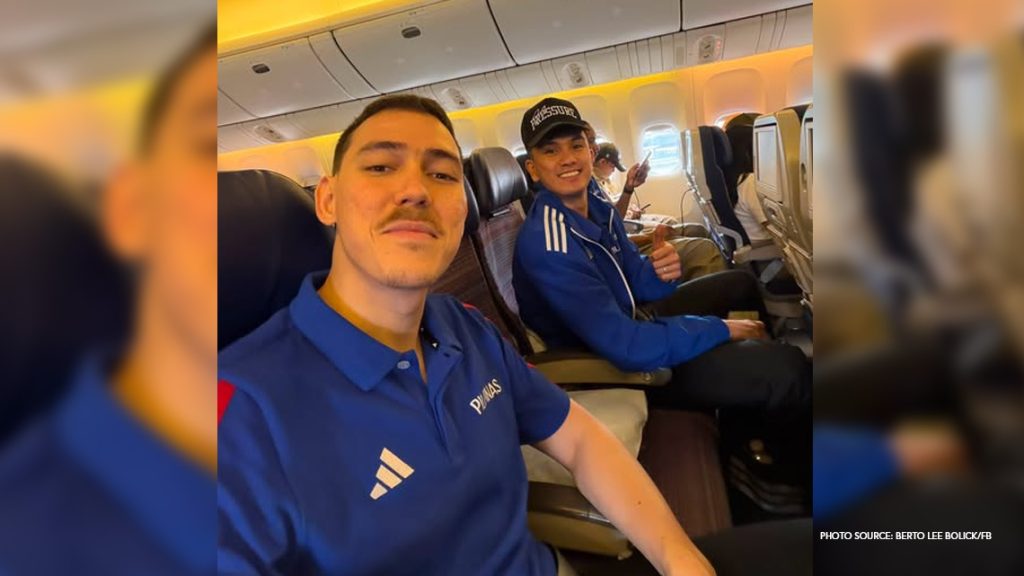
S: You’ve probably seen the photo of Robert Bolick sitting next to Adrian Nocum on the plane to Korea. (Congrats to Berto for getting the window seat, by the way.) Aside from Bolick and Nocum, the Gilas backcourt in the Korea tuneup games also includes RJ Abarrientos, Jerrick Ahanmisi, and Sedrick Barefield.
Assuming this will be our actual guard rotation for the Asian Games, are you guys happy with the names in this backcourt? Or are there other PBA guards that would have been a great fit for Gilas’ Asian Games lineup?
N: In terms of firepower, this backcourt has enough. I’m more concerned about the defense: Can the aforementioned standouts prevent dribble penetration so our bigs can focus on rebounding the basketball rather than having to leave assignments to help out on slashers? This Gilas lineup has a ton of speed on it, but in order to capitalize on that advantage, we must limit opponents to one shot per possession.
A: Robert Bolick is an easy choice. He leads the PBA in assists at 7.6 per game, while averaging 17.7 points and 5.8 rebounds on a 61.2 TS%. His playmaking has helped NLEX reach a 7–2 record, and with his skill set, I’d like to see him not only at the Asian Games but also as a regular fixture in the national team moving forward.
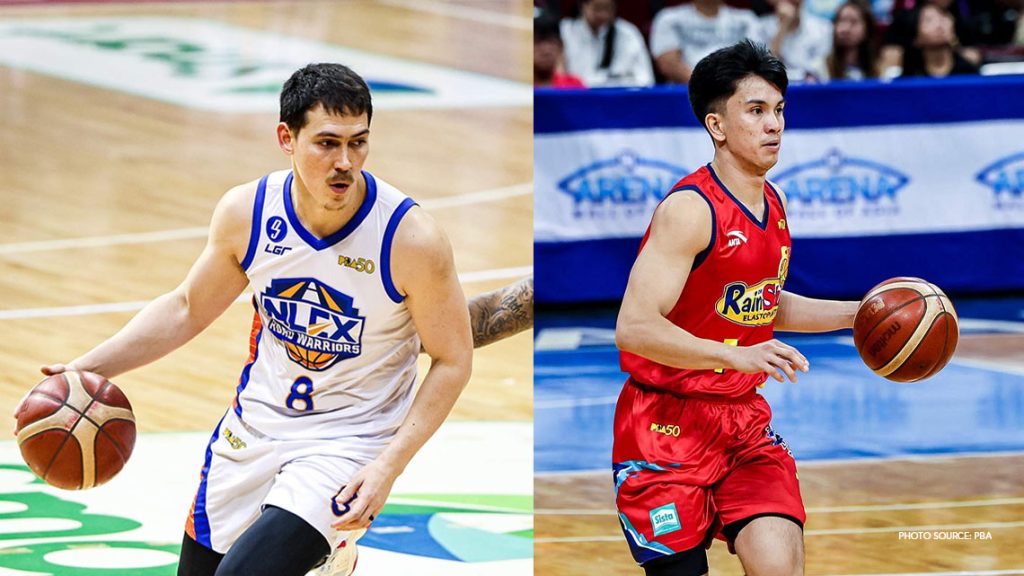
Adrian Nocum is another player I have little doubt about. He’s averaging 17.7 points, 7.2 assists, and 1.3 steals while leading Rain or Shine to a 4–2 record. His ability to attack the basket fearlessly could give Gilas another dimension offensively, and I think he could form an excellent backcourt pairing with Bolick. RJ Abarrientos brings both production and international experience, averaging 14.8 points, 2.3 rebounds, 4.5 assists, and 1.3 steals. I have mixed feelings, however, after Gilas struggled to break down New Zealand and Australia’s defenses. Still, the Asian Games give him a chance to redeem himself and show that he can be more effective on the international stage.
Sedrick Barefield gives Gilas another potential go-to scorer, averaging 19.2 points for Blackwater. The concern is his efficiency—38% from the field and 23% from three—especially since he won’t have the same volume of opportunities with Gilas and will have to adjust to a different role. Jerrick Ahanmisi rounds out the group as the shooter. While his 10.3 points, 2.8 rebounds, 3.3 assists, and 1.1 steals may not jump off the page, he’s shooting 35% from three on nearly five attempts per game.
I would’ve preferred Jordan Heading, but Ahanmisi can still provide the floor spacing and shooting Gilas has been needing. Overall, I like this backcourt. There’s enough variety in what each player brings, but the biggest question is how they’ll translate together on the international stage. More importantly, they’ll have the opportunity to help Gilas compete for—and hopefully win—the Asian Games gold medal, while also proving they deserve to be part of the national team moving forward.
S: As talented as those four guards are, I need more Juan Gomez de Liaño in my life. In both the Jordan slugfest and the Iran encounter, Juan gave Gilas’ offense a different look by pushing the pace and helping his athletic teammates maximize their strengths. At the same time, he was 1,000% confident to take his own shots, doing so with the flair that pre-pandemic UP fans came to know and love.
I’m happy, though, that Bolick and Nocum are getting a chance. Berto’s got the size and the scoring prowess to keep up with other elite court generals in Asia, so I’d love to see him light it up as our starting point guard in Japan. As for Nocum, his slashing ability should be able to force defenses to collapse and free up his sweet-shooting teammates on the perimeter. (Can we call him Angas ng Tondo 2.0?)
Meanwhile, I can see Abarrientos, Ahanmisi, and Barefield creating off the dribble and spacing the floor with their outside shooting. While our guards don’t exactly have the advantage of size on the defensive end, they’re certainly well-equipped for an up-tempo game. I think we have a better chance of winning games in Aichi-Nagoya if our guards can speed things up.
Frontcourt
S: Playing in the Korea exhibition games are big men Justin Arana, Justine Baltazar, Brandon Ganuelas-Rosser, and Brandon Bates. (Two Justins and two Brandons. Amazing.)
They’re joined in the frontcourt by wings Zavier Lucero and Don Trollano. So, do we have enough muscle, athleticism, and rim protection in this rotation? Or are we missing some PBA names here?
A: Justin Arana and Justine Baltazar are no-brainers, especially after being part of the national team pool in the recently concluded fourth window. Arana leads all Filipinos in scoring this Governors’ Cup with 21.8 points and 8.3 rebounds on 62% shooting, while Baltazar provides floor spacing alongside 14.1 points and 8.3 rebounds on a 70 TS%, including 53% from three. They may be our most skilled bigs, but their biggest test will be against the bigger frontcourts they’ll encounter in the Asian Games.
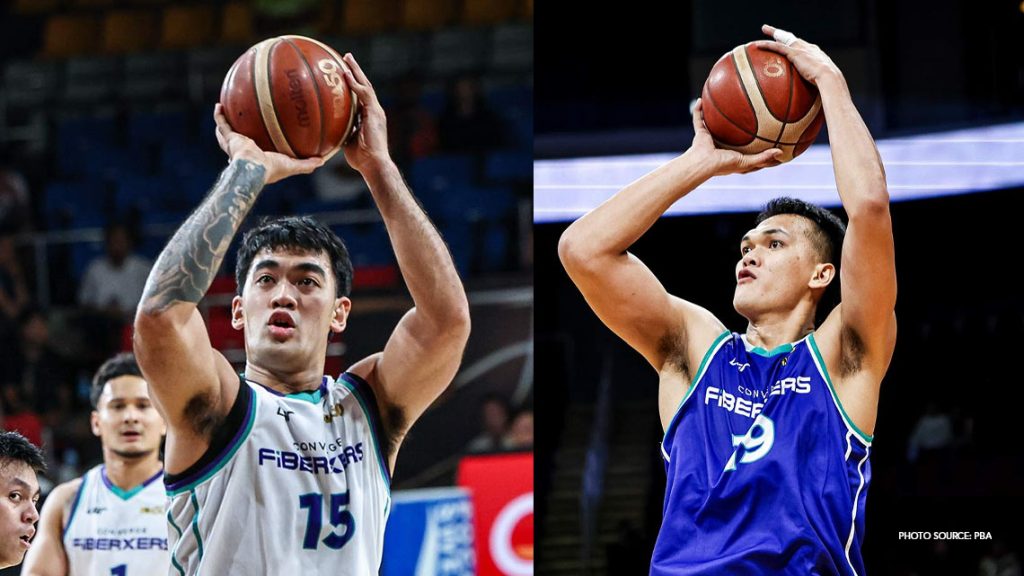
Zavier Lucero brings a different kind of versatility, averaging 15.1 points, 8.6 rebounds, 1.1 steals, and 1.4 blocks. He can play inside and on the wing, handle the ball, and stretch the floor after shooting 53% from three. More importantly, his two-way ability could make him an important piece for Gilas both now and moving forward. Don Trollano provides reliability on both ends of the floor. He’s averaging 17.1 points while shooting 44% from three on four attempts per game, making him an ideal international wing who can contribute without needing the ball constantly. His stability could be especially valuable in a team with several new pieces.
Brandon Bates and Brandon Ganuelas-Rosser will likely be the dirty-work guys—screening, rebounding, defending, and finishing around the basket. Bates provides size at 6’9” and around 230 pounds, while BGR brings athleticism. Their 72% and 63% field-goal percentages, respectively, also show their ability to finish efficiently when given opportunities.
Overall, this frontcourt has scoring, versatility, shooting, athleticism, and physicality. Size remains the biggest concern, but if they can hold their own against bigger Asian frontcourts, this group has enough talent to help Gilas make a serious push for Asian Games gold.
N: This rotation is strong enough. There’s a ton of versatility as well. In particular, I’m interested to see what Zavier Lucero can do as I see him as a Swiss Army Knife-type of contributor to this squad.
S: Given how the Asian Games roster has been put together, I think team chemistry could be the biggest question in the coming weeks. With that being said, having the Converge duo of Baltazar and Arana in the frontcourt is a reassuring sight—two lengthy, athletic big men who will effortlessly work together in the shaded lane.
On defense, I feel like Lucero is the lynchpin. Against the most lethal snipers of Asia, we’d be giving up way too many perimeter points if our forwards and centers settle for drop coverage on pick-and-roll sets. Lucero’s agility is exactly what Gilas needs to put a body on ball handlers coming off those screens. That’s the value that AJ Edu brought in the Asian Qualifiers, and that’s what the Magnolia star can pull off in Japan.
On the one hand, I get the inclusion of the other three frontcourt pieces: Trollano for his inside-outside offense, Ganuelas-Rosser for his size and excellent movement off the ball, Bates as the man in the middle. I’ll admit, though, that I wish Calvin Oftana was in better health these days. The TNT forward, who has been dealing with toe and hamstring issues in recent weeks, would have been another sizable shooter in our Asian Games lineup.
The 12th Man
S: And now, let’s talk about the final spot on this roster.
Coach Tim Cone has said that a spot remains open for Justin Brownlee, who has been dealing with hamstring, leg, and knee injuries. Due to his health, Brownlee missed the August window of the Asian Qualifiers, along with several Ginebra games in the PBA Governors’ Cup.
If Brownlee ends up missing the Asian Games as well, can Gilas still secure a second consecutive gold medal finish? Or is it imperative that a player like Brownlee or Bennie Boatwright (whose Filipino citizenship is still up in the air) compete for our national squad?
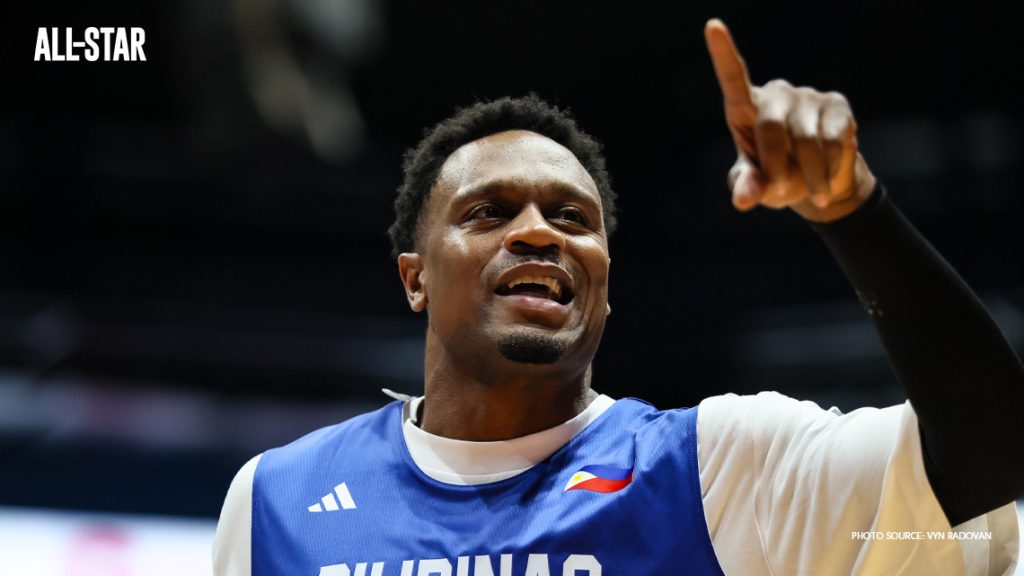
N: I think we need Brownlee. For the longest time, Brownlee has been a safety net for the nationals. When the offense isn’t humming, he’s been reliable in terms of getting a badly-needed bucket. But, from the looks of things, we won’t have a naturalized player in the Asian Games, which makes me curious about which local will be ready to take on a heavier responsibility.
A: Yes, they need Justin Brownlee. Not to say Gilas can’t compete without him, but they’re simply a much better team with him on the floor. I’m excited to see what Boatwright can bring as well, but with Brownlee getting older, it makes sense to maximize what he has left in the tank—especially with another Asian Games gold medal on the line.
S: As for me, I wish Brownlee and Boatwright the very best in their recovery and naturalization process, respectively. With all due respect, though, I would be just as happy if a Gilas squad were to conquer the Asian Games even without a naturalized player.
This isn’t a knock on Brownlee, Boatwright, or any other foreign-born hooper who has ever played for our national team. What I’m knocking is the idea that Gilas’ success hinges on the presence of a savior-type of figure who will bail out our offense when things don’t work out.
Aren’t we past the point of frequently dumping the ball to an Andray Blatche or a Jordan Clarkson and praying that they power our production? I’m thankful to the contributions of those players to Gilas’ legacy, but in my opinion, our national team will flourish even more if we build on the identity of team play—running a system, moving the ball around, activating as many scorers as possible.
Between the talent pool that showed up for the August window, the PBA treasure chest, and the extremely colorful college pipeline, we have enough resources to fully manifest that identity. Brownlee, Boatwright, and other naturalized assets like Ange Kouame and Malick Diouf are welcome additions who bring a lot of value, but instances when they’re unavailable shouldn’t have to be a deal-breaker for our prospects in international competition. Kung sino ang pwede, laban lang.
For more exclusive basketball stories and updates, click here.