Report Card: Grading UP’s AUBL Run Ahead of UAAP Season 89
ALL-STAR readers, can I have your attention?
I’m Sir Simoun, and class is in session.
As we anticipate the dawn of a brand-new UAAP season, consider this space your new syllabus for Philippine sports.
You see, I didn’t leave the classroom. I simply moved it to a bigger arena. Now, all of you get to sit in and have a blast as we debate topics, dissect plays, and designate grades for players, coaches, teams, and even entire leagues!
My own mentor told me to share the pen. And that’s exactly what will happen. In Sir Simoun’s classes, recitation isn’t just encouraged; it’s expected. Let ALL-STAR’s comments sections be the avenue for your voices!
But, dear students of the game, I prefer critiques of on-court performance. Attacks on character, family, or background get no extra credit here. We’re better than that.
So, open your notebooks, bring out your sharp pencils and even sharper minds, and dive into the discussion. The semester’s officially open.
Question: How important are preseason tournaments, exactly?
I can see some of you placing zero stock in these, while others are incredibly ecstatic when their teams win FilOil, Pinoyliga, or AsiaBasket.
So, I’ll do what any good teacher should do and split the difference.
These tournaments are intended as a tune-up for the UAAP and NCAA tournaments, so I’d say winning them becomes a secondary priority to, you know, becoming UAAP or NCAA champions.
But you can’t become champions without developing championship habits. If you don’t put in the effort to master the topics covered in your quizzes and midterm assessment, is it reasonable to assume that you’ll ace the final exam? Hell no. The most important thing, then, that can be gained from these tournaments is not so much the title in the end but the individual growth, the mastery of plays, and the building of team chemistry.
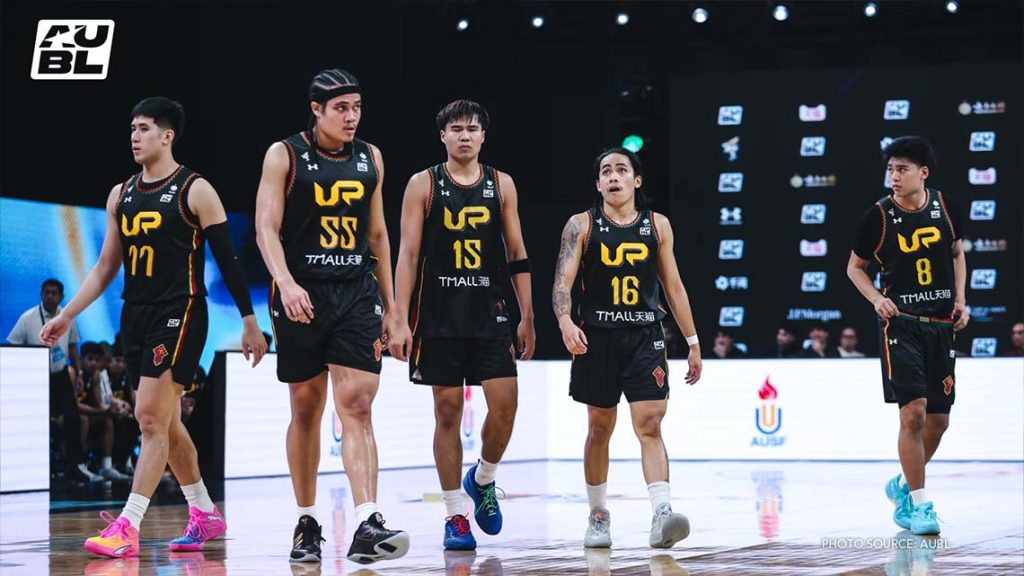
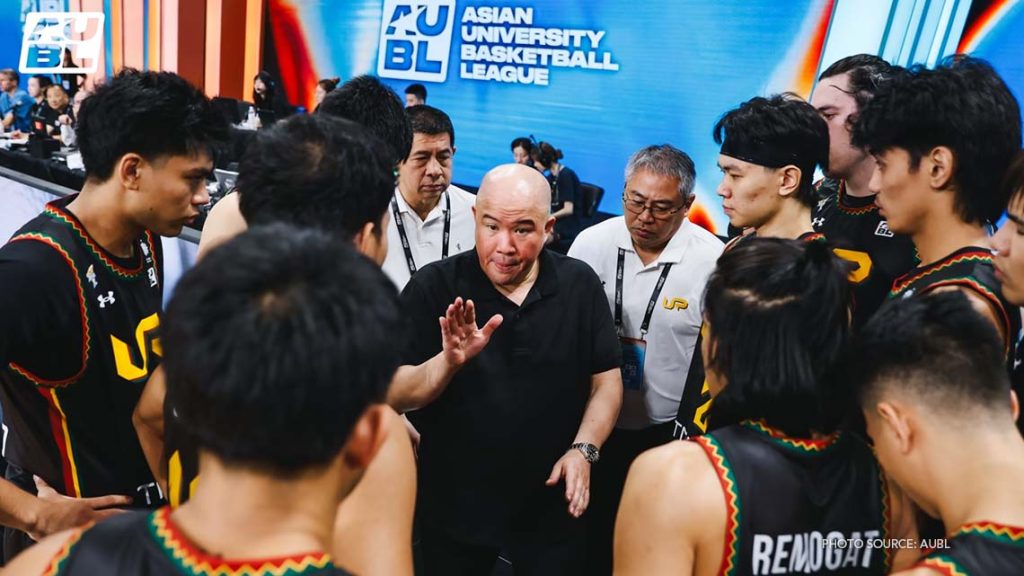
In the case of the UP Fighting Maroons, this year’s stint in the Asian University Basketball League (AUBL) was an exciting test on an international stage. To be specific, the Maroons’ three-game AUBL performance gives us a snapshot of their progress heading into UAAP Season 89.
Based on their outings against Hakuoh University, Korea University, and Tsinghua University, what are the areas where UP earned top marks? And which areas need course correction?
Frontcourt: A
This is easily the biggest strength of the Fighting Maroons’ roster this upcoming season.
UP’s frontcourt had been throwing their weight around in the FilOil EcoOil tournament, but it’s even more impressive that they continued to thrive against the forwards and centers of AUBL schools. In all three of their AUBL games, the Fighting Maroons outrebounded their opponents by an average of 12.0 boards per outing. That’s huge.
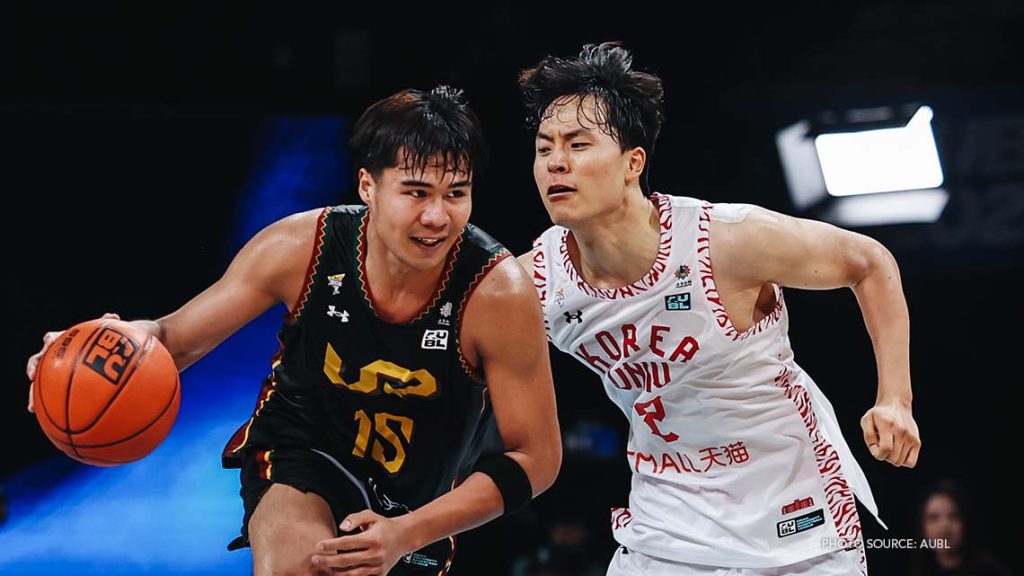
Their leading rebounder, though, isn’t one of the hulking enforcers that backed up the Maroon 5 in years past. That distinction belongs to Veejay Francis Pre, who is second among all AUBL players with 11.3 rebounds per game. Pre was also the most consistent scorer in UP’s frontline, averaging 15.0 ppg on 47.5% shooting from the field.
If Pre is the new student turning heads, Jacob Bayla is the Mr. Congeniality candidate who’s starting to develop an edge. Having made a name for himself as a lockdown defender over the past two seasons, Bayla is unleashing his scoring self, increasing the frequency of his rim attacks, getting better at drawing fouls, and even bringing back the perimeter shot he used to wield in high school.
The other mainstays of UP’s frontline had their shining moments as well. Gani Stevens pulled down 10 rebounds opposite the bigs of Korea University; Sean Alter had eight points on 3-for-4 FG shooting in 11 minutes against Hakuoh; and Dieonte Miles finished with 10 points, eight boards, and three blocks in the matchup with Tsinghua University.
So, is the Maroons’ frontcourt the most loaded in the UAAP this season? Discuss.
Making and Defending Threes: C+
Rebounding and frontcourt scoring are looking great for UP. I can’t say the same thing about this whole 3-point business.
Here’s how bad it was. In the second game, Korea University’s Kim Jeong Hyun Daniel, Shim Ju Eon, and Seok Jun Hwi combined for eight triples. If you took the Maroons’ made 3s in the first game and added it to their tally in the second outing, you’d still fall short of matching the KU trio’s output!
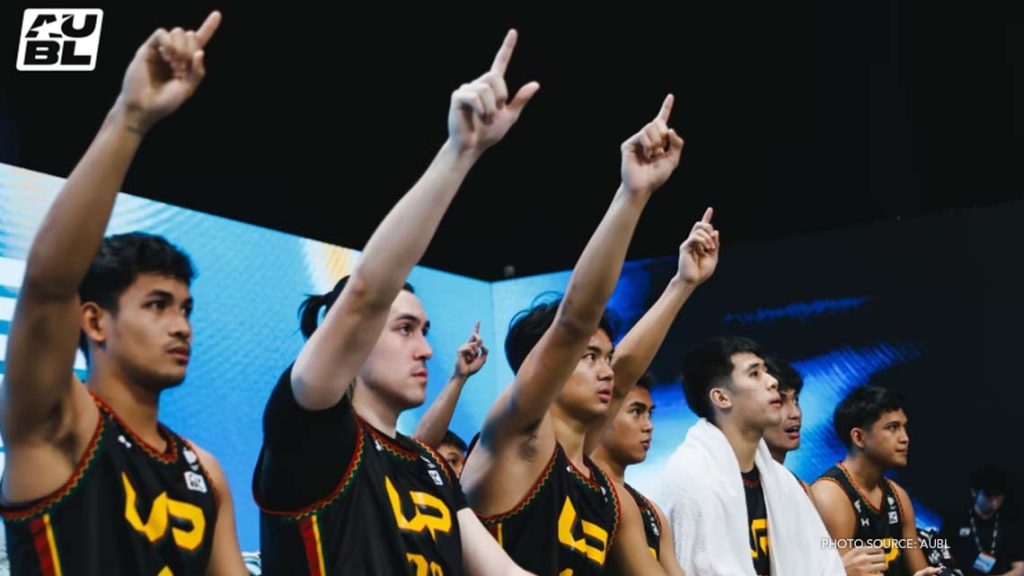
After shooting 3-for-16 against Hakuoh and 4-for-25 against KU, the Maroons sort of perked up from beyond the arc when they made 10 of their 30 outside attempts in the quarterfinal matchup versus Tsinghua University. Still, there were eyesores in the individual percentages: Neither Rainer Maga nor Arvie Poyos could buy a basket from deep, and James Payosing missed all three of his attempts (just two days after Elliot Dimaculangan went 0-for-4 from beyond the arc against KU).
On the defensive end, I felt that UP gave up more perimeter shooting when they went in drop coverage as opposed to switching. For instance, take a close look at Hakuoh’s made threes in the first game. A good number of them came off pick-and-roll situations when UP’s bigs stepped back towards the paint in anticipation of drives from Hakuoh’s ball handlers. That space in the drop coverage was all the Hakuoh shooters needed to launch (and make) their 3s and middys.
In contrast, when defenders like Stevens, Alter, and Miles committed to covering ball handlers coming off screens and hand-offs, these ball handlers were deterred from simply rising up for a shot.
Of course, we have to talk about the Rey Remogat of it all. UP’s premier court general looked damn good when he was making those deep threes, but in the bigger picture, he’s been inefficient in this tournament, hitting just 24.1% of his 29 outside attempts. Remogat has demonstrated his range time and again, but when he’s going 1-for-7 or 2-for-8 from distance, I think he’d make a lot of people feel better if he launches more attempts from the corners than, say, three to five steps behind the arc.
Oh, and I’ll go ahead and make a dad joke like other teachers are fond of doing. If there’s a silver lining to this 3-point situation, I’d say the C stands for Chicco. Now in his senior year, the second-generation Briones is displaying the best form of his UAAP career, constantly squaring up and letting his shots fly with no hesitation. Briones could be a game changer for UP off the bench if he finally makes threes on a consistent basis in the UAAP.
If you were an opposing UAAP coach, would you funnel your defenders towards the paint and give up the 3-point shot when going up against UP? Think about that.
Composure: B
Here’s your homework: Revisit that UP-San Beda matchup in the FilOil semis this year and find out what went wrong.
If your answer is, “They fell apart in the third quarter,” you’re correct!
That blowout loss to the Red Lions is a red flag for the Maroons’ prospects this season, and concerns about their composure emerged once again in their last two AUBL games. UP’s worst showing in this regard was in that Korea University game, when they tended to respond to KU’s runs with rushed shots and forced attempts. Their 18 turnovers didn’t help, either.
By the time UP got to the quarterfinals, they reined in some of the bad habits by limiting their errors to 10 and matching Tsinghua University’s buckets for the most part. All well and good, but a certain sequence in the last three minutes of the game caught your teacher’s eye.
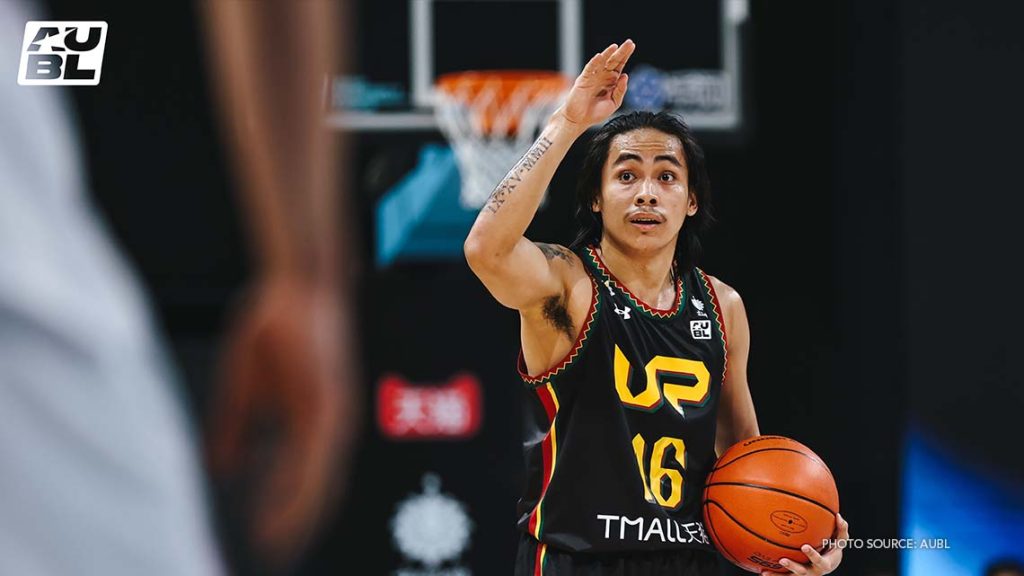
With 2:40 left in the fourth quarter, Remogat received the ball off a Stevens hand-off and pulled up from 25 feet. It was a booming triple that cut Tsinghua’s lead down to four, and on the bench, Remogat’s teammates were feeling the excitement.
Then, off a defensive stop and a Stevens rebound, Remogat brought the ball down on the next possession…and promptly pulled up from the same spot.
He missed. I groaned. And I’m sure many UP fans did as well.
In this day and age, what’s a good shot in basketball? Do you cut a guy some slack if he goes for a pull-up three off a make? Or do you wish that he sticks to the fundamentals by passing the ball around to look for the best shot available?
What’s even more infuriating for the UP side is the fact that, moments later, Payosing swung the ball to Pre for an easy floater just outside the paint. That looked exactly like the inside points that Pre was getting in crunchtime of that win over Hakuoh.
Which begs the question…
Is Pre a better closer than Remogat?
Final Grade: B+
With a little over a month to go before the UAAP season begins, the Fighting Maroons have shown clear glimpses of the team they’ll look like. More often than not, UP will win the inside game as they dominate the glass and get a huge chunk of points from their frontcourt. Their defensive coverage from deep, however, has been exploited on multiple occasions. And they have a tendency to make things worse by making bad decisions in the face of runs.
The Maroons remain a force to be reckoned with in the UAAP. But they have a long way to go before they gain championship form.
What grade would you give the Maroons’ AUBL stint? Hit us up on Facebook, Instagram, and X! Class dismissed.