In the US, Philippine Basketball Gets a Glimpse of Its Future
Norman Black came home from Virginia with names to pass along and a question for the families he had met: “Did their children have Philippine passports?“
He had seen enough basketball to believe that question mattered.
Across two days at the Next Generation Tournament of Champions, Black identified at least 10 boys and seven girls who he believed could play college basketball in the Philippines. Some, he felt, could eventually merit national-team consideration.
But when I spoke with him afterward, the first thing he wanted to discuss was the work that made those discoveries possible.
“Outside of the talent, I thought it was well organized and well attended by the Filipino community in the United States,” Black said over the phone.
At one point, he recalled, eight or nine courts were operating simultaneously. Players had arrived with their families. For a scout trying to decide where to look next, there was plenty to take in, almost like a basketball buffet.
The tournament’s October 9–11 gathering at the Henrico Sports & Events Center in Glen Allen, Virginia, brought together Filipino basketball programs for a weekend whose significance extended beyond won games and stat sheets.
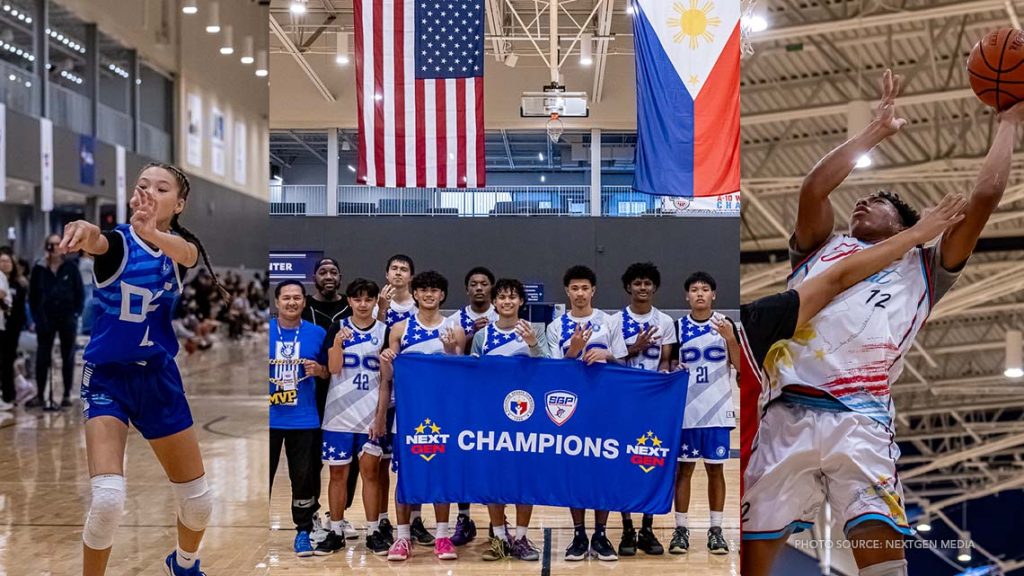
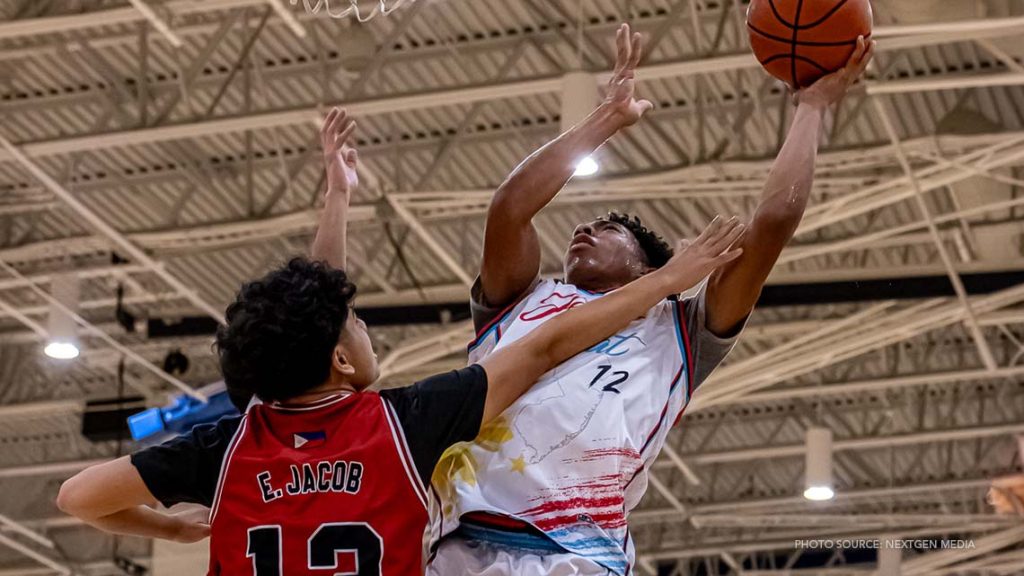
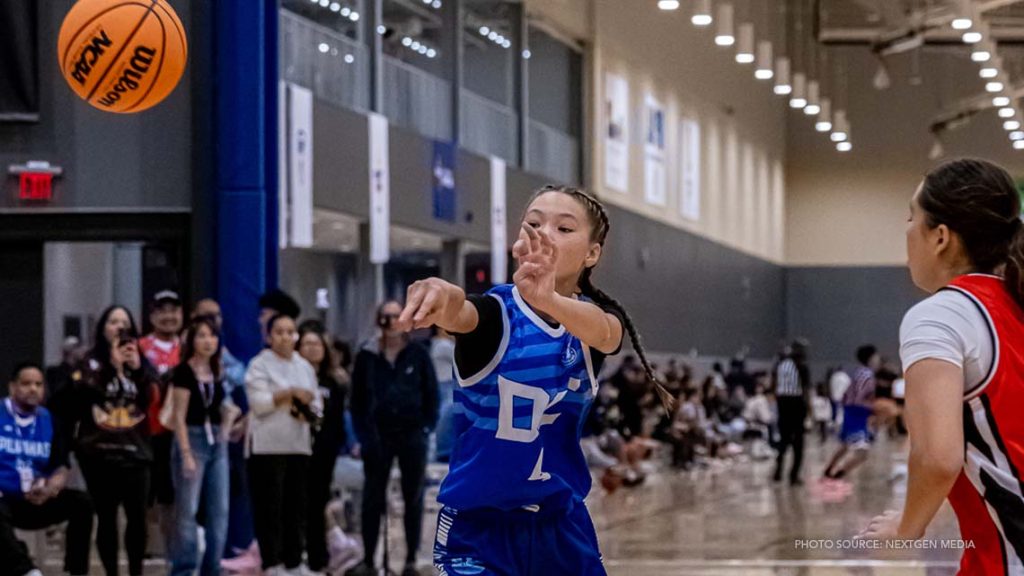
In photographs from the event, spectators are close enough to the sidelines to become part of the backdrop of a contested pass or drive. Teammates sit shoulder to shoulder between appearances. In one championship photograph, the Philippine and American flags hang above the players.
Those images give shape to what Black described: a community turning up for its children, and a competition giving those children a chance to be seen.
Finding the next opportunity
Black flew in on Friday and departed on Monday, spending Saturday and Sunday moving between games. With several contests running at once, he concentrated on players he believed might warrant consideration for Philippine national programs.
His initial measuring stick was familiar.
“Can they play college basketball here in the Philippines? Do I think they’re good enough?” he said, explaining how he assessed the talent.
That helped establish a starting point. National-team selection would demand more.
“The national team is the best of the best,” Black said.
He was also careful about the limits of his role. When I asked which players had impressed him most, he declined to identify individuals. His responsibility was to provide names and evaluations; the national-program coaches would decide whom to pursue.
“All I can basically do is give them the names and give them my opinion,” he said. “But I’m not actually involved in the choosing of any of them.”
That distinction matters. A promising weekend can begin a conversation, but it does not settle a player’s future.
Separately, information supplied by the tournament’s organizers identified five athletes as potential scholarship prospects: 6-foot-7 Mo Turner, 6-foot-5 Matt Jernigan, 6-foot Dion Lane, 6-foot-5 Amari Fields and 5-foot-10 Brooke Jurgensmeier, a 13-year-old girls’ player.
Organizers also highlighted Robin Casapao, a 6-foot guard from FYBA’s 19U team, for his performance. Casapao is on the roster of Marymount University, an NCAA Division III program in the United States.
Organizers reported interest from Philippine schools including UP, UST, Ateneo, La Salle, FEU, Adamson, NU, San Beda, Mapua, LPU, Benilde, Letran and JRU. No individual school-player pairings or finalized scholarship agreements were provided.
The possibility of a Philippine education and basketball career gives families something substantial to consider after the final game.
A weekend worth building
The competition had its own achievements to celebrate.
Fil-Am Nation Chicago won the 14U boys’, 15U girls’ and 17U girls’ titles. Migs Buenafe earned the 14U boys’ MVP recognition, while Talia Ismail and Francheska Bacol were recognized in the 15U girls’ division, and Sehvyn Foster and Bella Silva in the 17U girls’ division.
Other champions included CHPTR in 10U boys, FASE VA in 12U boys, Jersey City in 13U boys, JSAG in 15U boys, Jersey Heat in 17U boys, FYBA in 19U boys and Blue Lobster in 13U girls, according to the results supplied to ALL-STAR.
Behind those finishes was the coordination required to bring different programs, age groups and families into one venue.
Next Gen was identified in the event’s advance information as the organizing entity, with the Philippine Sports Commission and Samahang Basketbol ng Pilipinas as partners and Fil-Nation Select providing marketing and ground support.
Organizers credited PSC chairman Patrick Gregorio’s initiative to extend the commission’s grassroots campaign to Filipino talent worldwide. The aim, they explained, is for events like this to help national sports federations build deeper talent pools, connecting athletes developing locally with those growing up overseas.
Black repeatedly credited Coaches Rodel Lizan and Cris Gopez for their work delivering the tournament. Before our conversation ended, he returned to that point without prompting.
“Please put emphasis on the organization and the execution of the tournament, because I thought it was well done,” he said.
For him, the quality of the event deserved recognition alongside the quality of the players.
Keeping the door open
Black was not surprised that Filipino talent existed across North America. The SBP, he explained, had conducted its own showcases in the United States for three years, welcoming groups from the U.S. and Canada.
Virginia offered another opportunity to observe players and add to that knowledge.
His next task was to submit his findings to the SBP office. He also expected executive director Erika Dy to coordinate with the event’s contacts about entering participating players into the federation’s database.
The purpose was continuity: keeping track of young athletes as they developed.
That effort extends to the Philippines. Black said he had already visited 12 provinces this year through his work with young players. Regional activities include combines for athletes aged 15 and under, recording results in sprinting, agility, shooting, and vertical jumping.
An overseas prospect and a child attending a provincial showcase could therefore become part of the same broader effort to identify future national-team talent.
Documentation, however, remained a concern in Virginia.
“The biggest concern would be: do they have passports?” Black said.
He estimated that a majority of the children he encountered did not have Philippine passports, something he encouraged parents to address to help preserve future opportunities.
There was a lighter discovery, too. Many of the children apparently had little idea who Black was. Their parents supplied the introduction his resume could not make on its own.
“So I got a little bit of credibility because of the parents,” he laughed.
Once the children gathered on the floor, he spoke about his experiences in the Philippines and the opportunities they could explore.
Organizers now hope to increase participation, with Europe and Australia among the regions being considered for future events. Those possibilities would bring the same opportunity to more Filipino communities: a place to compete, be evaluated and learn what might come next.
Virginia offered a glimpse of what that can look like—young players leaving with a clearer idea of where basketball might take them, and Philippine basketball gaining more names worth following.